Book the best Iquitos Amazon tours in Peru. Explore the world's largest rainforest from Iquitos: spot pink river dolphins, monkeys, sloths, caimans and exotic birds on multi-day jungle lodges, piranha fishing, night walks, canopy walks and Pacaya-Samiria National Reserve boat trips. Authentic small-group or private adventures available year-round. Secure your unforgettable Iquitos Amazon experience today!
Our best-selling multi-day Iquitos tours immerse you in the Peruvian Amazon with guided jungle walks spotting monkeys, birds, and caimans, river cruises for pink dolphins, night safaris, and lodge stays deep in the rainforest.
Escape to the Peruvian Amazon for a 2-day adventure on Monkey Island. Cruise by boat, spot caimans, river dolphins, anacondas, and monkeys, then hike at dusk and dawn to experience the jungle’s biodiversity. Stay overnight in a sustainable eco-lodge, visit an indigenous community, and immerse in authentic wilderness.
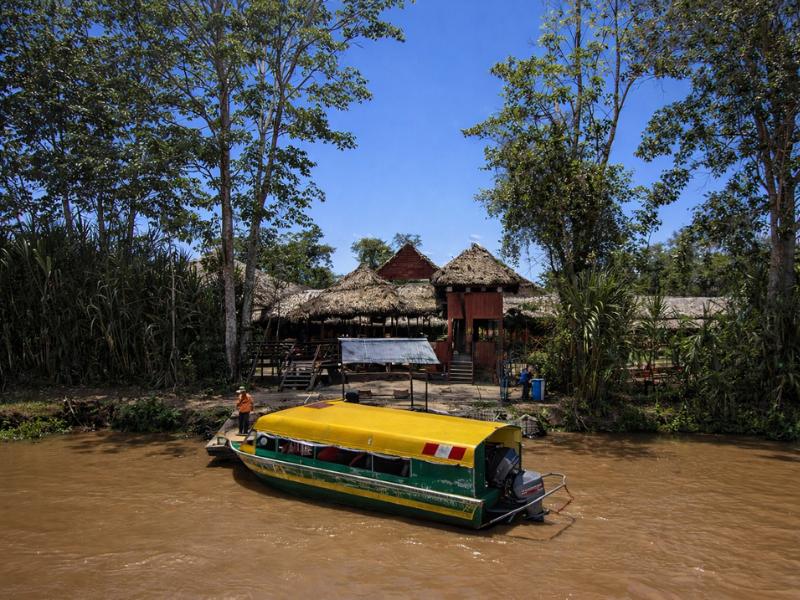
Nestled in the Peruvian Amazon, Maniti Eco-Lodge serves as your cozy base for an immersive jungle escape. Cruise the Rio Nanay by boat, paddle canoes to remote corners, and spot wild dolphins, herons, turtles, and more in their natural habitat.
This immersive 4-day escape from Iquitos blends wildlife spotting, cultural encounters, and relaxation in the Peruvian Amazon. Cruise rivers, explore indigenous communities, hike trails, and enjoy sunset views. Stay in a comfortable lodge with meals included.
This 5-day Amazon adventure immerses you in one of the world’s natural wonders. Glide along the mighty river, awaken your senses with tropical sun and fresh air, and spot unique wildlife in pristine landscapes. Stay in comfortable eco-lodges, enjoy guided excursions, and connect with local culture through expert guides from the region.
Immerse in the Peruvian Amazon on this 6-day guided escape. Cruise rivers spotting pink dolphins, visit indigenous communities, explore Monkey Island, swim in the Amazon, hike at night for insects and nocturnal animals, fish for piranhas, and enjoy sunrise birdwatching.
Deep in Peru’s Amazon, this 7-day adventure immerses you in the rainforest. Canoe serene channels, hike lush trails, and cruise by motorboat spotting wildlife. Stay in a peaceful eco-lodge with private rooms, included meals, and guided activities. Wake to bird chorus and explore at night for nocturnal creatures.
Our best-selling one-day Iquitos Amazon tours take you deep into the Peruvian rainforest with boat cruises on the Amazon River spotting pink dolphins and caimans, guided jungle walks for monkeys and birds, and visits to local communities or wildlife reserves.
This tour combines wildlife conservation and Amazon exploration. Cruise the river spotting native aquatic species, then visit Monkey Island – a refuge rehabilitating and releasing primates into their natural habitat. See monkeys up close in a sustainable setting, learn about biodiversity efforts, and enjoy the river’s serene beauty.
This immersive day trip from Iquitos blends nature, culture, and mystery. Pickup from your hotel, head to Bellavista Nanay port, and sail the Nanay and Amazon rivers, spotting pink/gray dolphins. Explore jungle trails, discover medicinal plants used by indigenous communities, meet playful monkeys, and stand in awe before the massive Lupuna tree.
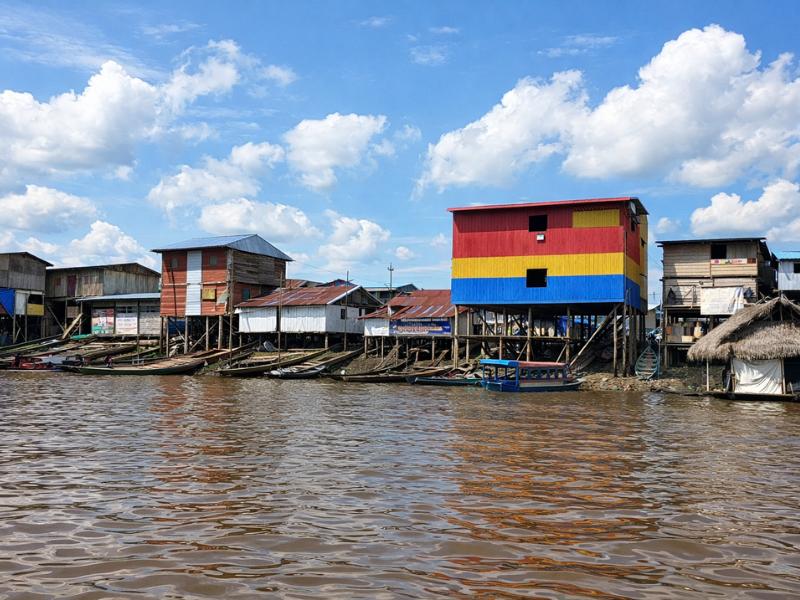
This private tour from Iquitos immerses you in authentic Amazon life. Stroll Malecón Tarapacá for river views and local flavors, explore bustling Belen Market for traditional food and medicine, then boat through the unique Floating City built on water. Witness how residents live and work. End at the meeting of Rio Itaya and the mighty Amazon River – a vivid slice of Iquitos culture and nature.
Our premium Iquitos Amazon tours immerse you in the Peruvian rainforest with upscale lodge stays or luxury river cruises, featuring private guided excursions for wildlife spotting like pink dolphins, monkeys, and birds, night safaris, and cultural visits.
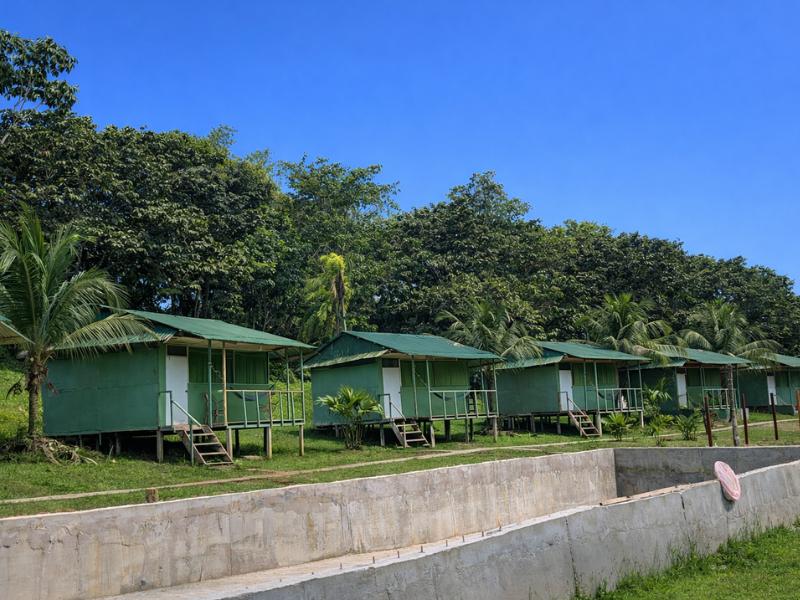
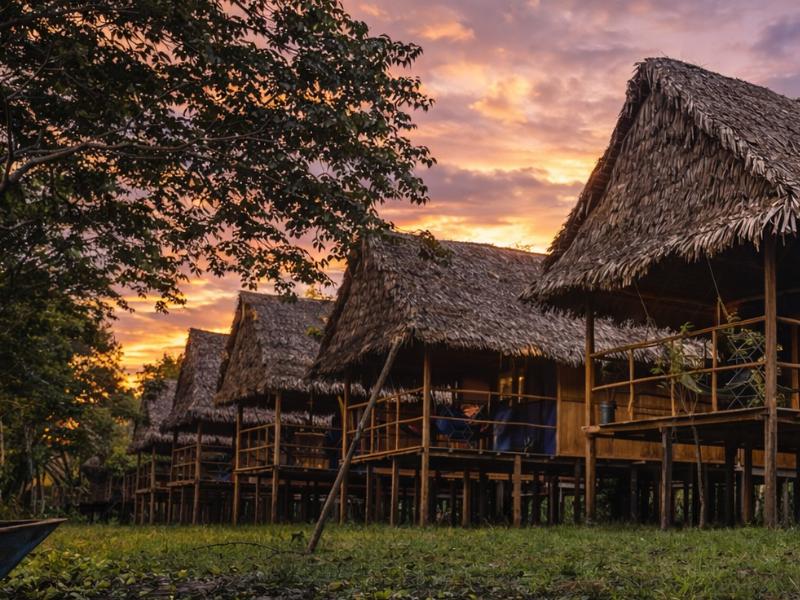
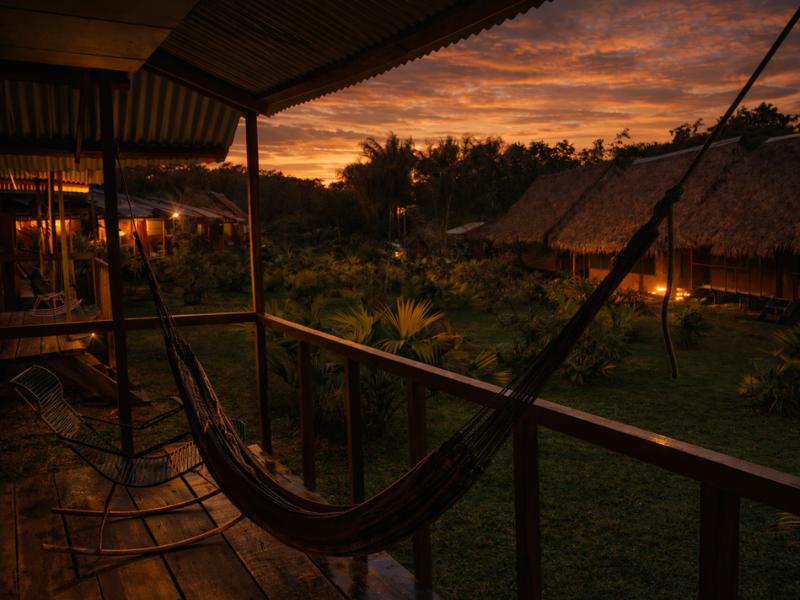
This premium 3-day escape immerses you in the Peruvian Amazon at a comfortable eco-lodge in the Yanamono Communal Reserve, 80 km from Iquitos. Stay in rustic rooms with high ceilings, panoramic windows, private bathrooms, terraces with hammocks, ceiling fans, and mosquito nets. Join small-group activities (max 12) with a professional guide for wildlife spotting, canoeing, jungle walks, and cultural insights.
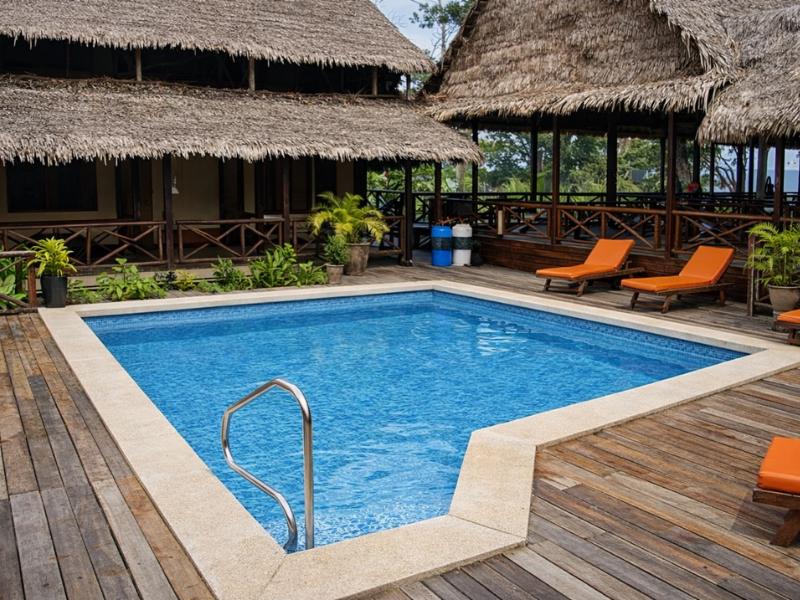
Immerse in the Peruvian Amazon on this 4-day adventure from Iquitos. Stay in a premium jungle lodge with riverbank pool for comfort and nature. Paddle the mighty Amazon, explore flooded forests, spot pink dolphins, visit Monkey Island for rescued primates, hike rainforests teeming with birds and plants, and meet the Yagua community to learn traditions and try blowguns.
Escape to Peru’s Amazon on this 3-day adventure from Iquitos. Stay in a private bungalow at Muyuna Lodge with all meals included. Paddle Juanachi Lake, canoe Amazon River channels, hike jungle trails, and spot howler monkeys, macaws, sloths, toucans, tarantulas, and more. Expert guide leads wildlife spotting and nature activities.
Our unique Iquitos tours offer offbeat Peruvian Amazon adventures like ayahuasca ceremonies, night jungle walks for glowing insects, piranha fishing and cooking, indigenous community visits with blowgun demos, and swimming near wild pink dolphins.
This vibrant food walking tour dives into downtown Iquitos’ unique Amazonian cuisine. Led by a passionate local guide, stroll bustling streets and hidden gems, tasting authentic dishes from street vendors and cozy restaurants. Each bite pairs with lively stories about Iquitos’ history, culture, and flavors.
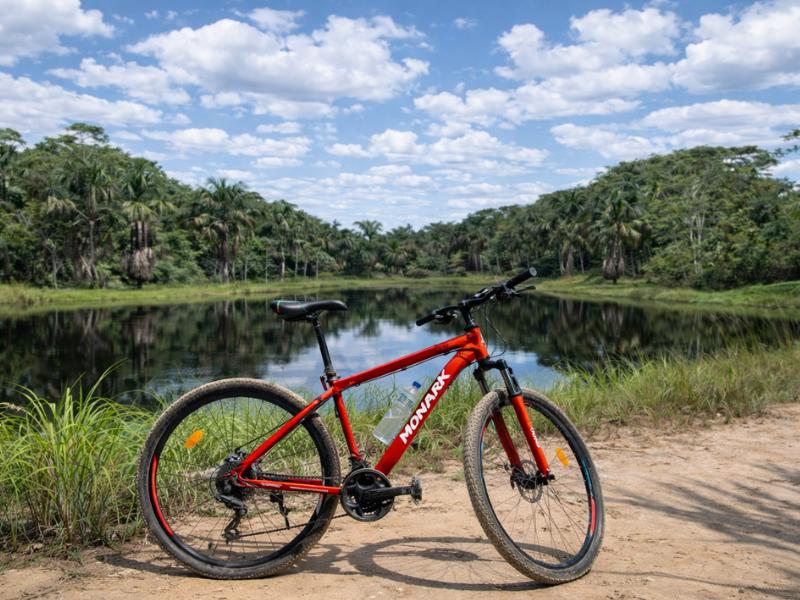
Explore the buffer zone of Allpahuayo Mishana reserve by bike on this eco-friendly adventure. Start at a cozy Airbnb base just 400m from the Iquitos-Nauta road and Manatee Rescue Center (visit optional). Refresh with fresh papaya juice or filtered water from the garden, relax in hammocks surrounded by nature. Ride compacted sand trails (some challenge in dry season) to a beautiful mirror lagoon with rainforest views.
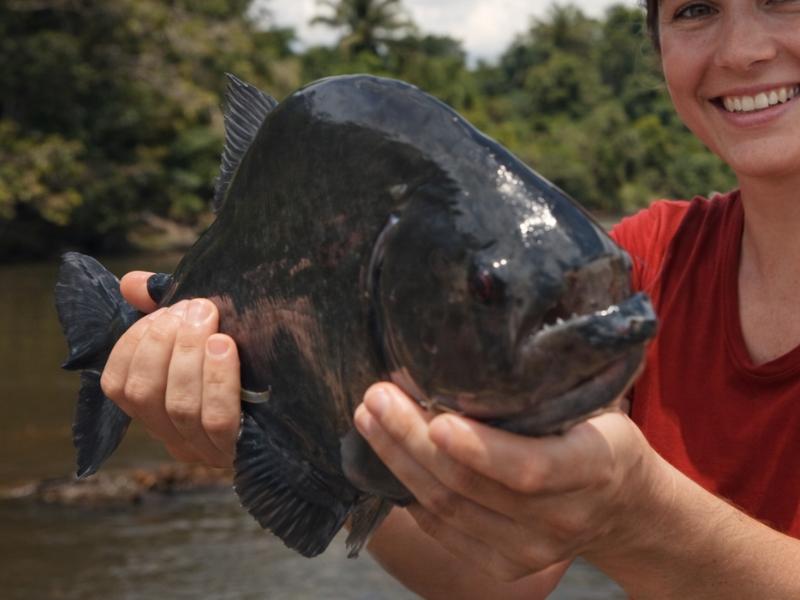
Pickup from your Iquitos hotel takes you to the boulevard pier for a boat journey on the mighty Amazon River, the world’s largest. Sail through lush jungle scenery, spot amazing flora and fauna, and learn to fish piranhas with rod and line at the Itaya-Amazon confluence. Spend 1 hour fishing various species (omnivorous, sharp-toothed but harmless to humans).
Why Iquitos & the Amazon is a Must-Visit Destination
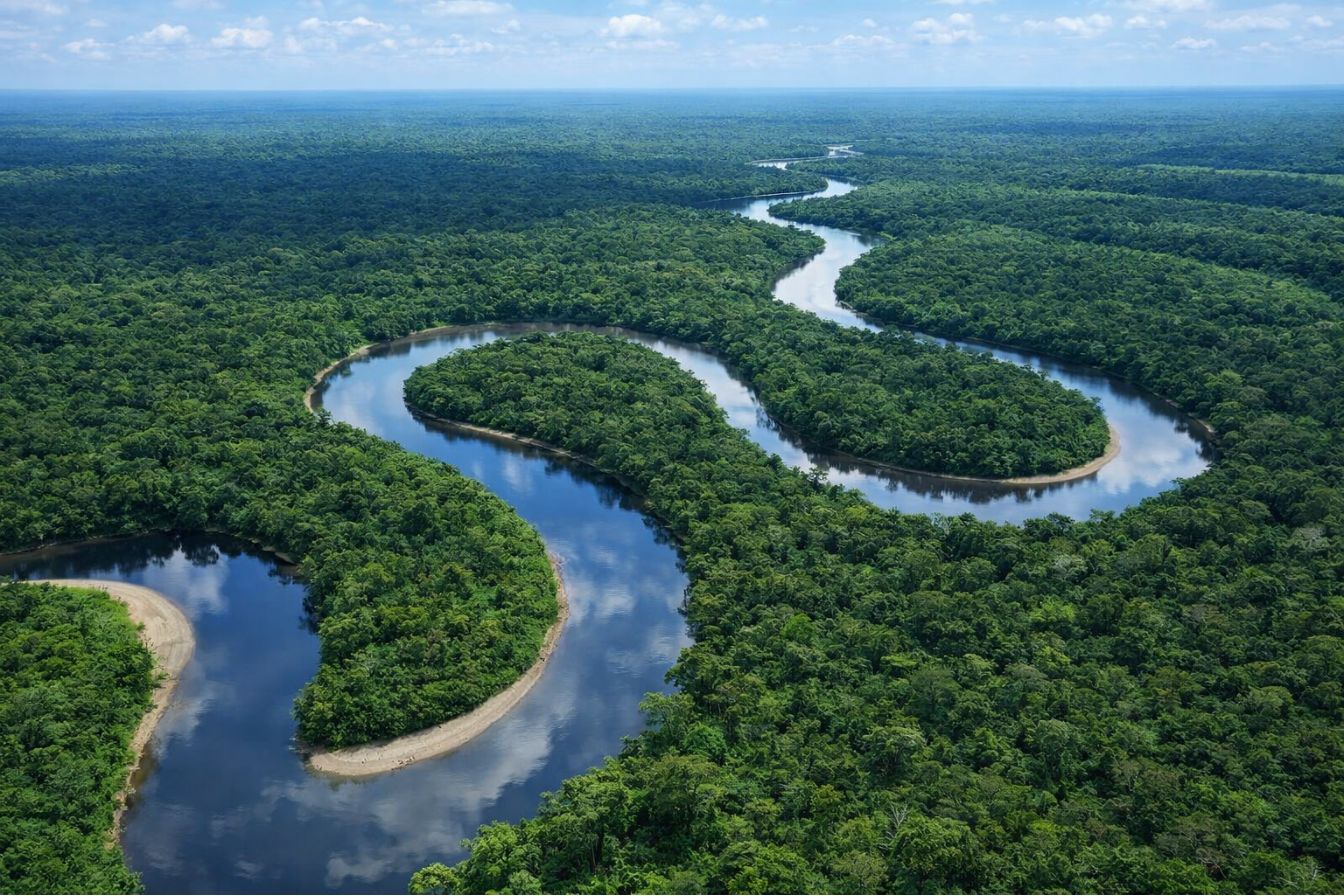
Deep in Peru's northern Amazon basin, Iquitos is the largest city in the world unreachable by road—surrounded by endless rainforest, mighty rivers, and wildlife that feels straight out of a nature documentary. Float through narrow blackwater channels in a dugout canoe, spot pink river dolphins leaping beside your boat, listen to howler monkeys at dawn from a jungle lodge, and walk canopy walkways high above the forest floor. The Amazon here is raw and accessible: fresh paiche fish grilled riverside, ayahuasca ceremonies with Shipibo healers (if you're seeking that path), birdwatching that racks up hundreds of species in a day, and sunsets that turn the water gold. With Iquitos Amazon Tours, you'll cruise the mighty Marañón and Ucayali rivers, stay in comfortable ecolodges with expert naturalist guides, explore remote tributaries and indigenous communities, and experience the heartbeat of the world's largest rainforest up close—humid, alive, and unforgettable.
Our expert team has been helping navigate and book Iquitos Amazon tours and activities for tourists from all over the world for over a decade, ensuring you have a hassle-free trip with everything booked in advance.
With deep knowledge of the Peruvian Amazon rainforest, the mighty Amazon River, and incredible biodiversity, partnerships with the best local lodges, riverboat operators, and expert guides, and a passion for creating unforgettable experiences, we're committed to making your Iquitos Amazon adventure truly extraordinary. From your first inquiry to your last tour, we're here to support you every step of the way.
Award-Winning Travel Experience
Iquitos Amazon Tours is recognized by leading travel platforms worldwide
Peru Amazon Excellence Award2025
Iquitos Explorer Choice Award2024
Best Iquitos Amazon Tour Operator2023
Peruvian Amazon Sustainable Tourism Award2024
Rainforest & River Biodiversity Verified Excellence2024
Iquitos Amazon travel questions
How do I get to Iquitos for Amazon tours?
Iquitos is the main gateway to the Peruvian Amazon and can only be reached by plane or boat — there are no roads connecting Iquitos to the rest of Peru (it is the largest city in the world without road access to the outside).
Here are the main ways to get to Iquitos in 2025–2026:
1. Flight (fastest and most common)
Direct flights to Iquitos International Airport (IQT) from:
Lima (most frequent, multiple daily flights by LATAM, Star Perú, Sky Airline) — ~1 hour 45 minutes.
Pucallpa or Tarapoto (less common, but options exist).
Cost: USD 80–250 one-way (cheaper if booked early; round-trip often ~USD 150–400).
Pros: Quick, frequent, scenic views of the Amazon rainforest from the air.
Cons: Weather-dependent (rare delays due to rain/fog), book in advance for high season (June–October).
2. River boat from Pucallpa or Yurimaguas (adventure/slow travel)
Multi-day cargo/passenger boats up the Ucayali or Huallaga Rivers to Iquitos.
Time: 3–7 days (slow, irregular schedule).
Cost: USD 30–100 (basic hammock deck) to USD 150–300 (cabin).
Pros: Authentic river experience, see villages and jungle along the way.
Cons: Very slow, uncomfortable (hammocks, basic facilities), not recommended for first-timers or short trips.
Verdict
Flight from Lima is the best and most practical way for almost everyone — fast, reliable, and the standard entry for Amazon tours starting in Iquitos.
Once in Iquitos, most tours include boat transfers from the city to the jungle lodges (30 min–3 hours by speedboat along the Amazon, Nanay, or Itaya rivers).
You can book highly rated Iquitos Amazon tours (jungle lodges, guided walks, boat trips, canopy towers, expert guides) at Iquitos Amazon Tours.
What wildlife can I expect on Iquitos Amazon tours?
On typical Iquitos Amazon tours in Peru (most commonly in the Pacaya-Samiria National Reserve, Marañón River, Nanay River, or Yarapa River areas), you can expect to see a rich and diverse array of wildlife — the northern Peruvian Amazon is one of the most biodiverse regions on Earth, with over 1,000 bird species, 300+ mammals, and countless reptiles, amphibians, insects, and fish.
Here is what you are most likely to see on standard 3–7 day lodge-based tours (success rates based on 2025–2026 visitor reports and operator data):
Very common / almost guaranteed (90–100% chance on good tours)
Monkeys: Squirrel monkey, brown capuchin, howler monkey (loud morning calls), night monkey, tamarin, woolly monkey — often in troops, jumping through trees or feeding near lodges/trails.
Pink river dolphins (boto): Very common in rivers — they surface frequently, curious around boats, often seen in groups.
Caimans: Spectacled caiman and black caiman — seen on night boat trips or riverbanks (eyes glowing red).
Capybara: Largest rodent — grazing on riverbanks or swimming.
Common / high chance (60–90%)
Sloths: Three-toed and two-toed — slow-moving in trees, often spotted on walks or boat rides.
Giant river otters: Playful, vocal, often fishing in oxbow lakes — a top highlight.
Turtles: River turtles basking on logs or beaches.
Anacondas & boas: Occasionally seen on night walks or near water (guides know where to look).
Poison dart frogs: Vibrant colors — especially on night walks.
Special / less common but possible (30–70%)
Jaguar: Rare but possible (especially in Pacaya-Samiria or remote areas — sightings ~10–30% on longer stays with good guides).
Tapir: Shy, nocturnal — sometimes seen on night walks or at clay licks.
Giant anteater: Occasional on open savanna areas.
Harpy eagle: One of the most sought-after birds — rare but possible in remote areas (guides know nesting sites).
Ocelot, margay, bush dog: Elusive nocturnal cats — night walks improve chances.
Factors that improve sightings
Longer stays (4–7 days) — more time in remote lodges (e.g., Pacaya-Samiria lodges, Explorama, Muyuna) = higher chances of rare species.
Early morning & late afternoon/evening excursions — animals are most active.
Night walks/boat trips — best for caimans, frogs, snakes, nocturnal mammals.
Experienced local guides — they know current animal locations, calls, and tracks.
Dry season (May–October) — animals concentrate around permanent water, easier to spot.
Verdict Monkeys, birds, caimans, pink river dolphins, and giant river otters are almost guaranteed on any good tour. Sloths, capybaras, and turtles are very likely. Jaguars, tapirs, and harpy eagles are possible bonuses — more likely on longer, remote lodge-based tours. The Iquitos Amazon delivers incredible wildlife even on short trips.
You can book highly rated Iquitos Amazon tours (jungle lodges, guided walks, boat trips, canopy towers, expert guides, and high wildlife sightings) at /.
Real chances of seeing pink dolphins on Iquitos Amazon tours?
Pink river dolphin (boto) sightings on Iquitos Amazon tours are very high — typically 80–95% success rate on well-run tours during peak season, and still strong (60–85%) year-round.
The Peruvian Amazon near Iquitos (especially along the Amazon, Nanay, Yarapa, and Marañón Rivers) has one of the highest densities of pink river dolphins in the entire Amazon basin. They are resident year-round, curious, and often approach boats — making them one of the most reliable and exciting wildlife sightings on tours.
Realistic breakdown:
Peak season (dry season: May–October, especially July–September): 90–95% chance. Lower water levels concentrate dolphins in main channels and lagoons, making them easier to spot (often 5–15+ per trip, with surface behaviors like jumping or spyhopping).
Wet/high-water season (November–April): 70–85% chance. Higher water floods forests, spreading dolphins out, but they still appear regularly in channels and near lodges.
Factors improving chances:
Early morning or late afternoon excursions — dolphins are more active feeding.
Small-group or private tours — captains go to current hotspots and spend more time searching/following pods.
Experienced local guides — they know seasonal patterns and use hydrophones to detect dolphin clicks.
Longer stays (4+ days) — more opportunities across different rivers/lakes.
Verdict Pink river dolphins are one of the most reliable and memorable highlights of Iquitos Amazon tours — sightings are frequent, often close-up, and a major reason many people choose this region. While not 100% guaranteed (wild animals), the odds are among the highest in the Amazon.
You can book highly rated Iquitos Amazon tours (jungle lodges, guided walks, boat trips, canopy towers, expert guides, and high pink dolphin sighting chances) at Iquitos Amazon Tours.
What are the main activities on multi-day Iquitos Amazon tours?
Multi-day Iquitos Amazon tours (typically 3–7 nights, lodge-based in Pacaya-Samiria National Reserve, Yarapa River, Nanay River, or Marañón areas) follow a structured daily rhythm combining boat travel, guided excursions, and wildlife observation. Here’s the typical breakdown of main activities you can expect:
Boat travel on the Amazon, Marañón, Nanay, or Yarapa Rivers
Daily speedboat or canoe rides to reach remote areas — often the most scenic part, with pink river dolphins, caimans, birds, and monkeys visible from the boat.
Guided jungle walks & trail exploration
Morning and afternoon hikes on forest trails — learn about medicinal plants, track animals (jaguar prints, tapir tracks), spot monkeys, sloths, birds, poison dart frogs, and insects.
Guides point out hidden details (camouflaged animals, tree species, Amazon ecology).
Mokoro (dugout canoe) paddling
Silent gliding through narrow channels and flooded forests — excellent for close wildlife viewing (caimans, birds, monkeys, sloths, otters).
Often combined with short walks on islands or birdwatching.
Oxbow lake excursions
Boat or paddle to lakes (e.g., Yarapa Lake, Sandoval Lake) — high chance of seeing giant river otters (playful and vocal), caimans, hoatzin birds, monkeys, and sometimes anacondas or macaws.
Night walks & night boat trips
After dark: spotlight nocturnal animals — frogs, tarantulas, snakes, caimans (eyes glowing red), sleeping birds, and occasional ocelot or tapir.
Night boat rides for caiman spotting or listening to jungle sounds (howler monkeys, insects, frogs).
Clay lick (colpa) visits
Early morning boat to a macaw/parrot clay lick — watch hundreds of scarlet macaws, blue-and-yellow macaws, and parrots eating clay (peak activity 7:00–9:00 AM). One of the most spectacular sights.
Canopy tower or walkway
Climb a tower or walk suspended bridges above the forest canopy — excellent birdwatching (toucans, macaws, tanagers, eagles) and views over the treetops.
Fishing for piranha
Catch-and-release fishing in oxbow lakes or rivers — fun and educational (piranhas are small and not dangerous).
Visit to local communities
Optional short stops at indigenous villages — learn about traditional life, crafts, medicinal plants, and sometimes share a meal.
Night sky observation
Clear nights in dry season — stargazing from lodge decks or open areas (no light pollution).
Day 1: Arrival in Iquitos → boat transfer to lodge → afternoon jungle walk + night walk.
Day 2: Morning clay lick → jungle trail → afternoon oxbow lake (otters, caimans) → night boat.
Day 3: Full-day boat/mokoro excursion → canopy tower → night walk.
Day 4: Morning activity (fishing or walk) → return to Iquitos.
Verdict A multi-day Iquitos tour focuses on boat/mokoro travel, guided jungle walks, clay licks, oxbow lakes, night activities, and canopy viewing — delivering a balanced, immersive Amazon experience with high chances of seeing monkeys, birds, pink dolphins, caimans, otters, and occasional big cats.
You can book highly rated Iquitos Amazon tours (lodge-based, guided walks, boat trips, canopy towers, expert guides) at /.
Best time of day for wildlife spotting on Iquitos Amazon tours?
The best time of day for wildlife spotting on Iquitos Amazon tours is early morning (dawn to mid-morning, typically 5:30–9:00 AM departures).
Here’s why early morning is the clear winner:
Animals are most active at dawn and early morning — monkeys (howler, squirrel, capuchin) are vocal and feeding, pink river dolphins surface frequently, giant river otters hunt in oxbow lakes, caimans and birds (macaws, toucans, herons) are out, and even elusive species (tapirs, jaguars) are more likely to be seen moving to water.
Cooler temperatures and calmer waters — less wind, mirror-like reflections, excellent visibility, and animals are less skittish with fewer boats.
Golden hour light — sunrise creates stunning backlighting on birds in flight, monkeys in trees, and dolphins breaking the surface.
Fewer other boats — early departures have the rivers and channels almost to themselves — wildlife is more relaxed and easier to approach quietly.
Second-best option: late afternoon to dusk (3:00–6:00 PM until sunset)
Animals return to water to drink/feed before night (monkeys, capybara, birds roosting, caimans more visible).
Golden-hour light is dramatic for photography.
Quieter than midday — many boats return to lodges by 4:00–5:00 PM.
Downside: Shorter daylight in shoulder seasons, and some animals bed down earlier.
Avoid midday (10:00 AM–3:00 PM):
Heat/humidity rises, animals retreat to shade/forest.
More boats on the water — wildlife more skittish, visibility drops slightly from chop/wake.
Quick tip: Book the earliest possible excursion (dawn/sunrise) — most lodges offer morning boat/mokoro trips, which give you the highest wildlife activity and the most magical, peaceful Amazon experience.
You can book highly rated Iquitos Amazon tours (early-morning departures for maximum wildlife spotting, expert guide, boat/mokoro, jungle walks, canopy towers) at Iquitos Amazon Tours.
Best month for Iquitos Amazon tours – high water or low water?
The best month for Iquitos Amazon tours depends on your priorities, but most travelers and experts recommend the low water / dry season (June–October, peak July–September) for the majority of activities and the overall best experience.
Here’s the clear comparison for 2025–2026:
Low water / dry season (June–October)
Water levels: Lowest — rivers and channels shrink, concentrating wildlife around permanent water sources (oxbow lakes, main rivers).
Wildlife viewing: Highest success rates — animals (monkeys, macaws, caimans, giant river otters, pink dolphins, jaguars) are easier to spot because they gather at fewer water points. Clay licks (colpas) are very active with hundreds of parrots/macaws.
Access: All trails, lakes, and remote areas are fully accessible — no flooded paths, easier navigation on foot and by boat.
Weather: Sunny and dry (28–34 °C / 82–93 °F), low humidity, calm rivers — comfortable for long boat rides, jungle walks, and night excursions.
Crowds: Moderate — high season but the vast size of the region and private lodges keep it uncrowded compared to other safari destinations.
Best months: July–September — driest, clearest skies, peak wildlife concentration, best birdwatching and clay lick activity.
High water / wet season (November–May)
Water levels: Highest — extensive flooding creates vast flooded forests and deeper channels.
Wildlife viewing: Still good but different — birds in breeding colonies, migratory species arrive, but animals are more spread out (harder to find jaguars, tapirs, or concentrated groups). Some trails and lakes become inaccessible.
Access: Boat/mokoro-based activities excel (more areas reachable), but land trails may be flooded or muddy.
Weather: Hot and humid (30–36 °C / 86–97 °F), frequent afternoon showers — more mosquitoes, but lush green scenery.
Crowds: Very low — fewer tourists, lower prices (30–50% off high season), easier lodge bookings.
Best months: November–December (migration peak) and February–March (breeding colonies).
Verdict
Choose low water / dry season (especially July–September) for the best overall experience — clearest weather, easiest access, highest wildlife concentration, and the most reliable conditions for boat/mokoro/walking safaris. This is when most visitors go and when sightings (jaguars, giant otters, macaw clay licks) are at their peak.
Choose high water / wet season (November–April) if you want fewer crowds, lower prices, lush flooded forests, and don’t mind occasional rain — excellent for water-based activities and bird breeding spectacles.
You can book highly rated Iquitos Amazon tours (jungle lodges, guided walks, boat trips, canopy towers, expert guides — best in July–September) at /.
What should I pack for Iquitos Amazon jungle tours?
Pack lightweight, quick-dry, long-sleeved clothing with excellent insect and sun protection — the Iquitos Amazon (Pacaya-Samiria, Yarapa River, Nanay River lodges) is hot/humid year-round (28–35 °C daytime, 22–26 °C nights), with constant mosquitoes, sandflies, occasional rain, and sun reflection off water.
Essential packing list for 3–7 day lodge-based tours
Cash in small USD bills ($5–20 notes) – tips for guides/poler/staff (~$10–20/day total)
Seasonal notes
Dry season (May–Oct): Extra long-sleeve layers for cooler evenings, strong insect repellent (mosquitoes peak at dusk/dawn).
Wet season (Nov–Apr): Extra rain poncho, quick-dry everything (heavy showers common), more insect repellent.
Verdict Focus on long sleeves/pants, high-DEET repellent, quick-dry fabrics, waterproof phone protection, and good closed-toe shoes. Pack in a soft duffel — small planes and boat transfers have weight/space limits. Lodges usually provide laundry service (daily or every 2 days).
Are kids allowed on Iquitos Amazon multi-day tours?
Yes, children are allowed on most Iquitos Amazon multi-day tours — there are no strict minimum age restrictions across the majority of reputable operators and lodges in 2025–2026.
Most lodges and tour companies in the Iquitos region (Pacaya-Samiria National Reserve, Yarapa River, Nanay River, Marañón areas) welcome families and consider multi-day jungle stays suitable for children, with practical age/ability guidelines for safety and enjoyment.
Practical age guidelines:
Infants and toddlers (0–4 years): Allowed — they ride safely with parents on boats/mokoros (child-sized life jackets provided and mandatory). No participation in walking safaris or strenuous activities.
Young children (5–7 years): Allowed on boat rides, mokoro excursions, canopy tower visits, night walks (with close supervision), and most lodge-based activities. Many operators accept from age 5–6, but some recommend 7+ for longer hikes or night excursions.
Older children (8+ years): Fully participate in nearly all activities (guided jungle walks, fishing, clay lick visits, canoe paddling) — most camps have no upper age limit, and kids this age handle the pace well.
What’s family-friendly:
Boat/mokoro travel: Very safe and stable — kids ride with parents.
Lodge activities: Swimming in safe river sections (if allowed), wildlife observation from boats/towers, night spotlighting (caimans, frogs), and cultural visits.
Meals: Peruvian-Amazonian food (fish, rice, plantains, fruit) — vegetarian options and kid-friendly dishes usually available on request.
Child rates: Commonly 50–70% off for ages 3–12; under 3 often free or heavily discounted (confirm with lodge/operator).
When younger kids may not be allowed:
Some remote or luxury lodges set a minimum age of 6–8 years (due to long boat transfers, insects, or remote location).
Walking safaris in areas with potential dangerous wildlife (jaguars, large caimans) often have a minimum of 8–10 years.
Multi-day camping-style trips (without permanent lodge) may require older children (10+).
Verdict
Kids of all ages are allowed on most Iquitos Amazon multi-day tours — very family-friendly with child life jackets, adjusted pacing, and safe activities.
Ages 5–7+ are comfortable on standard lodge-based tours; younger kids (under 5) join easily but stay closer to the lodge/boat.
Private or family-focused tours offer the most flexibility — operators can customize for young children (shorter walks, more boat time).
You can book highly rated family-friendly Iquitos Amazon multi-day tours (lodge-based, boat/mokoro trips, jungle walks, canopy towers, expert guides, child accommodations) at /. Always confirm the lodge/operator’s specific age policy when booking.
Is Iquitos safe for solo travelers on Amazon tours?
Yes, Iquitos and the surrounding Amazon tours are generally very safe for solo travelers (including solo female travelers) in 2025–2026 — especially when using reputable, lodge-based guided tours. The region has a strong tourism infrastructure and low violent crime rates against visitors.
Key safety points:
Guided lodge-based tours (Tambopata, Pacaya-Samiria, Yarapa River, Nanay River lodges) are extremely secure — remote lodges have 24/7 staff, armed guides on walks/boat trips, first-aid kits, emergency communication, and strict safety protocols. Solo travelers are never left alone in the jungle.
Group dynamic — small-group tours (6–12 people) or private options create a social safety net — most solo travelers quickly connect with others and feel comfortable.
Low crime — Violent incidents or theft targeting tourists are extremely rare. Petty theft (unattended bags at airports or lodges) is the only minor concern — keep valuables in your room safe or dry bag.
Solo female feedback — Solo women consistently report feeling safe and respected — guides are professional, lodges have private cabins/rooms, and the environment is calm and non-intrusive. Many describe it as “safer than expected” and one of the easiest solo adventures in South America.
Main risks (low overall):
Insects (mosquitoes, sandflies) — lodges provide repellents, nets, and long-sleeve clothing advice.
Wildlife (snakes, caimans, jaguars) — always with armed guides, no unguided walks, and very low encounter risk.
Boat travel — calm rivers, life jackets mandatory, experienced captains.
Iquitos city — petty theft possible in crowded markets or streets — use Uber/taxi at night and avoid flashing valuables.
Practical tips for solo travelers on Amazon tours:
Book with reputable operators (high ratings on Viator, GetYourGuide, or direct lodge sites) — they prioritize safety and have good emergency procedures.
Choose small-group or private tours — more personal attention and flexibility.
Share tour details (lodge name, guide contact, dates) with someone.
Keep phone charged (some lodges have signal; satellite phones available in remote areas).
Dress neutrally (long sleeves/pants) and follow guide instructions on walks/boat trips.
Overall verdict: Iquitos Amazon tours are very safe for solo travelers — the professional lodges, armed guides, small-group activities, and remote, peaceful setting make it one of the easiest and most secure solo safari experiences in South America. Many solo women and first-timers say it was one of their safest and best travel experiences.
You can book highly rated Iquitos Amazon tours (small-group or private, with game drives, mokoro, walking safaris, luxury camps, expert guides, and strong safety focus) at Iquitos Amazon Tours.
Can I combine pink dolphins with jungle hikes on Iquitos Amazon tours?
Yes, you can easily combine pink dolphin watching with jungle hikes on multi-day Iquitos Amazon tours — in fact, this is one of the most common and highly recommended combinations on standard 3–7 night lodge-based itineraries in the Peruvian Amazon (Pacaya-Samiria National Reserve, Yarapa River, Nanay River, or Marañón areas).
Here’s how it typically works:
Pink river dolphins (boto) are seen almost every day during boat transfers or dedicated river excursions — they are resident year-round and very common in the main rivers and channels around Iquitos lodges. Most tours include daily boat rides (speedboat or canoe) where dolphins surface close to the boat (often 5–15+ sightings per day in good conditions).
Jungle hikes (guided forest walks) are a core daily activity — usually 2–3 hours in the morning and/or afternoon, on trails from the lodge or via short boat rides to different islands/terra firme forest areas. You explore medicinal plants, track animals (jaguar prints, tapir tracks), spot monkeys, sloths, birds, poison dart frogs, and insects.
Typical multi-day structure (4-day/3-night example – most popular length):
Day 1: Arrival in Iquitos → boat transfer to lodge → afternoon jungle walk + night walk (monkeys, frogs, caimans).
Day 2: Early morning boat ride → pink dolphin watching in the river → clay lick (macaws/parrots) → afternoon jungle hike (tracks, birds, sloths).
Day 3: Full-day oxbow lake excursion (giant river otters, caimans) + jungle walk → night boat/caiman spotting.
Day 4: Morning jungle hike or canopy tower → return to Iquitos.
Verdict
Yes, highly recommended — almost every multi-day Iquitos Amazon tour naturally combines pink dolphin watching (daily boat rides) with jungle hikes (morning/afternoon trails) — it’s the standard way to experience both the river and forest ecosystems.
Short 1–2 day tours may focus more on one or the other, but 3+ nights give you both reliably.
You can book highly rated Iquitos Amazon multi-day tours (lodge-based, boat rides for pink dolphins, jungle hikes, canopy towers, expert guides) at /.
Is 3 days enough for Iquitos Amazon tours or go longer?
3 days (2 nights) is enough for a good introductory experience of the Iquitos Amazon, but most visitors who want a meaningful immersion in the rainforest and wildlife find it feels quite short and recommend staying longer (4–7 days / 3–6 nights).
Here’s the realistic breakdown for 2025–2026:
3 days / 2 nights (short but doable)
Typical itinerary:
Day 1: Flight to Iquitos → boat transfer to lodge → afternoon jungle walk + night walk (monkeys, frogs, caimans).
Day 2: Full day — morning clay lick (macaws/parrots), jungle trail (tracks, birds, sloths), afternoon oxbow lake (giant river otters, caimans), night boat.
Day 3: Morning activity (fishing, canopy tower, or short walk) → return to Iquitos → afternoon flight out.
What you get: Pink dolphins, monkeys, birds, caimans, possibly giant river otters, and a taste of the jungle — enough to feel the Amazon magic.
Pros: Quick, affordable (~$400–800 pp for mid-range lodge), no long commitment.
Cons:
Very rushed — limited time for remote areas or rare sightings (jaguars, tapirs, harpy eagles).
No buffer for bad weather (rain can limit boat access).
Misses deeper immersion (sunrise/sunset on the river, night sounds, multiple clay licks).
4–7 days / 3–6 nights (recommended sweet spot)
4 days / 3 nights: Good minimum — more time for clay licks, oxbow lakes, night walks, and possibly a jaguar sighting or harpy eagle spot.
5–7 days / 4–6 nights: Ideal — allows multiple lodges (different concessions = different ecosystems), longer mokoro trips, canopy towers, night drives, and weather buffer.
What you get: Higher chance of rare species (jaguars ~20–40% on longer stays, tapirs, giant anteaters), more bird species, relaxed pace, and true Amazon solitude.
Pros: Full wildlife immersion, better photos, deeper cultural/community visits, and the feeling of really being in the rainforest.
Most repeat visitors and wildlife enthusiasts say 5+ days is when the delta “opens up” and you start seeing the exceptional stuff.
Verdict
3 days / 2 nights → sufficient for a solid introduction — you’ll see pink dolphins, monkeys, birds, caimans, and otters — good if time/budget is tight.
4–7 days → highly recommended — gives you the depth, variety, and wildlife magic that make the Iquitos Amazon special (most people regret not staying longer).
You can book highly rated Iquitos Amazon tours (3–7 night lodge-based packages with boat trips, jungle walks, clay licks, canopy towers, expert guides, and high wildlife sightings) at Iquitos Amazon Tours.
How long do most people spend on boat rides in Iquitos Amazon tours?
Most people spend 2–5 hours per day on boat rides during multi-day Iquitos Amazon tours (lodge-based in Pacaya-Samiria, Yarapa River, Nanay River, or Marañón areas), with the average being around 3–4 hours daily spread across morning and afternoon excursions.
Here’s the realistic breakdown for 2025–2026:
Short/typical daily boat time (common on 3–4 night tours):
Morning excursion: 1.5–2.5 hours (boat to clay lick, oxbow lake, or river for pink dolphins).
Afternoon excursion: 1.5–2.5 hours (more river travel, wildlife spotting, or return to lodge).
Total per day: 3–5 hours on the water (including slow cruising, stops for photos, and wildlife observation).
Speedboats or canoes move slowly (10–20 km/h) for silent viewing — time passes peacefully.
Longer/full-day boat excursions (common on 5–7 night tours):
4–6 hours total in one day — e.g., full-day trip to a distant oxbow lake or remote clay lick, with picnic lunch on the boat or island.
Some multi-day itineraries have 1–2 longer boat days (6–8 hours) to reach deeper areas.
Why boat rides are long:
The delta is vast — lodges are 1–3+ hours from Iquitos by speedboat.
Slow pace is intentional — quiet cruising maximizes wildlife sightings (pink dolphins, caimans, monkeys, birds, otters).
Multiple stops (clay licks, lakes, trails) add time on the water.
Verdict
3–4 hours per day is the most common boat time on a typical 4-day/3-night tour — enough for excellent wildlife viewing without feeling excessive.
Longer tours (5–7 days) increase daily boat time slightly for deeper access, but the pace remains relaxed.
You can book highly rated Iquitos Amazon multi-day tours (lodge-based, with daily boat rides, jungle walks, canopy towers, expert guides, and high wildlife sightings) at /.
A Typical Tour Day in the Iquitos Amazon
One day in the jungle, hour by hour, the way the guided lodge tours actually run it.
6:00 amHotel pickup in Iquitos, transfer to Bellavista Nanay port
10:00 amCanoe paddle through flooded forest channels
11:30 amPink dolphin watching on the Amazon tributary
12:30 pmLunch at the lodge, rest through peak heat
2:30 pmMonkey Island visit, primate rehabilitation center
4:00 pmPiranha fishing in the river channels
5:30 pmSunset on the water, return to lodge for dinner
7:30 pmNight walk, black light for insects, caiman spotlight
9:30 pmReturn to lodge, sleep to jungle sounds
Iquitos is the largest city in the world unreachable by road. It sits at the confluence of the Amazon, Nanay, and Itaya rivers in the Loreto region of northern Peru, surrounded by rainforest on every side, and the only way in or out is by river or by air. That isolation is the reason the ecosystem surrounding it remains largely intact in a way that more accessible Amazon entry points do not. The river journey from the port at Bellavista Nanay into the lodge territory takes about 45 minutes by motorboat, and the transition from the city’s riverfront activity to the quiet of the forest channels is almost immediate. Iquitos Amazon Tours guides use the boat ride to orient clients to what the river system they are entering looks like: the difference between the main Amazon channel, the oxbow lakes that have been cut off from it by meanders, the seasonally flooded varzea forest where the canoes will go, and the terra firme upland forest where the morning trek operates.
The jungle walk is where the ecology of the Peruvian Amazon becomes something more than a backdrop. The guides know the forest on both its visual and chemical registers, recognizing plants by leaf shape and texture and explaining their medicinal uses in Amazonian indigenous communities alongside their botanical classification. The forest here contains more plant species per hectare than any other biome on earth, and the density of what the guides point out in a two-hour morning walk often overwhelms clients who arrived expecting to see large animals and find instead that the complexity of life in the undergrowth, the symbioses between fungi and trees, the poison dart frogs the size of a fingernail on the leaf litter, the leaf-cutter ant column moving its cargo with the specific efficiency of a system running for millions of years, is where the Amazon’s intelligence actually lives.
Here is what we tell clients honestly before the Amazon day: the equatorial heat and humidity in Iquitos is more sustained than almost anywhere else on the Iquitos Amazon Tours network. The midday break at the lodge is not a scheduling inconvenience but a physiological necessity. The heat peaks between noon and 3pm and the guides structure the day’s most physically active portions around the cooler morning and late afternoon hours. Lightweight, moisture-wicking clothing in neutral colors is the correct choice. Long sleeves and trousers matter more than most clients initially accept, because the insects in the flooded forest channels are not metaphorical and sunscreen alone is insufficient protection. The guides apply DEET-based repellent to exposed skin before each activity, and clients who decline this accommodation in the spirit of natural travel consistently spend the next day reconsidering that decision.
Pink river dolphins, the boto, are the sighting most clients are most curious about before the trip and least able to fully anticipate from a photograph. The animals are genuinely pink, increasingly so in mature males, and significantly larger than ocean dolphins, reaching two and a half meters in some individuals. They surface in a rolling pattern that is specific to the species and different from the arching breach of sea dolphins, and they move through the Amazon tributaries with a directional intelligence the guides read and use to position the boat. The mythology surrounding them in Amazonian indigenous communities, the belief that they can transform into men and enter villages at night in human form, is one of the most consistent stories across the dozens of culturally distinct peoples of the Peruvian Amazon, and the guides explain it with the seriousness it deserves as a coherent attempt to account for an animal that is genuinely unusual.
The night walk closes the day in the register the forest keeps after dark. The guides use UV torches that cause specific insects and spiders to fluoresce, the same light that makes scorpions glow blue-green in desert environments but applied here to jumping spiders and silk structures in the undergrowth. The caiman spotlight requires a separate boat trip, the guide scanning the water with a torch until the red reflections of caiman eyes appear in the reeds, then approaching quietly to within a few meters before the animal submerges. The specific sound of the jungle at night, a completely different acoustic composition from the dawn chorus, is something that clients who have heard it describe as one of the sensory memories they return to most often from the Iquitos Amazon trip. By the time Iquitos Amazon Tours has clients back in their lodges and the sounds have become the only thing in the dark, most are already deciding to extend their stay.
Average Tour Prices in Iquitos, Peruvian Amazon
Tap a column heading to sort.
Prices below are what you’ll pay when booking through verified operators online. They are current as of early 2026. Iquitos is the largest city in the world with no road access; surrounded entirely by the Amazon jungle and river system, it can only be reached by air or boat. Francisco Secada Vignetta International Airport (IQT) connects to Lima in approximately 1.75 hours and to other Peruvian cities. The city sits at the junction of the Amazon, Nanay, and Itaya rivers in the Loreto Region of northern Peru. Tour operators run excursions into surrounding areas including the Pacaya-Samiria National Reserve (one of the world’s largest protected flooded forests), the Nanay River system, Yanamono Communal Reserve, and Monkey Island. The Amazon here is genuinely vast: in the wet season (December to May) the river rises up to 12 metres, flooding forest for hundreds of kilometres; in the dry season (June to November) beaches and trails emerge that are inaccessible for half the year. Both seasons offer excellent wildlife encounters, with different species more visible at each.
Iquitos Amazon Tours: What Each Experience Costs Online
All multi-day lodge tour prices are per person and fully all-inclusive of accommodation, meals, guided excursions, boat transport from Iquitos, and rubber boots and ponchos. The 5-day jungle explorer tour at $360 is priced lower than the 3-day Maniti option at $469 because it uses a different, more basic lodge; duration and comfort tier are independent variables. Premium eco-lodge options include private bungalows, en-suite bathrooms, and in some cases riverside pools. Ayahuasca ceremony tours are offered through the unique experiences section and involve certified traditional healers; these are multi-day retreats requiring specific intake screening and preparation guidance from the operator.
Online vs. Arrange in Iquitos on Arrival vs. Lima-Based Tour Package: How Booking Method Affects What You Get
Book Online in Advance (via verified operators like Iquitos Amazon Tours)
$110 to $150 for day tours; $305 to $1,129 for multi-day lodge packages; $420 to $545 for premium lodges
Low: lodge accommodation confirmed, boat transport coordinated, guide assigned, rubber boots and rain gear provided; peak season availability from June to August fills multi-day lodge packages weeks ahead; the 7-day Maniti and Muyuna Lodge packages require advance notice for provisioning and guide allocation; free cancellation on most day tours 24 hours ahead; multi-day packages have specific cancellation schedules
Arrange on Arrival in Iquitos (approach operators at Iquitos airport or in town, book day-of or next-day)
Comparable to online for basic day tours; lower for short local excursions; uncertain for multi-day packages
Medium: Iquitos has a well-developed local tour market with agencies concentrated near the main plaza and along the waterfront; piranha fishing, dolphin watching, and Belén Market tours are readily available same-day at competitive rates; the specific challenge for multi-day lodge stays is that lodge beds require advance booking to ensure availability and the provisioning of food and supplies in remote jungle locations requires 1 to 2 days’ lead time at minimum
Lima-Based Peru Package Including Iquitos (Iquitos stage added to a wider Peru itinerary booked from Lima)
Typically 20 to 40% above direct Iquitos operator rates
Low logistics: Lima-based and international Peru tour operators include Iquitos jungle stages in multi-destination packages; the coordination of the Lima-Iquitos domestic flight (approximately $80 to $150 USD each way), airport transfer, and lodge stay is handled as a block; the underlying lodge operator is typically the same as direct booking, but the package margin is consistent
The Honest Case for Booking with Iquitos Amazon Tours in Advance
Iquitos is one of the most genuinely remote major cities on earth, and the jungle it gives access to is not a managed wildlife park but a functioning, largely intact Amazonian ecosystem. The experience available here is categorically different from zoo-adjacent wildlife encounters: a 3-day lodge stay in the Yanamono Reserve or on the Nanay River involves arriving at a community or private lodge by motorboat, sleeping to the sound of howler monkeys, walking through primary forest with a guide who has been navigating it for decades, and spotting the same species in the wild that most people only see in documentaries. Wildlife encounter success rates on reputable 3-day-plus tours run at over 90% for several species of monkey, macaws and toucans, caimans, pink river dolphins, and numerous bird species, and considerably higher for guides who know specific clay licks, feeding sites, and sleeping trees.
The 2-day Maniti Eco-Lodge option at $305 is the minimum recommended duration for a meaningful jungle experience; a single day trip from Iquitos delivers a river boat ride and a brief walk but the genuine rhythm of the Amazon, the dawn chorus, the night sounds, the slow pace of a canoe through flooded forest, requires at least one overnight in the jungle itself. The 3-day options at $420 to $539 are the most popular format and the one that produces the strongest review endorsements: enough time for morning birdwatching, an afternoon jungle walk, piranha fishing, a night caiman search by spotlight, and a visit to an indigenous community, without requiring the stamina commitment of a week-long expedition.
The 5-day and 7-day options are for visitors who want genuine depth. The 6-day camping expedition at $909 uses jungle camping rather than lodge infrastructure, which means sleeping under a tarp in the forest with no electricity and no running water, and is appropriate for travelers who have prior camping experience and a high tolerance for mosquitoes and humidity. The 7-day Maniti Lodge option at $1,129, by contrast, maintains lodge comfort while building a full week’s programme of excursions covering areas not accessible on shorter stays. Both deliver access to Iquitos Amazon Tours’ most remote river channels, where wildlife density and diversity are highest and the probability of encountering rarely-seen species like giant river otters, tapirs, and anacondas increases meaningfully with each additional day in the field.
How to Visit Iquitos and the Amazon
Iquitos is the largest city in the world with no road connection to the outside. The Amazon rainforest surrounds it on every side, the rivers are the highways, and the lodge you sleep in tonight may have been reached only by an hour of travel on the water. This geographical fact is what makes Iquitos the best single base for an Amazon expedition in Peru: the city is large enough to have good infrastructure and direct flights from Lima, but the wilderness begins within minutes of leaving the dock. The pink river dolphins here are among the most reliably sighted in the entire Amazon basin, the birdlife is extraordinary, and the experienced local guides who grew up in this ecosystem understand it in ways no amount of external study can replicate. Here is what the team at Iquitos Amazon Tours tells first-timers when they plan their visit.
1
Fly directly to Iquitos from Lima.
Jorge Chávez International Airport in Lima has multiple daily flights to Iquitos International Airport (IQT) with LATAM, Star Perú, and Sky Airline. The flight takes about an hour and forty-five minutes and offers aerial views of the Amazon floodplain on approach that immediately communicate the scale of what you are about to enter. Book flights in advance: July through September is peak season for Amazon tours and seats fill. Round-trip tickets purchased several weeks ahead typically cost between 150 and 400 US dollars. Once you land, your lodge operator or tour company will arrange the speedboat transfer from the city port to your jungle base, which takes anywhere from 30 minutes to three hours depending on how deep into the river system your lodge is located.
2
Plan for at least four nights.
A two-night stay at a lodge is technically sufficient to have a few excursions, but it leaves very little time before the itinerary is already folding back toward the airport. Four nights is the point where the Amazon starts to feel like a place rather than an event: mornings arrive with howler monkeys and the smell of the river, the guides learn what you are most interested in, and you start recognising individual animals on the same route you walked the previous day. Five to seven nights is the version that produces the extraordinary sightings: the first jaguar footprint in the mud, the clay lick at dawn with three hundred macaws, the night boat that finds a three-metre caiman ten metres from the canoe.
3
Go between July and September for the best wildlife concentration.
The Amazon operates on a high-water and low-water cycle that is counter-intuitive to most visitors: the rainy season in the Andes sends floodwater into the Amazon basin months later, producing high water levels in Iquitos between December and May. When water is high, the forest floods and animals disperse across an enormous area, making sightings harder. When water falls between June and October, animals concentrate along the remaining permanent channels and oxbow lakes. Giant river otter families fish in the same lakes every morning. Pink dolphins cluster at the confluences where fish are easiest to catch. Birds and monkeys remain in the riverside trees within sight of the boat. July, August, and September produce the highest sighting success rates for almost every species.
4
Do the clay lick at dawn at least once.
Most lodges have access to a clay lick, called a colpa in Spanish, where parrots and macaws arrive in the early morning to eat the mineral-rich clay. The experience defies description: the sound of hundreds of macaws in the canopy before they descend, the sudden arrival of the first flock, the riot of colour as groups of scarlet macaws, blue-and-yellow macaws, and mealy parrots compete for position on the exposed clay face. The best clay lick sessions are at dawn, before the sun fully clears the trees, when the light is low and the birds are at maximum activity. It requires an early departure from the lodge in a canoe, but the result is something that most visitors describe as the single most spectacular wildlife experience of their lives.
5
The pink dolphins are genuinely reliable here.
The boto, or Amazon pink river dolphin, is the species that visitors most frequently mention when they describe why they chose Iquitos. In the main channels and at the confluences of the Nanay, Itaya, and Marañón rivers the dolphins are present throughout the year and not particularly shy. In low water season they surface repeatedly near the boat, often within a few metres, rolling slowly and sometimes spy-hopping to look at the occupants of the canoe. Morning excursions on calm water produce the clearest views. Most visitors on four-night tours see dolphins on every single day they are on the water.
6
Pack specifically for insects and heat.
The Iquitos Amazon is hot and humid throughout the year, with daytime temperatures typically between 28 and 35 degrees and nighttime temperatures rarely dropping below 22 degrees. The insects are constant and serious: mosquitoes at dawn and dusk, sandflies in shaded areas, and various biting flies throughout the day. Long lightweight trousers and long-sleeved shirts in quick-dry fabric are the practical uniform for every jungle activity, not just walking. DEET-based repellent at 30 to 50 percent, applied to exposed skin and to the fabric of your clothes at cuffs and collar, is genuinely necessary rather than precautionary. A waterproof dry bag or phone case is essential from the moment you board the first boat from Iquitos, because spray, rain, and the occasional moments of sudden immersion are routine.
The Amazon after dark is a different sensory environment from the daytime forest: the guides’ torches sweep the canopy finding sleeping birds frozen in place, scanning the riverbank finding the red eye-shine of caimans, and picking out the reflective eyes of larger mammals in the undergrowth. Night walks on the lodge trails reveal tarantulas, tree frogs, glowing insects, and the small nocturnal mammals that spend the daylight hours invisible. Night boat trips cover more ground and produce the most reliable caiman sightings of any activity on a lodge-based itinerary. Both take two to three hours and involve no particular physical difficulty beyond walking on uneven ground in darkness, which the guides manage carefully.
8
The one thing most first-timers get wrong:
booking only two or three nights and spending one of them in transit back to Iquitos, which effectively means one full day and one early morning in the forest before the itinerary turns around. We see this constantly from clients who are not sure how committed they are to the Amazon experience and want to test it on a short trip first. The problem is that two nights does not produce the experience they are trying to test: the rhythm of the lodge, the escalating familiarity with the forest, and the steady accumulation of sightings that together produce the genuine sense of having been somewhere remote and alive simply cannot happen in 48 hours. Four nights is the minimum version that delivers the thing people come for. Book four nights; if it turns out to be too long, it will not be.
Most Popular Iquitos Amazon Tours
Tap a column heading to sort.
Iquitos is the only major city in the world with no road connection to the outside, and everyone who arrives has made a deliberate choice to come deep into the Amazon. The booking patterns at Iquitos Amazon Tours reflect a destination where visitors typically commit to at least two nights in the jungle before considering the trip worthwhile. The three leading tours by volume all involve staying at the Maniti Eco-Lodge or a standalone day visit to Monkey Island — and together they reveal a site built primarily around one trusted lodge brand and one irresistible wildlife encounter.
Travelers who want a three-day all-inclusive immersion at a sustainable eco-lodge on the Rio Nanay, covering the full range of Amazon activities without any planning beyond booking
Boat cruise on the Rio Nanay with pink and grey dolphin spotting, canoe paddling into remote channels, guided walking safaris for jungle wildlife and birds, overnight stays in comfortable lodge rooms with meals included, guided nature walks for monkeys, herons, turtles and exotic species, round-trip transfers from Iquitos included
Visitors with limited time who want a genuine two-day Amazon experience at the same Maniti Eco-Lodge, covering Monkey Island, caimans, dolphins, and indigenous community visits in the most compact all-inclusive format
Boat cruise spotting caimans, pink river dolphins, anacondas and monkeys, guided jungle hikes at dusk and dawn to experience peak rainforest biodiversity, overnight stay at the sustainable eco-lodge, visit to an indigenous community for cultural exchange, round-trip transfers from Iquitos
Day visitors and travelers with only a single day in Iquitos who want close-up encounters with rescued primates and a wildlife conservation boat trip without an overnight commitment
Amazon River cruise spotting native aquatic species, visit to Monkey Island — a primate rehabilitation and release refuge where rescued monkeys live in a semi-wild habitat — close encounters with multiple species in a sustainable conservation setting, guide commentary on Amazonian biodiversity and rescue efforts
5.0 (508+ bookings)
The three-day Maniti lodge leading in volume over the two-day version despite costing $164 more per person suggests that visitors who have made the effort to reach Iquitos consistently decide that two nights feels too short once they understand what the lodge offers. The 797 versus 688 booking split is close enough to show that both formats attract substantial demand, but the extra day is converting. The Monkey Island day tour in third with a perfect 5.0 rating occupies a completely different market — it draws visitors who either cannot stay overnight or are spending only one day in Iquitos before continuing elsewhere in Peru. At $150 with a perfect rating, it functions as the site’s entry-level experience and captures meaningful volume from a segment that would otherwise leave Iquitos without any organised wildlife encounter. The contrast between the $150 day tour and $469 three-day lodge at the top of the chart reflects one of the widest natural price splits in the network, and both positions are clearly justified by their respective booking counts.
Location
Iquitos sits in Peru’s northern Amazon basin at roughly 100 metres above sea level, surrounded on all sides by rainforest and river — it is the largest city in the world with no road connection to the outside, making Francisco Secada Vignetta International Airport (IQT) the only practical gateway, with frequent direct flights from Lima’s Jorge Chávez Airport taking around 1 hour 45 minutes. The city sits near the confluence of the Amazon, Nanay, and Itaya rivers, at the edge of one of the most biodiverse stretches of Peruvian rainforest, with the vast Pacaya-Samiria National Reserve — the country’s largest protected area — accessible by river to the south and west. The climate is equatorial and consistently hot and humid year-round, with the river’s annual flood cycle, not temperature, dictating the seasons and shaping where wildlife concentrates and which parts of the forest become accessible by boat. Take a look at the map below to see where our tours operate across the rivers and reserves surrounding Iquitos.
100 mElevation
1 hour 45 minutesFlight from Lima
Guarantee Your Spot with Iquitos Amazon Tours
Iquitos is the largest city in the world without road access. You reach it by plane and leave it by boat. The lodges along the Nanay, Yarapa, and Marañón rivers operate with a small, fixed number of rooms per night and a finite number of naturalist guides who know where the giant river otters are feeding this week and which clay lick has the active macaw colony right now. The 3-day Maniti Eco-Lodge all-inclusive experience has nearly 800 bookings. The 2-day version has 688 bookings. The 7-day Amazon jungle adventure at Maniti with a perfect 5-star rating has 109 bookings and runs on a lodge with private rooms in primary forest 80 kilometres from Iquitos. The 4-day premium eco-lodge tour at Yanamono Communal Reserve — with a riverbank pool, private bungalows, and groups capped at 12 — has 158 bookings and a 4.9 rating. The Muyuna Lodge 3-day all-inclusive has 139 bookings and a perfect 5-star rating.
Book before your Peru flights are confirmed. The July lodge bed that puts you in the dry-season Amazon — when water levels are low, wildlife concentrates around permanent channels, and the macaw clay licks are at full activity — is booked by people who decided in March.
What you lock in when you book in advance:
The lodge bed in the specific concession before the dry-season calendar fills. Not all Amazon lodges operate in the same ecosystem or with the same access to wildlife. Maniti Eco-Lodge sits on the Rio Nanay inside a protected concession with confirmed giant river otter territories and pink dolphin corridors. Muyuna Lodge operates on Juanachi Lake with access to howler monkey territories and caiman-rich channels that day-trip boats cannot reach. The Yanamono Communal Reserve premium lodge restricts groups to 12 specifically so wildlife encounters remain undisturbed. Each of these products requires a room booked against a specific date. In July and August, when the dry season concentrates animal activity and flight connections from Lima fill the lodges progressively, the available rooms go to confirmed bookings first.
A naturalist guide who knows this week’s conditions. The guides operating out of Iquitos’ best lodges — those who can name the birds by call before dawn, who know which sandbank has the current caiman nursery, and who will take the small canoe into the blackwater channel at 5:30am before the boat noise from other operators begins — have calendars filled with confirmed tour groups. The guide quality difference between a booking made in advance and a last-minute arrangement in Iquitos is significant. Booking through Iquitos Amazon Tours allocates the guide before the lodge calendar closes.
The Monkey Island and Amazon River combination before the boat schedule fills. The Monkey Island full-day tour — cruising the Amazon for native aquatic species including pink and grey dolphins, visiting the primate rehabilitation sanctuary, and learning about the biodiversity conservation program — has over 500 bookings and a perfect 5-star rating. The morning departure from Bellavista Nanay port, which positions the boat for the best dolphin feeding windows before midday river traffic increases, requires a confirmed reservation. Walk-up boat availability for this tour exists in low season. In July and August it does not.
The multi-day package that coordinates the flight, boat transfer, and lodge as a single confirmed itinerary. Iquitos is not a destination where you arrange the pieces independently on arrival. The flight from Lima, the speedboat from Iquitos to the lodge, the room, the guide, and the daily activities are logistics that need to align before you land. A 4-day or 7-day lodge package booked through Iquitos Amazon Tours means every element is confirmed before your Lima departure — including the return boat and airport transfer that must arrive in time for the onward flight, which for most visitors connects directly to Cusco or Lima for the rest of their Peru itinerary.
The piranha fishing excursion and night caiman walk on evenings your group is available. The Amazon piranha fishing tour — a 2-hour boat ride to the Itaya-Amazon confluence, with rod-and-line fishing for multiple species — and the night jungle walk with spotlights for caimans, tarantulas, nocturnal snakes, and sleeping birds are signature daily activities that lodges schedule on specific departure times. Both require a confirmed booking and a guide who is not already committed to another group that evening. The evening that works for your group’s schedule requires a reservation made before you arrive.
Iquitos is where the Amazon is unambiguously wild. The lodge room, the naturalist guide, and the dawn canoe into the flooded forest where the giant otters are swimming are waiting for the people who booked them.
Videos from Iquitos Amazon Tours
Helpful articles about visiting the Iquitos Amazon
Guides and answers to plan the trip: which lodge to choose, how to get there, what it costs, the best time to go, and the questions travellers ask most.