Are There Anacondas and Jaguars Near Iquitos?
Both animals live in the forest around Iquitos, and both are genuinely possible to see. Neither is guaranteed, and anyone promising you a jaguar is selling something. Here are the real odds and what shifts them.
For a paid experience alongside this guide, explore the Yanayacu-Pucate by boat, with forest walks, birdwatching and night excursions. Camp accommodation, meals and reserve entry included. Explore Pacaya-Samiria: 4 days / 3 nights
Pricing note: figures in the original guide are illustrative historical examples, not current quotes. No independent wildlife sighting percentages or safety/welfare certification are verified. Use the dated provider options below to compare current details.
The question comes up on almost every booking enquiry, usually phrased as a hope rather than a question. Two animals carry the mythology of the Amazon: the snake that can swallow something larger than itself, and the cat almost nobody sees. Both live in the forest and rivers around Iquitos. Neither behaves like a zoo exhibit.
What follows uses the same sighting-probability tiers this site applies to every species, because badly set expectations are how people end up disappointed by one of the richest ecosystems on earth.
Short answer: yes to both, with very different odds. No independently measured sighting rate is verified for this guide; encounters depend on the route, conditions and wild animals.
Booking choice: Pacaya-Samiria: 4 days / 3 nights. Explore the Yanayacu-Pucate by boat, with forest walks, birdwatching and night excursions. Camp accommodation, meals and reserve entry included.
Discover Pacaya-Samiria: 4 days / 3 nightsAre there anacondas near Iquitos?
Yes. Green anacondas and boa constrictors both live in this part of the Peruvian Amazon , and they are seen occasionally on night walks or along the water margins. No independently measured sighting rate is verified for this guide; encounters depend on the route, conditions and wild animals.
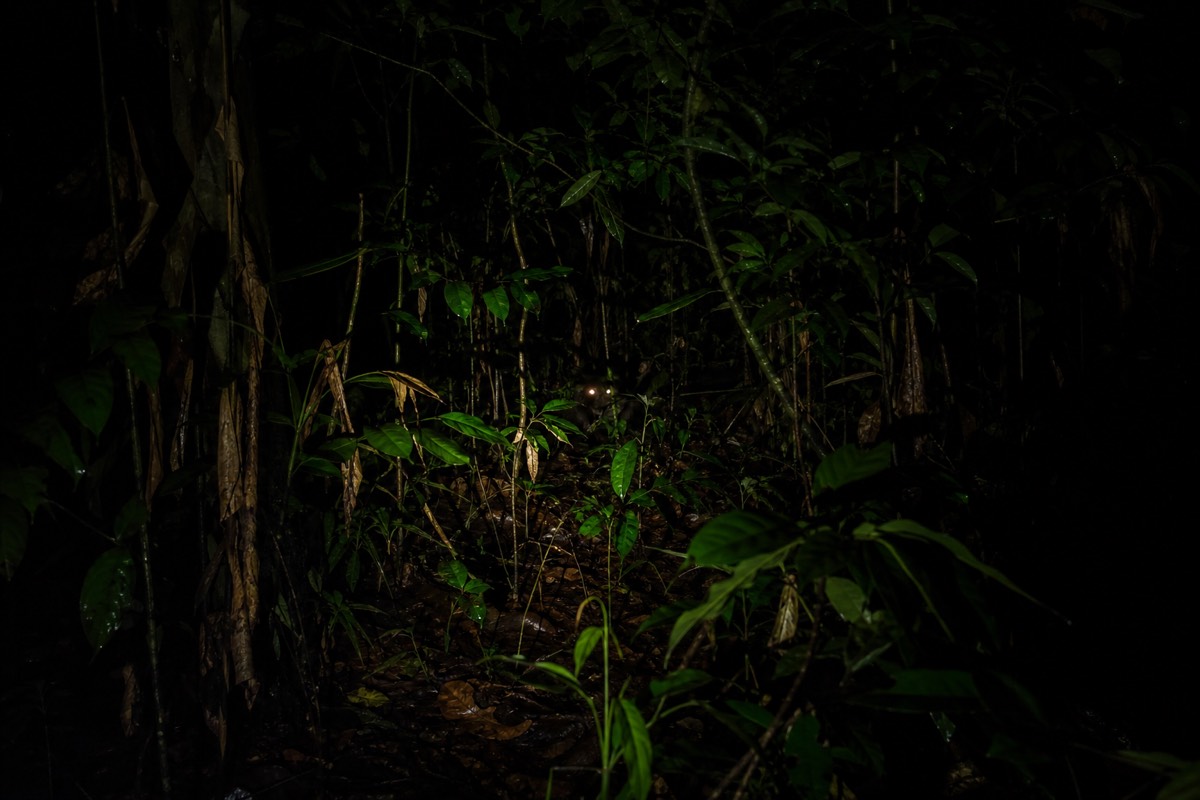
The important detail is the phrase guides use: they know where to look. Anacondas are ambush animals tied to water, so they turn up in predictable habitat, slow channels, lake margins, the edges of flooded forest, rather than being distributed randomly through the trees. A guide who works one river system daily has a mental map of the places worth checking, and that is what converts a theoretical presence into an actual sighting.
Most encounters are smaller than the internet suggests. A boa draped over a channel, or a young anaconda in the reeds picked out by a spotlight, is a far more typical find than the enormous specimens that dominate photographs. It is still the moment everyone talks about at breakfast.
Can you see jaguars near Iquitos?
Rarely, but it happens. No independently measured sighting rate is verified for this guide; encounters depend on the route, conditions and wild animals. Remote areas and the Pacaya-Samiria National Reserve carry the better odds.
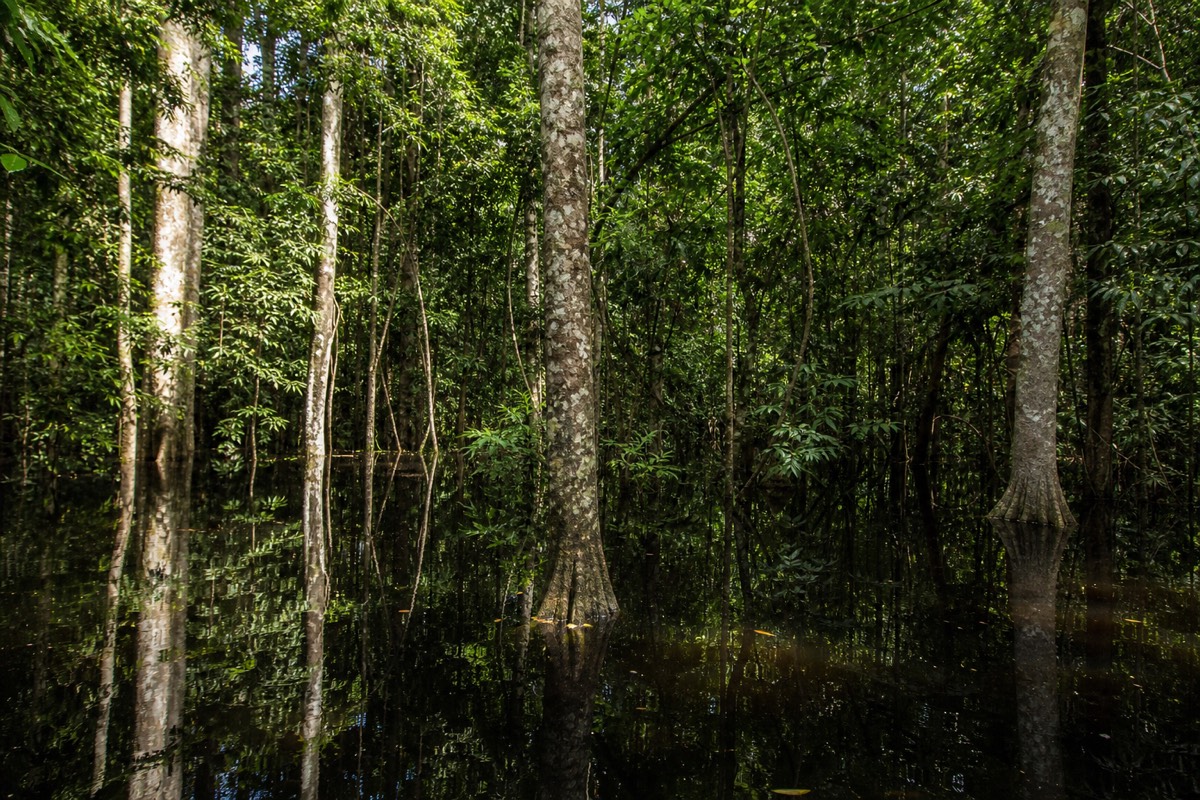
Read that number correctly. It means most visitors do not see a jaguar, and it also means a meaningful minority do. Anyone spending five or seven days deep in the forest with an experienced guide is playing a game they can win. On a two-day trip out of the city, effectively not.
What you find far more often is evidence. Jaguar prints in river mud are a standard part of guided walks, and guides read them the way other people read street signs: direction, freshness, size. Tracks are not a sighting, but they change how the forest feels for the rest of the walk.
| Animal | Sighting tier | Realistic odds | Where and when |
|---|---|---|---|
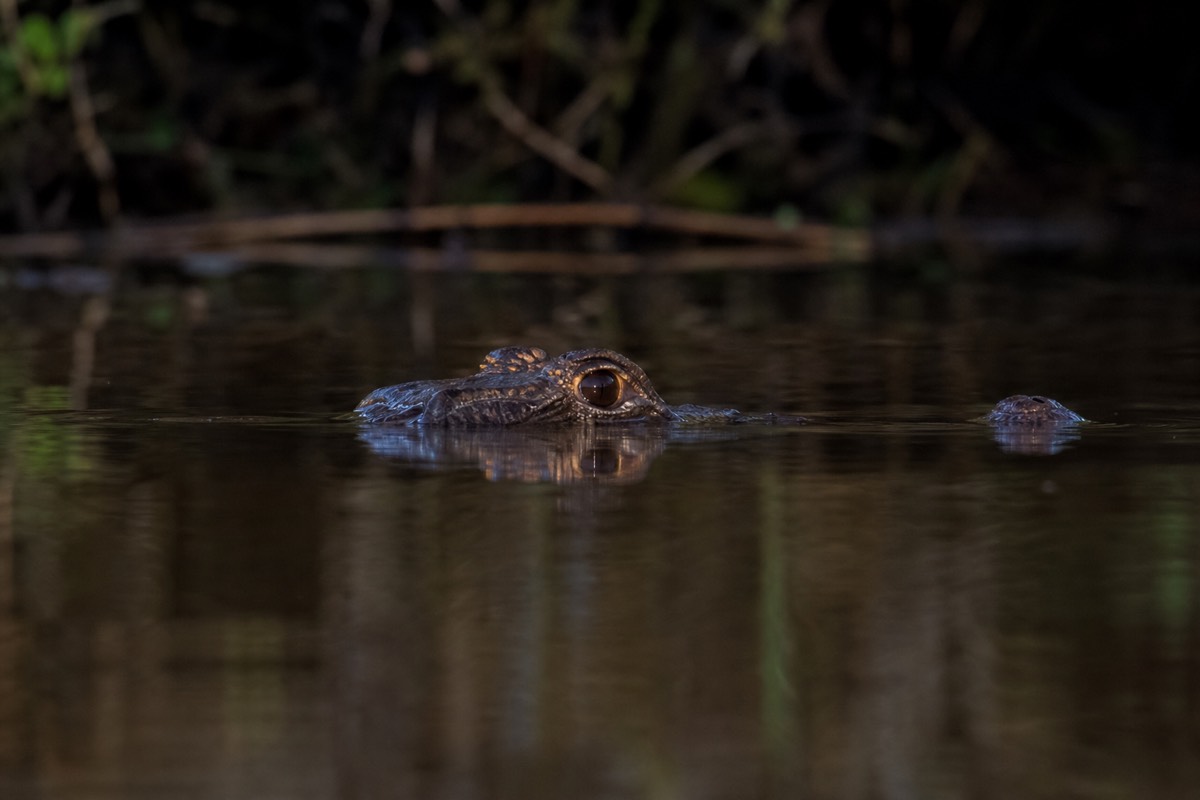
| Caimans (spectacled, black) | Very common | Not independently measured | Night boat trips and riverbanks, eyes reflecting red in a spotlight |
| Anacondas and boas | Common | Not independently measured | Night walks and water margins, at spots guides check deliberately |
| Poison dart frogs | Common | Not independently measured | Night walks, especially after rain |
| Jaguar | Special | Not independently measured | Remote areas and Pacaya-Samiria, dawn and dusk near water |
| Tapir | Special | Not independently measured | Night walks and clay licks, shy and nocturnal |
| Ocelot, margay, bush dog | Special | Elusive, night walks improve the odds | After dark, on foot, with a spotlight |
What actually improves your chances?
Four things, in order of impact: how many nights you stay, how remote your lodge is, whether your itinerary includes night activities, and how good your guide is. Season matters too, since low water from roughly June to October concentrates animals around permanent water and makes them easier to find.
Rare-species odds are a function of hours in the field, and hours in the field are a function of days booked. That is why how many days you need in the Iquitos Amazon matters more for these two animals than for anything else in the forest.
| Factor | Why it moves the odds |
|---|---|
| Longer stays of 4 to 7 days | More excursions, more remote water, more chances at animals that appear once a week rather than once a day |
| Remote lodges and reserve access | Pacaya-Samiria and other deep areas carry the higher jaguar probability |
| Night walks and night boat trips | The activity where snakes, frogs, caimans and nocturnal cats are actually found |
| Early morning and late afternoon excursions | Peak animal activity, including elusive species moving to water |
| Experienced local guides | They know current locations, calls and tracks, and which spots to check for snakes |
| Low water season, roughly June to October | Animals concentrate around shrinking water sources, so density of sightings rises |
Season is worth planning around here. The site's guide to the best time to visit the Iquitos Amazon covers the full trade: low water favours land trails and concentrated wildlife, while high water opens canoe routes through flooded forest that are closed the rest of the year.
Which tours give you the best shot?
The longer, more remote formats. No independently measured sighting rate is verified for this guide; encounters depend on the route, conditions and wild animals.
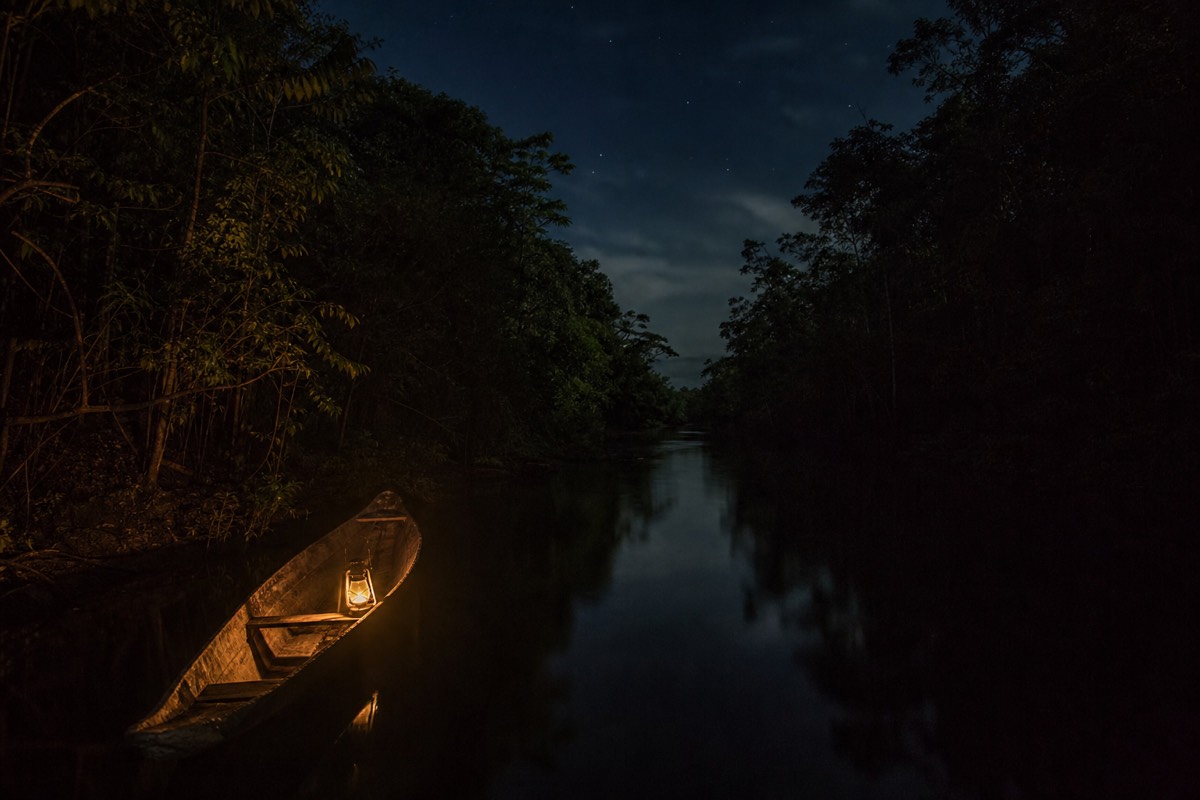
On this site, that points to the 5-day Jungle Explorer Tour at 360 dollars, rated 4.9 stars across 457 or more bookings, and the 7-day Amazon jungle adventure at Maniti Eco-Lodge at 1,129 dollars with a 5 star rating across 299 or more bookings. The 6-day camping expedition at 909 dollars is the most remote option in the range, trading lodge infrastructure for jungle camping, which means more nights spent where the animals are and fewer comforts while you are there.
If a week is not realistic, the 4-day, 3-night rainforest tour at 375 dollars, 4.8 stars across 468 or more bookings, is the practical middle ground: enough nights for several night walks without the commitment of a full expedition. Whatever you book, treat a jaguar as a bonus rather than an objective. The site's guide to Amazon night walks covers what those excursions are actually like, and the wildlife you'll actually see sets out the full probability picture across every species.
Are anacondas and jaguars dangerous to tourists?
Not in practice. Encounter risk is very low because no walk happens without a guide, and both animals avoid people. Jaguars in particular are so wary that seeing one at all is the difficult part, not staying safe near it.
The structure of a lodge tour keeps this simple. Guides lead every walk and boat trip, unguided wandering is not permitted, and guides carry protection on forest trails. Night walks follow fixed routes with the guide in front. Snakes are pointed out, photographed and left alone: the standing rule is look and do not touch, which applies as much to a tarantula on a trunk as to a boa on a branch.
The realistic risks on an Amazon trip are insects, sun and heat, not large predators. That ranking is set out properly in the site's guide on whether Iquitos is safe, which covers both the city and the jungle side of the question.
What will you definitely see instead?
A great deal. No independently measured sighting rate is verified for this guide; encounters depend on the route, conditions and wild animals. The Amazon around Iquitos delivers heavily even when the rare species stay hidden.
Night walks show why that matters. You go out hoping for a snake and come back having seen glowing caiman eyes across a black lake, tree frogs the size of a thumbnail, a tarantula in its burrow, and sleeping birds picked out by torchlight. The anaconda is the headline. The rest is why people book jungle tours from Iquitos in the first place.
So book for the forest, not for one animal. If a snake turns up on a night walk, that is a story. If a jaguar crosses a channel at dawn on day five, that is a story you tell for the rest of your life. Both are genuinely possible here, and neither is the reason to come.
When you are ready to move from planning to booking, browse the full set of Iquitos Amazon Tours and check availability.