Best Time to Visit the Iquitos Amazon: High-Water vs Low-Water Season
Iquitos has no summer and no winter. It has a river that climbs into the forest for half the year and falls back out of it for the other half, and that single fact decides whether your trip is spent paddling or walking.
For a paid experience alongside this guide, forest walks, a night boat outing and dolphin watching from a lodge base. Meals, guide and round-trip airport transfers included. Explore Muyuna: 3 days / 2 nights
Pricing note: figures in the original guide are illustrative historical examples, not current quotes. No independent wildlife sighting percentages or safety/welfare certification are verified. Use the dated provider options below to compare current details.
Ask when to visit most destinations and the answer comes back as a temperature. Iquitos does not work that way. The city sits at roughly 100 metres above sea level in Peru's northern Amazon basin, at the confluence of the Amazon, Nanay and Itaya rivers, and the climate is equatorial: hot and humid in every single month. What actually changes here is the water.
The river's annual flood cycle is the real season. Roughly December through May is high water. Roughly June through November is low water. Same lodges, same guides, same stretch of forest, and two genuinely different trips depending on which one you land in.
Quick answer: if wildlife is your priority, come in low water, June to November, with July to September as the strongest window. Falling rivers pull animals in around fewer water sources and every trail is walkable. If you want flooded forest, canoe channels that only exist for part of the year and far fewer other visitors, come in high water, December to May. No independently measured sighting rate is verified for this guide; encounters depend on the route, conditions and wild animals.
Booking choice: Muyuna: 3 days / 2 nights. Forest walks, a night boat outing and dolphin watching from a lodge base. Meals, guide and round-trip airport transfers included.
Discover Muyuna: 3 days / 2 nightsWhat the season actually changes near Iquitos
Wildlife sightings vary with the route, water level and animal behaviour. No independently measured sighting percentage is verified for this guide.
Sighting ranges are reported success rates on guided tours near Iquitos, not guarantees; the flood cycle shifts by a few weeks from year to year.
What is the best time to visit Iquitos?
For most visitors the best time to visit Iquitos is the low-water season, June to November, and July to September above all. Rivers drop, wildlife gathers around the water that is left, forest trails stay walkable and skies are clearer. High water, December to May, wins if you want flooded-forest canoeing, breeding birds and thin crowds.
That is the honest headline, but it hides how narrow the gap really is. Both seasons deliver the animals most people fly here for. Monkeys, macaws, toucans, caimans and pink river dolphins are resident year round and turn up on well-run trips in almost any month. What shifts is how you reach them, how concentrated they are, and how much of your day is spent in a canoe versus on your feet.
There is also a wrinkle worth knowing before you book. The site's own geography notes describe the flood cycle as high water December to May and low water June to November, while many operators and lodges talk about a "dry season" running May to October. Both descriptions are right, they are just measuring different things. One tracks the river gauge, the other tracks rainfall. May and June sit in the overlap, which is why those two months get described as high season by one lodge and shoulder season by the next one down the river.
Every tour on this site runs on both sides of the cycle. The 2-day, 3-day and 4-day lodge trips operate year round, and so do the day trips out of the city. Season changes the texture of the experience rather than whether it happens at all.
What does high water actually mean on the ground?
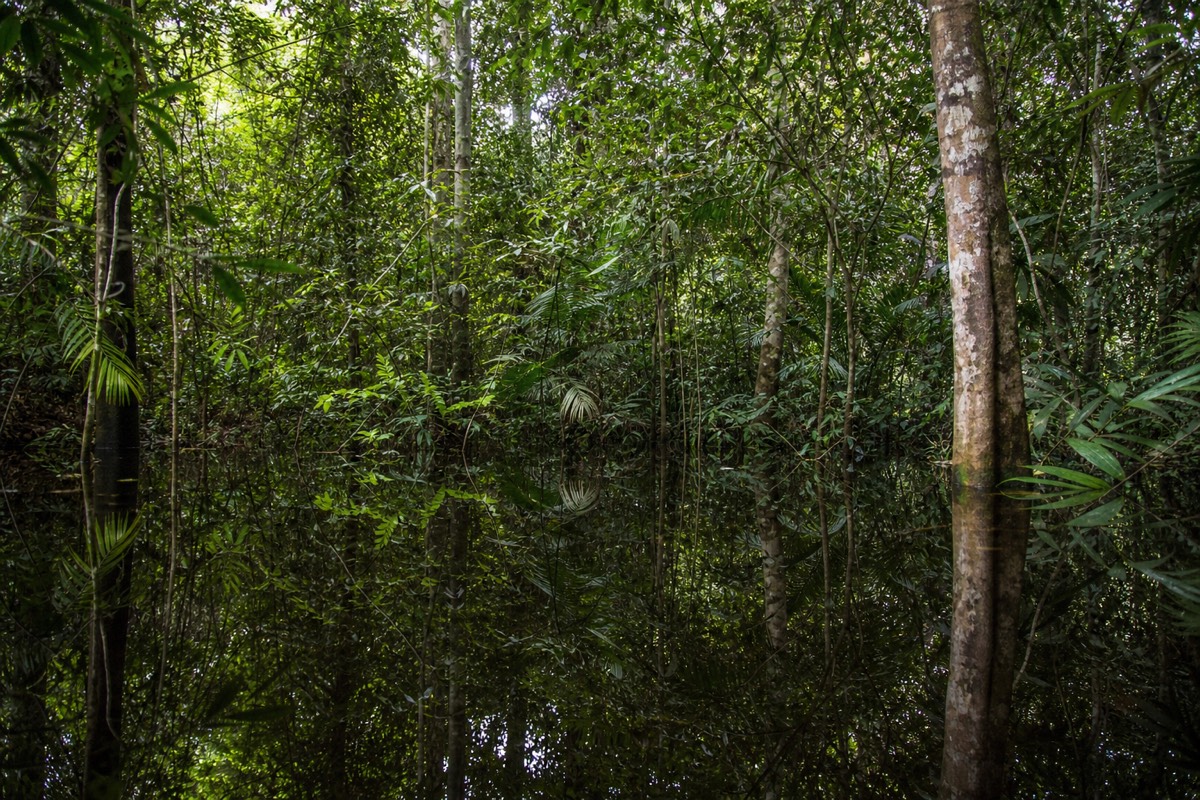
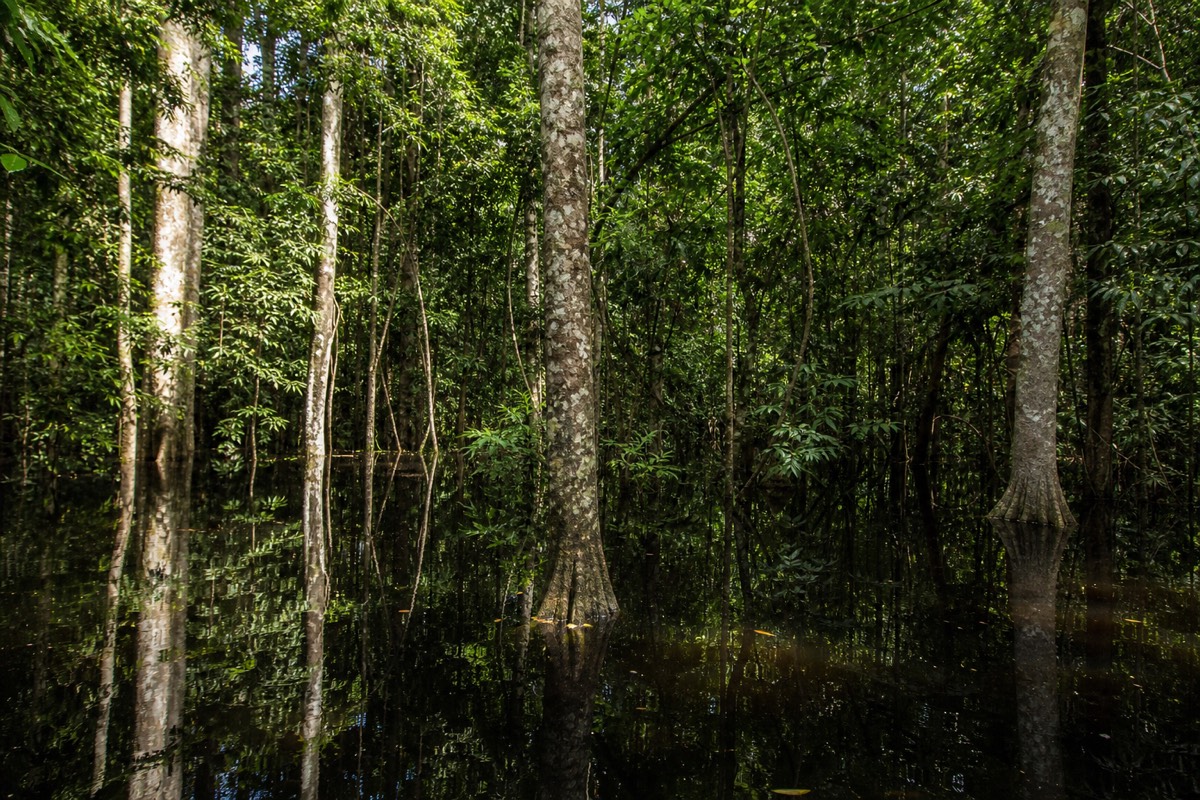
High water means the river climbs into the forest. Large areas of what is walkable trail in September sit under water in March, so the paddle replaces the boot. You move by dugout canoe between tree trunks, at eye level with the mid-canopy, reaching pockets of forest that are simply unreachable on foot at any other time.
This is the version of the Amazon most people picture from documentaries and never actually experience, because most visitors come in the drier months. Flooded forest, or igapo, is its own habitat. Fish swim through the understory. Sloths and monkeys are pushed higher and closer to the canoe routes because the ground floor of their world has vanished. Guides who know the flooded channels can drift you silently under a troop of squirrel monkeys with no engine noise at all.
The trade-offs are real. Land trails shrink or disappear, so if you had your heart set on long jungle hikes, this is the wrong window. Rain arrives most afternoons and it arrives hard. Daytime heat sits around 30 to 36°C with heavier humidity, and mosquito pressure is noticeably higher than in the low months. Lodges built for the flood have raised walkways and it all works fine, but expect wet feet as a baseline condition rather than an accident.
The compensations go beyond scenery. Bird breeding colonies are reported at their most active around February and March, and migratory arrivals peak around November and December. No independently measured sighting rate is verified for this guide; encounters depend on the route, conditions and wild animals. That discount applies to lodge and package rates generally; the listed prices on the tours here are what each operator publishes, so always check the live listing for the current figure.
What changes in the low-water season?
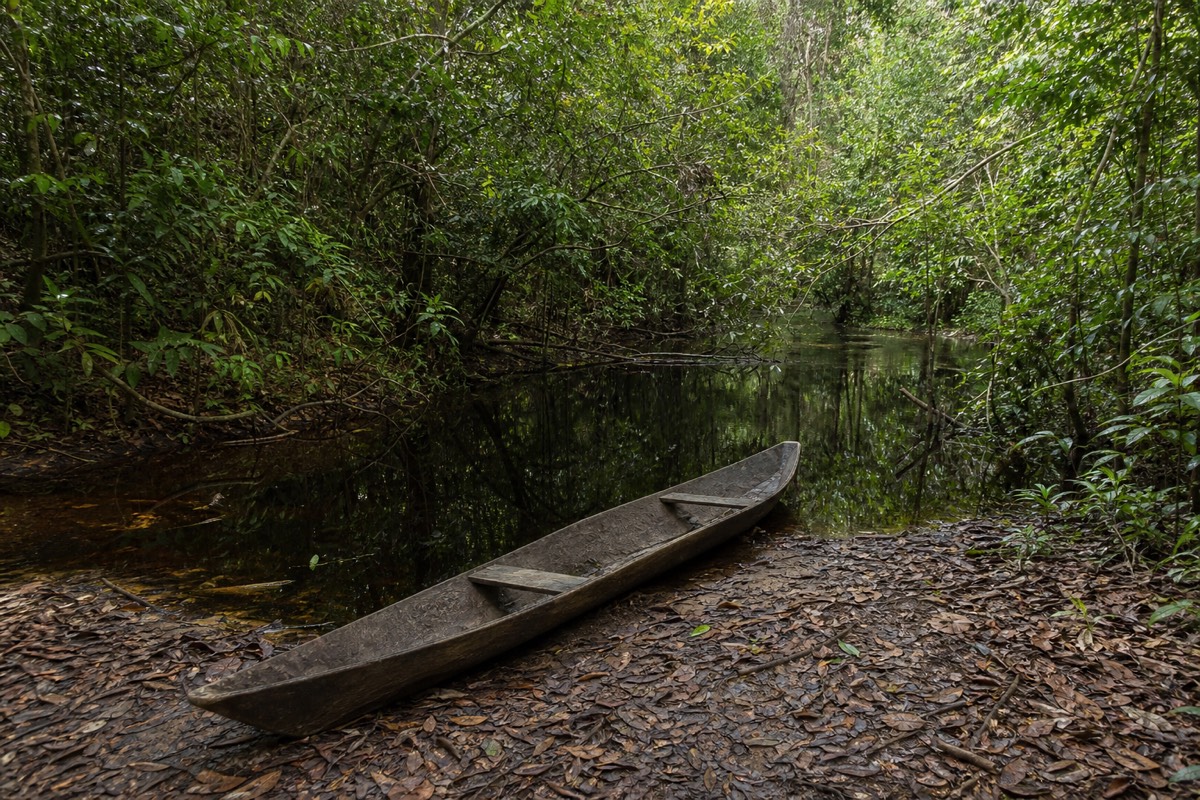
Low water strips the river back. Channels narrow, sandbanks and beaches appear, oxbow lakes shrink, and animals that were spread across thousands of square kilometres of flooded forest are pushed toward the water that remains. That concentration is the single biggest reason June to November posts the highest wildlife success rates.
Walk-based activity comes back in full. Trails that were under a metre of water in April are firm ground by August, which opens up longer hikes, more terra firme forest, more chances to work a trail slowly with a guide who is reading tracks rather than paddling. Jaguar and tapir prints in soft river mud are a low-water thing. So are the exposed banks where capybara graze in the open.
Macaw clay licks, the colpas, are at their most reliable in these months, with hundreds of parrots and macaws reported at the good sites during the 7am to 9am peak. Pink river dolphins get easier too, because the same channels that hid them under a flooded canopy now funnel them into visible main-river routes. No independently measured sighting rate is verified for this guide; encounters depend on the route, conditions and wild animals.
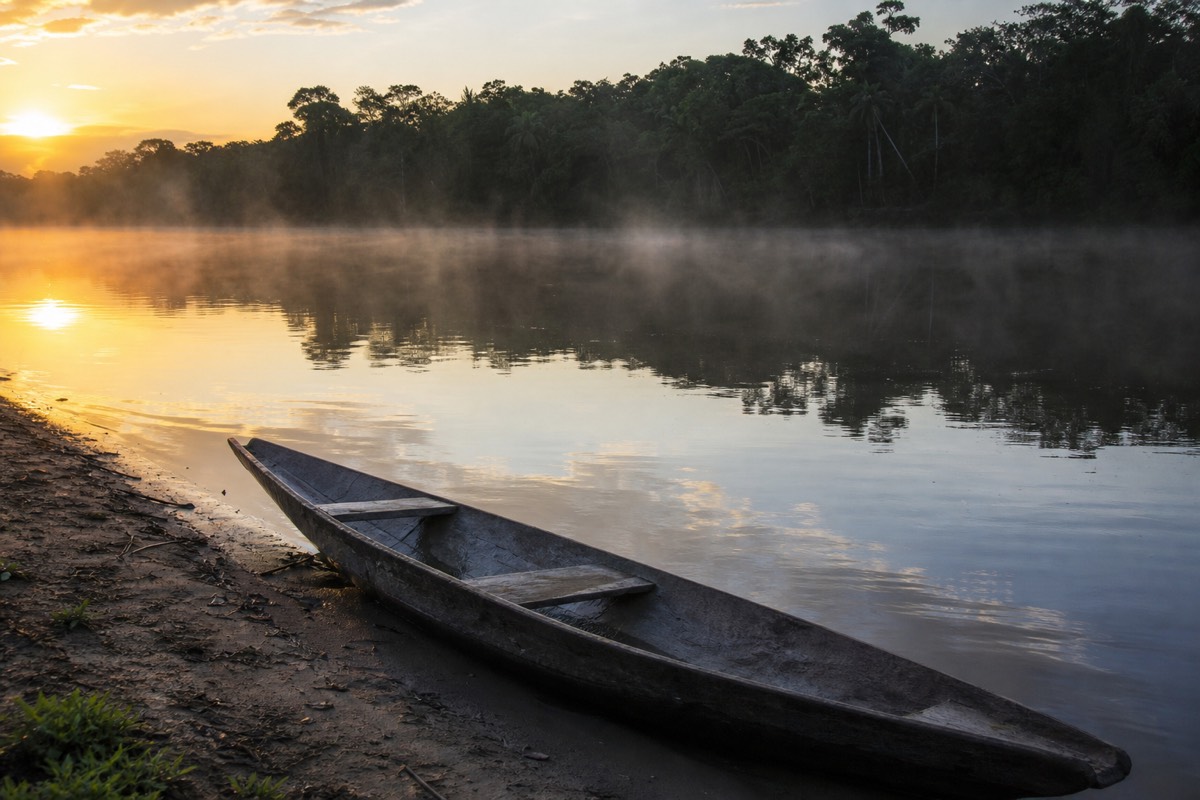
Weather is kinder for long days out: roughly 28 to 34°C, lower humidity, calmer water, clearer skies for photography. This is also the region's high season, so flights fill and lodges book out earlier. It is still uncrowded compared with almost any African safari destination, but you will share a clay lick with another boat in August in a way you would not in February.
High water vs low water: how do the two seasons compare?
The clean way to decide is to stop asking which season is better and ask which trade you prefer: canoe access to a flooded forest almost nobody sees, or the walkable, concentrated, high-sighting version of the same reserve. The table below lays out every dimension that actually differs.
| What changes | High water (Dec to May) | Low water (Jun to Nov) |
|---|---|---|
| River level | Highest of the year, large areas of forest floor submerged | Lowest of the year, channels shrink and sandbanks appear |
| How you move | Boat and dugout canoe nearly everywhere, including between the trees | Boat to a landing, then walking on firm trails |
| Jungle trails | Many flooded or deep mud, walking is limited | Fully open, the longest hikes of the year are possible |
| Wildlife spotting | Good, but animals are dispersed across more habitat | Highest success rates, animals concentrate at fewer water points |
| Pink river dolphins | Around 60 to 85 percent of well-run trips | Around 80 to 95 percent, strongest July to September |
| Macaw clay licks | Active, though access can depend on water levels | Very active, hundreds of parrots and macaws reported at good sites |
| Typical daytime heat | Around 30 to 36°C, higher humidity, frequent afternoon showers | Around 28 to 34°C, lower humidity, calmer rivers |
| Insect pressure | Heavier mosquito activity, repellent matters more | Present year round, peaking at dawn and dusk |
| Visitor numbers | Very low, easiest lodge availability | The region's high season, still uncrowded by safari standards |
| Lodge pricing | Commonly discounted, wet-season rates reported 30 to 50 percent below high season | Full high-season rates, book further ahead |
| Flights from Lima | Easier to find late seats | Book ahead, June to October is the busy stretch |
One row deserves a caveat. The 30 to 50 percent wet-season discount is a widely reported pattern for lodge and package rates across the region, not a promise attached to any specific tour. Operator-published prices on individual listings move for their own reasons, so treat it as a reason to check rather than a number to budget against.
What is the best month to go to the Amazon rainforest?
If you want one month, take August. It sits in the middle of the driest, clearest stretch of the year, water is close to its annual low, trails are open and clay licks are busy. If you want the flooded forest instead, take March, when water is near its top and bird breeding colonies are reported at their most active.
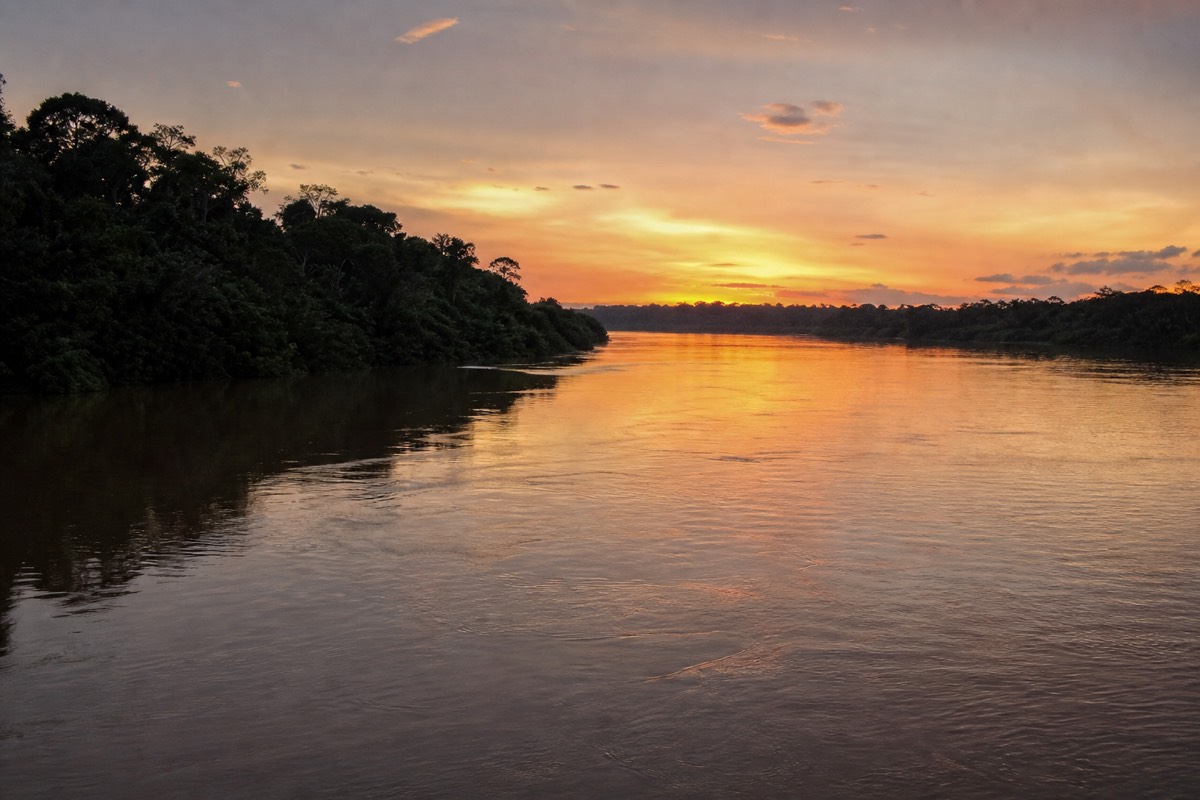
Month by month, here is what the flood cycle produces. Note that the Amazon does not run to a fixed calendar: the timing of the peak and the trough shifts by a few weeks from year to year, and a wet year can push high water later into June.
| Month | Water state | What stands out | Best suited to |
|---|---|---|---|
| January | High, rising | Deep green season, rain most afternoons | Flooded-forest canoeing, quiet lodges |
| February | High | Bird breeding colonies reported at their most active | Birdwatchers, photographers who like moody light |
| March | High | Breeding activity continues, water near its top | Canoe routes through forest that is dry ground by September |
| April | High, at or near peak | Maximum flooded-forest extent in most years | The deepest paddling access of the year |
| May | High, starting to fall | Overlap month, many operators call it the start of the dry season | Travellers who want a bit of both, first trails reopening |
| June | Low, falling fast | Water dropping, trails opening, dolphin sightings improving | A balanced first visit |
| July | Low | Start of the driest, clearest stretch of the year | Wildlife, dolphins, clay licks |
| August | Low | Middle of the peak window, reliable conditions | Long hikes, photography, jungle camping |
| September | Low, near the annual bottom | End of the driest window, animals most concentrated | Serious wildlife watchers |
| October | Low | Still low, rain starting to return in some years | Wildlife with slightly fewer boats around |
| November | Low, starting to rise | Migratory arrivals reported at their peak | Birders, shoulder pricing |
| December | High, rising | Forest greening up, water climbing back into the trees | Fewer visitors, the start of the flooded season |
Two months get unfairly overlooked. June is often written off as shoulder season and it should not be: water is falling quickly, trails are opening, and dolphin sightings are already improving while lodge availability is still easy. November is the mirror image, with migratory arrivals reported at their peak and prices starting to soften as the water comes back up.
Which wildlife is season-dependent and which is not?
Most of the Amazon's headline animals are resident and reliable in any month. Season shifts the odds at the margins: it barely moves monkeys, macaws and caimans, it moves dolphins and otters noticeably, and it moves the genuinely rare species, jaguar and tapir and harpy eagle, mostly through how long you stay rather than when you come.
| Wildlife | Typical likelihood on a well-run tour | Season notes |
|---|---|---|
| Monkeys (squirrel, capuchin, howler, tamarin, woolly) | Not independently measured | Year round, loudest and most active at dawn |
| Macaws, parrots, toucans | Not independently measured | Clay licks at their busiest in low water |
| Caimans | Not independently measured | Night boat trips work in any month |
| Capybara | Not independently measured | Easier to see on exposed low-water banks |
| Pink river dolphins | Not independently measured | Strongest July to September |
| Sloths | Not independently measured | Year round, spotted on walks and from boats |
| Giant river otters | Not independently measured | Oxbow lakes, better when water is low and lakes shrink |
| River turtles | Not independently measured | Basking on logs and low-water beaches |
| Anacondas and boas | Not independently measured | Night walks and water margins, guides know the spots |
| Poison dart frogs | Not independently measured | Night walks, wetter months are good for amphibians |
| Tapir, giant anteater, harpy eagle | Not independently measured | Remote areas, longer stays, experienced guides |
| Jaguar | Not independently measured | Rare in any season, tracks are more common than sightings |
The pink river dolphin deserves its own note, because it is the animal most people time their trip around. The waters near Iquitos hold one of the highest densities of the Amazon river dolphin anywhere in the basin, a species monitored by conservation organisations including the World Wildlife Fund. They are resident all year, they are curious about boats, and in low water they are funnelled into main channels and lagoons where pods of five to fifteen or more per trip are commonly reported. In high water they scatter into the flooded forest and you work harder for the same encounter.
If your list runs deeper than dolphins, the season matters less than the calendar you give yourself. That is covered properly in the guide to how many days you need in the Iquitos Amazon, but the short version is that rare-species odds respond to days in the field far more than to months on the calendar.
How bad are the mosquitoes, and does the season change that?
Mosquitoes and sandflies are present every month of the year near Iquitos, so nobody gets a free pass. The wet season is meaningfully worse: more standing water, more breeding habitat, more pressure through the day. In low water the bugs concentrate around dawn and dusk, which happens to be exactly when you want to be outside.
The practical answer is the same in both seasons and it is not complicated. Long sleeves and long trousers in neutral, earthy colours. A repellent with 30 to 50 percent DEET, applied to skin and clothing. Trousers tucked into socks on trail walks. Lodges provide nets over beds and the interiors are generally fine; it is the dusk hour on an open deck that catches people out.
Blackwater tributaries typically carry fewer mosquitoes than sediment-rich whitewater rivers, which is one reason lodges on the Nanay and similar blackwater systems can feel easier in the evening than a camp on the main Amazon channel. Ask your operator which river system their lodge sits on if insects are a serious concern for you.
The wet-season penalty is real but it is rarely trip-ruining. What to pack changes barely at all between seasons, mostly in the quantity of dry clothing and rain gear you bring rather than the categories.
Does the season change what you pack?
The core list is identical year round: long sleeves, long trousers, quick-dry fabrics, closed-toe shoes with grip, high-DEET repellent, high-SPF sunscreen, a dry bag, a headlamp and binoculars. Season changes the ratio. High water means more rain gear and more spare dry clothing. Low water means an extra layer for cooler evenings.
| Item | High water (Dec to May) | Low water (Jun to Nov) |
|---|---|---|
| Long-sleeve shirts | 5 to 6, everything stays damp longer | 4 to 5, plus one warmer layer for evenings |
| Long trousers | 4 to 6 quick-dry pairs, cotton dries too slowly | 4 to 5 quick-dry pairs |
| Rain protection | Poncho plus a light rain jacket, non-negotiable | Light rain jacket, showers still happen |
| Footwear | Rubber boots matter most, lodges usually lend them | Lightweight hiking shoes or trail runners come into their own |
| Repellent | Bring extra, 30 to 50 percent DEET | Same strength, focus on dawn and dusk |
| Sun protection | SPF 50 plus, glare off water is fierce even under cloud | SPF 50 plus, wide-brim hat, polarised sunglasses |
| Dry bag | Essential, spray plus rain on every transfer | Essential, spray on speedboat transfers |
| Electronics | Power bank plus extra waterproofing for camera gear | Power bank, charging at remote lodges is limited |
| Luggage | Soft duffel, small planes and boats have weight limits | Soft duffel, same limits |
Two small things that people forget in both seasons: cash in small US dollar bills for guide and staff tips, commonly around 10 to 20 US dollars per day in total, and binoculars. Binoculars are the difference between a guide saying "sloth, third fork, forty metres" and you actually seeing it. Full detail on what to pack sits in its own guide.
Which season suits which activity?
Nearly every activity runs in both seasons. Only two swing hard: extended jungle trail walking is a low-water pursuit, and paddling through standing flooded forest is a high-water one. Everything else, from night walks to piranha fishing to community visits, works all year with mild seasonal shading.
| Activity | Better season | Why |
|---|---|---|
| Canoe through flooded forest | High water | The habitat only exists when the river is in the trees |
| Long jungle trail walks | Low water | Trails that are submerged in April are firm ground by August |
| Pink river dolphin watching | Low water | Dolphins are funnelled into main channels and lagoons |
| Macaw clay licks | Low water | Peak colpa activity, hundreds of birds at good sites |
| Giant river otter spotting | Low water | Oxbow lakes shrink and otters become easier to locate |
| Bird breeding colonies | High water | Colonies reported most active around February and March |
| Migratory bird arrivals | High water shoulder | Peak arrivals reported around November and December |
| Amazon night walks | Either | Frogs, tarantulas and snakes are out year round, amphibians love the wet |
| Night caiman spotting by boat | Either | Eyeshine works in any water level, low water shortens the search |
| Piranha fishing | Either, low water slightly better | The same shrinking-lake effect that concentrates wildlife concentrates fish |
| Jungle camping | Low water | Dry ground for camps and firm trails, the 6-day camping expedition leans on this |
| Canopy towers and walkways | Either | Height beats water level, clearer low-water skies help photography |
| Community visits | Either | Villages are lived in year round, high water means arriving by canoe |
The Pacaya-Samiria National Reserve, Peru's largest protected area and managed by SERNANP, is the clearest case of the split. In high water its channels open up and you can push deep into the reserve by boat. In low water you swap that reach for far better odds on the animals you find. Neither is the lesser version.
Does the time of day matter more than the month?
Yes, and it is not close. Choosing a dawn departure over a mid-morning one changes your wildlife odds more than choosing August over March. Animals are active from first light to around 9am, then retreat into shade until late afternoon. Book the earliest excursion your lodge offers, in any month.
| Time window | What is happening | Worth going out? |
|---|---|---|
| 5:30am to 9:00am | Howler monkeys calling, dolphins surfacing, otters hunting, macaws at clay licks, cool air and mirror-flat water | The best window of the day, without exception |
| 9:00am to 10:00am | Activity tailing off, light getting harsh, more boats on the water | Still productive, especially on trails under canopy |
| 10:00am to 3:00pm | Heat and humidity peak, animals retreat to shade, river chop from other boats | The weakest window, better used for the lodge, a meal and a nap |
| 3:00pm to 6:00pm | Animals return to water to drink and feed, birds roosting, golden light | Second-best window, most boats are already heading home |
| After dark | Caiman eyeshine, frogs, tarantulas, snakes, occasional ocelot or tapir | A completely different set of species, do at least one |
This is why lodge-based trips beat day trips on wildlife regardless of season. A day trip from the city cannot put you on the water at 5:30am, and it certainly cannot put you on a trail with a spotlight at 8pm. Both of those windows are where the Amazon actually shows up. A guided tour with an overnight buys you access to hours a day visitor never gets.
How far ahead should you book for each season?
Book June to October at least two to three months out. That window is the region's high season, flights from Lima fill, and the best-reviewed lodge tours sell their limited beds first. December to May is far more forgiving, and you can often put a trip together a few weeks ahead without losing much choice.
The constraint that catches people is not the lodge, it is the plane. There is no road into Iquitos, so every visitor arrives through the same airport on the same handful of daily flights from Lima. Fares run roughly 80 to 250 US dollars one way and climb as seats sell, which is a strong argument for locking the flight before the tour rather than after. The full detail on how to get to Iquitos is worth reading before you fix dates.
| Season | Visitor level | Book flights | Book the tour | Pricing pressure |
|---|---|---|---|---|
| December to February | Very low | 3 to 6 weeks ahead is usually fine | 2 to 4 weeks ahead | Softest of the year, wet-season discounts common |
| March to May | Low | 4 to 8 weeks ahead | 3 to 6 weeks ahead | Still soft, Easter week is the exception |
| June to August | Highest | 2 to 4 months ahead | 6 to 12 weeks ahead | Full rates, best tours book out first |
| September to October | High | 6 to 10 weeks ahead | 4 to 8 weeks ahead | Full rates, easing through October |
| November | Moderate | 4 to 6 weeks ahead | 3 to 5 weeks ahead | Starting to soften as water rises |
Those windows are planning allowances built on the seasonal pattern rather than fixed rules, and a public holiday in Peru will tighten any of them. If your dates are immovable, book the flight first and shape the tour around it.
Is there a bad time to visit the Iquitos Amazon?
No. There is no month when the forest closes, no month when the dolphins leave and no month when reputable operators stop running. There is only a different trip. The question is not whether to come but which version you want, and that answer depends entirely on whether you would rather walk or paddle.
The strongest argument for the low-water months is straightforward: higher odds, easier logistics, better weather for long days outside. The strongest argument for high water is that the flooded forest is one of the strangest habitats on earth and most visitors never see it, plus you get quieter lodges and softer pricing. If you have no constraints at all, book July to September. If your constraint is money or crowds, book December to March and lose very little.
What genuinely does change your experience, far more than the month, is the length of your trip. No independently measured sighting rate is verified for this guide; encounters depend on the route, conditions and wild animals. A single day trip gives you a boat ride and a short walk. The real rhythm of the place, the dawn chorus, the night sounds, a canoe slipping through flooded forest, needs at least one overnight and preferably several.
Whichever window you choose, book the flight early for June to October and check how much an Iquitos Amazon tour costs before you fix your dates, because a shift of a few weeks can change both availability and price. The range of Iquitos Amazon tours running from the city covers everything from a 2-hour piranha fishing trip to a 7-day expedition, and all of them operate on both sides of the flood.