Pink River Dolphins in the Peruvian Amazon: Where, When, and How to See Them
The rivers around Iquitos hold one of the highest densities of pink river dolphins in the Amazon basin, and the animals are resident year-round rather than seasonal. Here are the real sighting odds by month, the hours that matter, the tours that put you on dolphin water, and a straight answer on the swimming question.
For a paid experience alongside this guide, explore the Yanayacu-Pucate by boat, with forest walks, birdwatching and night excursions. Camp accommodation, meals and reserve entry included. Explore Pacaya-Samiria: 4 days / 3 nights
Pricing note: figures in the original guide are illustrative historical examples, not current quotes. No independent wildlife sighting percentages or safety/welfare certification are verified. Use the dated provider options below to compare current details.
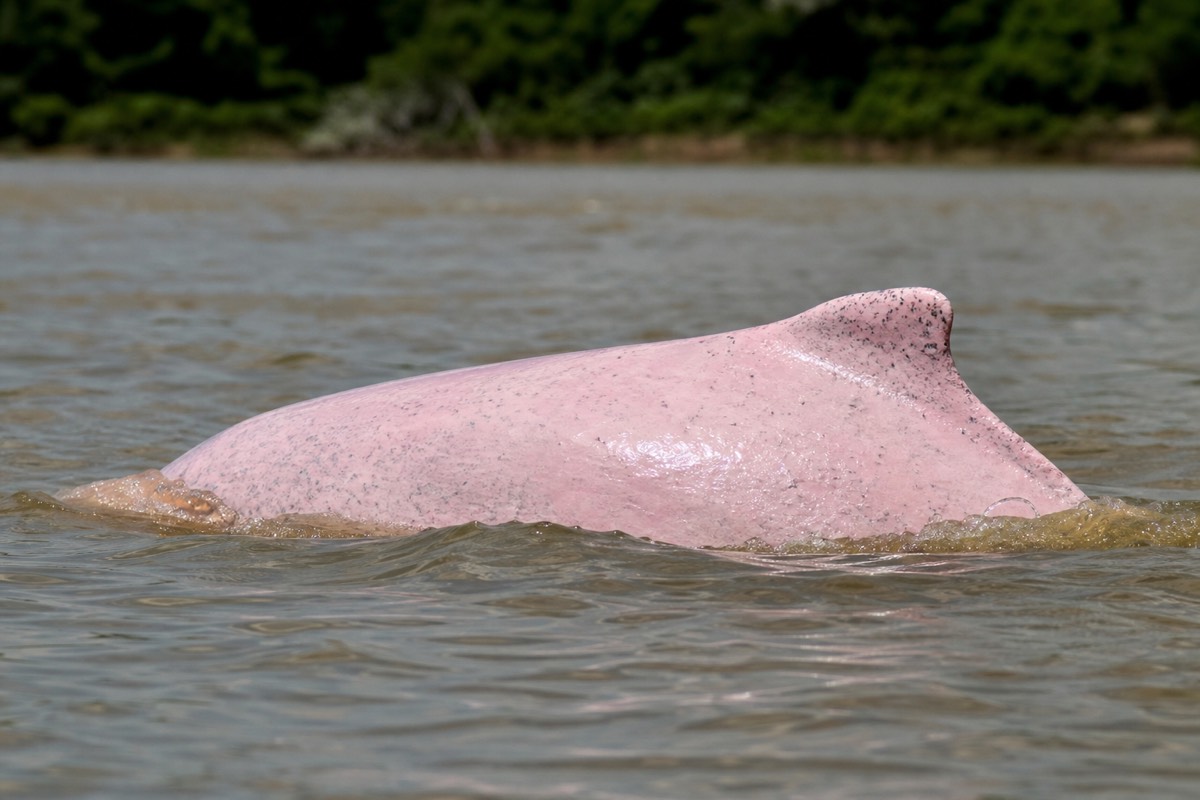
The first one usually arrives as a sound rather than a sight. A short wet exhalation somewhere off the bow, then a slab of pale pink back rolling through brown water, gone before anyone gets a camera up. Botos do not perform. They surface, breathe, and sink, and the whole event lasts about a second and a half.
What makes the rivers around Iquitos unusual is how often that second and a half happens. This stretch of the Peruvian Amazon holds one of the highest densities of pink river dolphins in the entire basin, and they are resident all year rather than seasonal visitors. No independently measured sighting rate is verified for this guide; encounters depend on the route, conditions and wild animals.
No independently measured sighting rate is verified for this guide; encounters depend on the route, conditions and wild animals. The dolphins live here year-round. What changes with the season is how spread out they are, and what changes your personal odds most is going out at dawn with a guide who knows where the pods are feeding this week.
Booking choice: Pacaya-Samiria: 4 days / 3 nights. Explore the Yanayacu-Pucate by boat, with forest walks, birdwatching and night excursions. Camp accommodation, meals and reserve entry included.
Discover Pacaya-Samiria: 4 days / 3 nightsYour realistic odds of a dolphin sighting, month by month
Wildlife sightings vary with the route, water level and animal behaviour. No independently measured sighting percentage is verified for this guide.
Ranges are the published sighting rates for well-run tours around Iquitos, not a guarantee; wild animals in a river system this large never come with one.
What exactly is a pink river dolphin?
The boto, or Amazon river dolphin, is a freshwater dolphin that lives permanently in the rivers, channels and flooded forests of the Amazon basin. Adults commonly show pink colouring that gets more pronounced with age, and unlike ocean dolphins they have a flexible neck that lets them turn their heads.
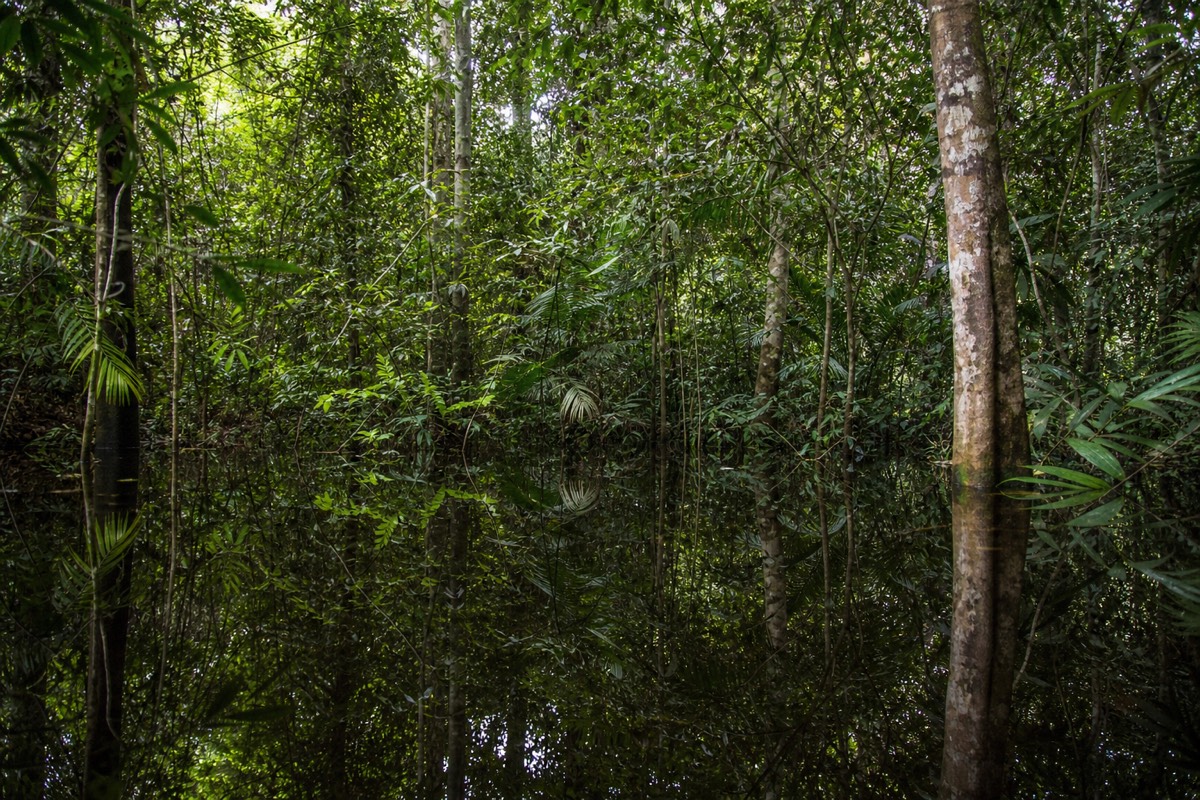
That flexibility is a specialisation for a strange habitat. In high water these animals swim between the trunks of a flooded forest, and a body that can bend around obstacles works better there than the rigid torpedo shape of a marine dolphin. They also have poor eyesight and superb echolocation, because visibility in a silt-loaded river is measured in centimetres.
The pink itself is not a single simple story. Older males tend to be the pinkest animals in a pod, and the colour is commonly attributed to scar tissue from rough play alongside blood vessels sitting close to the skin surface. Younger animals often look grey, which catches out first-time visitors expecting the postcard colour on every sighting.
They are not doing well as a species. Conservation bodies including the World Wildlife Fund classify the Amazon river dolphin as endangered, with river traffic, fishing gear, dam construction and mercury pollution from gold mining all named as pressures. That context matters when you choose how to see them, and it is the reason the ethics question further down this page is not an afterthought.
Why does the Amazon near Iquitos have so many?
Iquitos sits at the confluence of the Amazon, Nanay and Itaya rivers, in a region that also feeds into the Yarapa and Marañón systems. That density of large, connected, slow-moving water is prime boto habitat, and it produces one of the highest concentrations of the species in the whole basin.
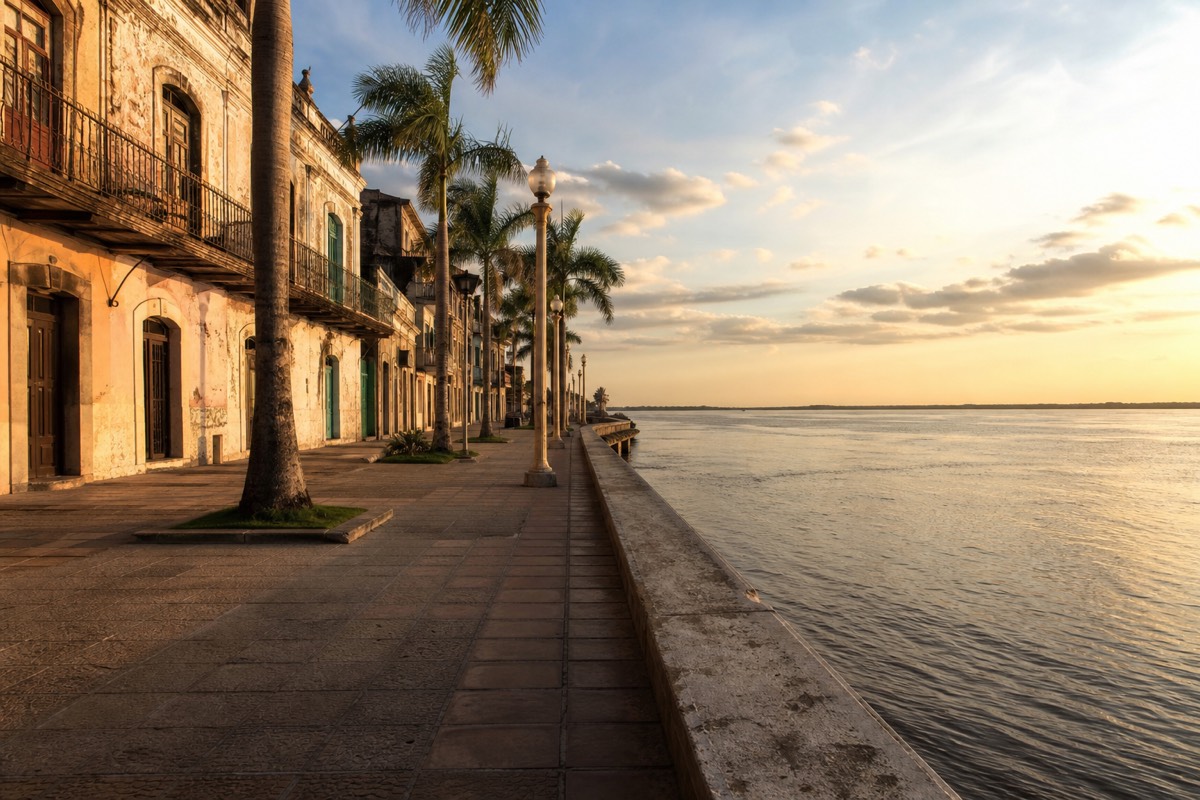
Confluences matter more than open river. Where two rivers meet, currents push fish into predictable seams and dolphins learn to hunt those seams. Guides working out of Iquitos know these spots the way a fishing captain knows a reef, which is why a good boatman will cut the engine at a junction and simply wait rather than keep motoring around looking.
The other factor is that these are working rivers with generations of coexistence behind them. Botos here are used to boats and frequently approach them out of curiosity, which is not the case everywhere in the Amazon. That habituation is what turns a rare wildlife encounter into something close to a daily event on multi-day trips.
Trips heading toward the Pacaya-Samiria National Reserve, Peru's largest protected area, add another layer, because the reserve's lakes and channels carry both botos and the smaller grey river dolphin. SERNANP, the official reserve authority, manages access to that area, and any tour that enters it should have that side handled for you.
What are your realistic odds of seeing one?
No independently measured sighting rate is verified for this guide; encounters depend on the route, conditions and wild animals.
| Season | Months | Chance of a sighting | What the river is doing |
|---|---|---|---|
| Peak dry season | July to September | Not independently measured | Lowest water concentrates dolphins into main channels and lagoons |
| Low water, wider window | May to October | Not independently measured | Water dropping, animals gathering, easy boat access |
| High water | November to April | Not independently measured | Flooded forest spreads dolphins out across a much larger area |
| Conservative year-round figure | Any month | Not independently measured | The floor a careful operator will quote you rather than the ceiling |
The reason the dry season is better has nothing to do with the animals being more numerous. There is simply less water for them to be in. As channels shrink, dolphins concentrate where the fish concentrate, and both end up in fewer, smaller, more findable places. In high water the same population is distributed through a flooded forest that may be several times larger.
Surface behaviour follows the same logic. In low water you see more of the spectacular stuff, the jumping and the spyhopping where an animal lifts its head clear of the water, because pods are hunting cooperatively in tighter spaces. Our guide to the best time to visit the Iquitos Amazon covers what else moves with the flood cycle.
What time of day should you go out?
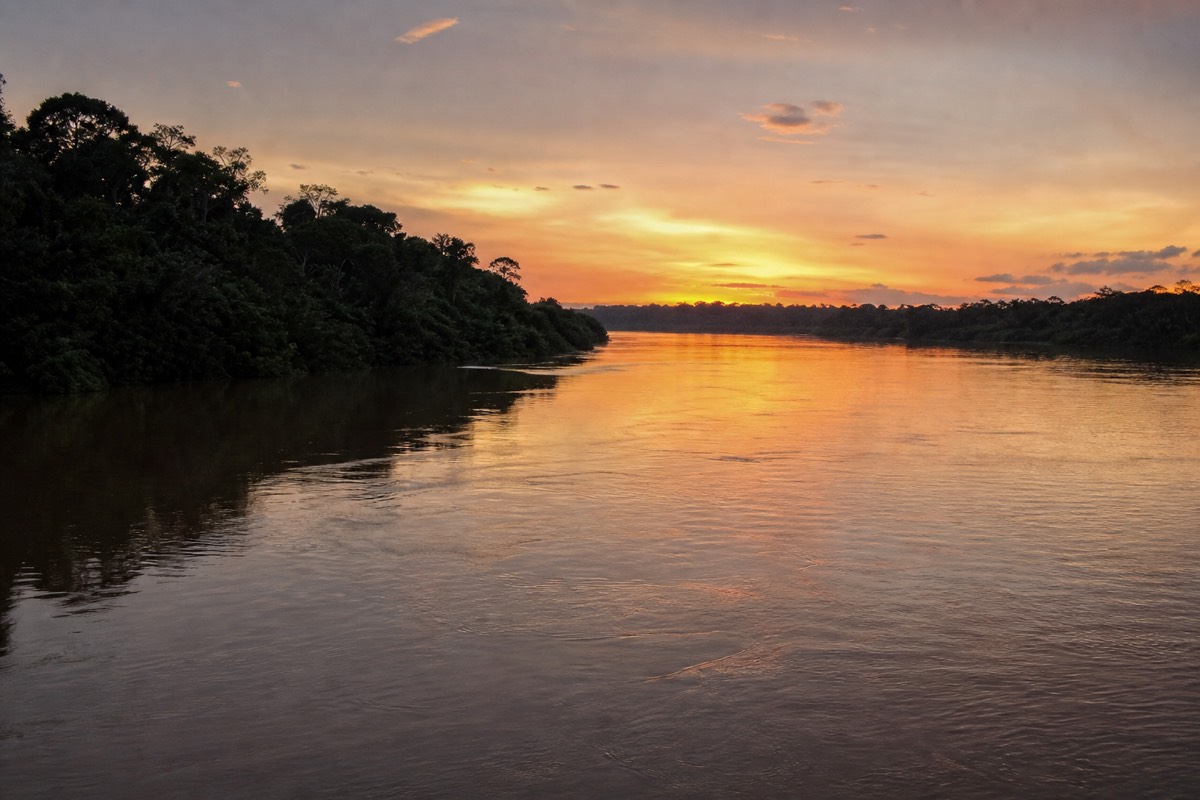
Dawn to about 9am is the clear winner, with late afternoon from around 3pm to dusk a solid second. Dolphins feed most actively at both ends of the day, the water is calmer, the light is better, and there are far fewer boats stirring the surface.
| Time slot | Dolphin activity | Conditions | Verdict |
|---|---|---|---|
| 5:30 to 9:00am | Highest, active feeding | Mirror-calm water, cool air, almost no boat traffic | Best. Book the earliest departure offered |
| 9:00 to 10:00am | Still good, tailing off | Light hardening, first boats out | Worth taking if dawn is not offered |
| 10:00am to 3:00pm | Lowest | Heat, chop, wake from river traffic | Avoid if dolphins are your goal |
| 3:00 to 6:00pm | Rising again toward dusk | Golden light, water settling, most boats heading home | Strong second choice |
| After dark | Not the target | Spotlight territory | This is caiman and frog time instead |
Flat water is the underrated variable. A dolphin surfacing produces a small, brief disturbance, and on a choppy river at midday you will miss half of them even when they are right there. At dawn the surface holds every ripple, and you start spotting animals fifty metres before you would have noticed them at noon.
Which tours here actually include dolphin watching?
The Monkey Island day trip is the most explicit about it, running seven hours on the Amazon with native aquatic species as a stated focus, at $150 with a 5.0 rating over 682+ bookings. Every multi-day lodge trip includes daily boat excursions on dolphin water, which is why sightings are near-routine on those.
| Tour | Length | Price from | Rating | Dolphin exposure |
|---|---|---|---|---|
| Monkey Island, Amazon River and Native Aquatic Species Tour | 7 hours | $150 | 5.0 (682+ booked) | Explicit focus on river species, the clearest single-day option |
| Iquitos Amazon Day Tour with Wildlife, Jungle and River Adventure | 8 hours | $121 | 4.8 (303+ booked) | Substantial river time, dolphins commonly seen in transit |
| Amazon Jungle Piranha Fishing Tour | 2 hours | $88 | 4.7 (307+ booked) | Short and fishing-focused, dolphins are a bonus not a plan |
| Maniti Eco-Lodge 3-Day All-Inclusive | 3 days | $469 | 4.5 (986+ booked) | Daily boat excursions, two mornings on the water |
| Muyuna Lodge 3-Day All-Inclusive | 3 days | $539 | 5.0 (321+ booked) | Daily boat excursions, two mornings on the water |
| Iquitos 4-Day Premium Eco-Lodge Adventure | About 4 days | $545 | 4.9 (349+ booked) | Three mornings, better odds through repetition |
| 7-Day Amazon Jungle Adventure, Maniti Eco-Lodge | 7 days | $1,129 | 5.0 (299+ booked) | Six mornings across multiple river systems |
If dolphins are the specific thing you flew here for, the arithmetic favours nights over hours. A single day trip gives you one shot at one tide of one river. A three-day lodge stay gives you two dawn excursions plus every transfer in between, and a longer stay multiplies that again. The best Amazon lodges near Iquitos comparison lays out those lodge options by price and rating.
That said, a day trip is a genuinely good option if your schedule is tight or you are bookending a city stay. At $150 for seven hours on the river, the Monkey Island trip is the most dolphin-forward short product sold here, and its 5.0 average across 682+ bookings suggests it delivers what the title promises.
What actually improves your chances?
Five things move the needle: the season, the hour, the size of your group, the experience of your guide, and the number of days you are out. The last one compounds, because each extra morning is another independent roll of the dice on the same high odds.
| Factor | Effect on your odds | What to do about it |
|---|---|---|
| Season | Large, 70 to 95% swing across the year | Aim for July to September if the calendar allows |
| Time of day | Large | Take the dawn excursion, every time it is offered |
| Group size | Moderate | Small-group or private boats can follow a pod instead of sticking to a schedule |
| Guide experience | Large | Local guides know this week's hotspots and use hydrophones to pick up clicks |
| Trip length | Compounds | Four days or more puts you on several different rivers and lakes |
| Patience on the water | Moderate | Ask the boatman to cut the engine at a confluence and wait ten minutes |
| Weather | Moderate | Calm, overcast mornings are often better than bright choppy ones |
The hydrophone detail is worth knowing about because it separates the crews who work at this from the ones who drive around hoping. Botos echolocate constantly, and a guide listening on a hydrophone can tell you there are animals nearby before anything breaks the surface. If a listing mentions it, that is a good sign about the rest of the operation.
Can you swim with pink river dolphins in Peru?
Some provider itineraries do advertise dolphin swimming. The reserve observation option below is a different experience; no independently audited no-feeding or no-contact policy is established here. Ask the operator about its actual wildlife practices before paying.
The mechanics are the issue rather than the swimming. A wild dolphin has no reason to stay beside a group of people unless something is holding it there, and what usually holds it there is fish handed out by an operator. Habituating an endangered species to approach humans for food changes its behaviour around boats, nets and river traffic, and none of those changes work in the animal's favour.
There is also a plainer point about what you actually get. A boto encountered on its own terms, hunting a seam of current at first light while you sit quiet with the engine off, is a better memory than one circling a feeding station. We have a fuller discussion of whether swimming with the pink dolphins ethical questions have a good answer, and a separate look at swimming in the Amazon river generally, which is a different question with its own considerations.
If a wildlife encounter of any kind is being sold to you as guaranteed, treat that as information about the operator. Our notes on how to choose an ethical Amazon tour operator cover the other signals worth reading before you book.
How should you behave when a pod turns up?
Stay seated, keep the noise down, and let the boat hold its position rather than chasing. Botos here are curious and often close the distance themselves, so the best thing a boatload of people can do is become boring: engine idling or off, voices low, nobody lunging for the rail.
Chasing does not work anyway. A dolphin that wants to avoid a boat has an entire river system to disappear into, and a hull driving toward a surfacing point almost always arrives after the animal has gone somewhere else. Sitting still at a confluence and waiting produces more encounters per hour than motoring around does, which is why experienced captains do exactly that.
Do not feed anything, and do not encourage a guide to. It seems generous in the moment and it is the mechanism behind every problem in the ethics discussion above. The same goes for reaching into the water to touch an animal that comes alongside, which is bad for the dolphin's skin and worse for its habits.
One small courtesy that pays you back: agree with the group beforehand that whoever spots something says it quietly and points rather than shouting. Sound carries strangely over flat water, and a boat that erupts every time a fin appears sees fewer fins as the morning goes on.
How do you combine dolphins with jungle hikes?
You barely have to try. Almost every multi-day lodge itinerary alternates boat excursions with forest walks, so dolphins come from the daily river time and monkeys, sloths and tracks come from the trails. Three nights or more gives you both reliably.
| Day | Morning | Afternoon | After dark |
|---|---|---|---|
| Day 1 | Fly in, boat transfer to the lodge | First jungle walk, orientation on the trails | Night walk for frogs and insects |
| Day 2 | Dawn boat, dolphin watching, then a clay lick | Jungle hike: tracks, birds, sloths | Spotlight boat for caimans |
| Day 3 | Full-day oxbow lake run, giant river otters and caimans | Continues, with a walk on the way back | Night boat or a quiet evening on the deck |
| Day 4 | Final walk or canopy tower | Boat back to Iquitos | Flight out or a night in the city |
Short one and two day trips force more of a choice, since a single outing usually leans either river or forest. From three nights upward, the rhythm above is close to standard across operators, and it is why the mid-length formats produce the strongest reviews. Our piece on how many days you need in the Iquitos Amazon takes the trip-length question apart properly.
Do not skip the night slots to bank sleep for the dawn starts. Amazon night walks deliver a completely different cast, and the caiman eyeshine on a spotlight boat is one of the few sights that genuinely competes with the dolphins.
What else will you see from the same boat?
Dolphins are rarely the only thing on a morning river run. No independently measured sighting rate is verified for this guide; encounters depend on the route, conditions and wild animals.
| Species | Likelihood on a good multi-day trip | Where you see it |
|---|---|---|
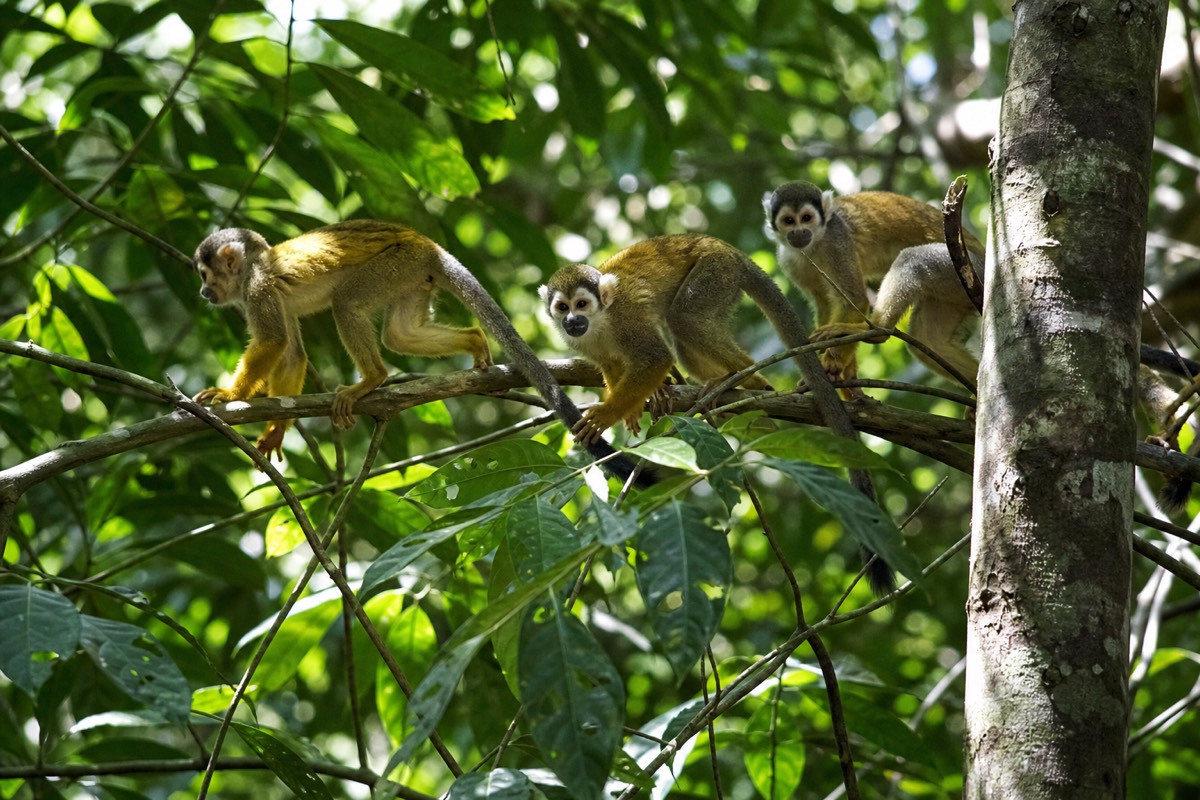
| Monkeys: squirrel, capuchin, howler, tamarin | Not independently measured | Riverside canopy and forest trails |
| Macaws, toucans, parrots | Not independently measured | Canopy, clay licks in the early morning |
| Caimans | Not independently measured | Night boat, spotlight along the banks |
| Pink river dolphins | Not independently measured | Main channels, confluences, lagoons |
| Giant river otters | Not independently measured | Oxbow lakes, usually loud before they are visible |
| Sloths | Not independently measured | Canopy, spotted from boats as often as trails |
| Capybaras and river turtles | Not independently measured | Banks, sandbars and half-sunk logs |
| Jaguar | Not independently measured | Remote areas, with a strong guide and luck |
| Tapir, giant anteater, harpy eagle | Not independently measured | Night walks, clay licks, remote nesting areas |
Keep binoculars on your lap rather than in the bag. Most of the animals above are spotted by a guide who says something quietly and points, and the window between that and the animal moving is short. The full species-by-species breakdown lives in our guide to the wildlife you'll actually see.
What should you bring for a dolphin-watching excursion?
Binoculars, polarized sunglasses, a dry bag, high-SPF sunscreen and a hat. The river is open water with no shade, the glare off the surface is punishing, and everything on an open boat gets wet at some point.
| Item | Why it matters on the water |
|---|---|
| Binoculars | Distant surfacings are easy to miss with the naked eye |
| Polarized sunglasses | Cut surface glare, which is how you spot a back before it breaks |
| Dry bag or waterproof phone case | Spray, rain showers and the occasional wave over the bow |
| Sunscreen, SPF 50 or higher | Reflection off the river roughly doubles your exposure |
| Wide-brim hat or cap with a neck flap | No shade exists on an open boat |
| Camera you can operate fast | A surfacing lasts a second or two, not long enough to fumble |
| Insect repellent | For the moment you land and walk into the trees |
Manage your camera expectations before you go rather than on the boat. Almost everyone comes home with a lot of photographs of ripples. The people who get a good frame are the ones who watched a pod for a few minutes, worked out the rhythm of the surfacings, and pointed the camera at where the animal was going to be.
Are sightings ever guaranteed?
No, and any operator promising otherwise is telling you something about themselves. Botos are wild animals in an enormous river system. What the region offers is genuinely excellent odds, among the best anywhere in the Amazon, backed by a resident population that does not migrate away.
The honest framing is that a dolphin sighting is likely rather than certain, that a whole morning without one is uncommon but possible, and that a three-day trip is close to a formality for the same reason repeated attempts beat single ones. If you go in July, get up before dawn, and stay two nights, you are about as close to a sure thing as wildlife watching gets.
Whatever you book, the encounter you want is the quiet kind: engine off, nobody feeding anything, a pod working a current seam while the sun comes up over the trees. That is available on a $150 day trip and on a $1,129 week, and the range of Amazon tours from Iquitos covers everything in between.
Everything here feeds into choosing among our Iquitos Amazon Tours, from short river trips to deep jungle stays.