Amazon Night Walks: What You'll See After Dark
At 7:30 in the evening the jungle changes shift. The guide switches on a spotlight, hands somebody a black light, and the forest that was mostly birdsong an hour ago turns into eyes, glowing scorpions and a wall of sound. This is the part of the trip people talk about afterwards.
For a paid experience alongside this guide, forest walks, a night boat outing and dolphin watching from a lodge base. Meals, guide and round-trip airport transfers included. Explore Muyuna: 3 days / 2 nights
Pricing note: figures in the original guide are illustrative historical examples, not current quotes. No independent wildlife sighting percentages or safety/welfare certification are verified. Use the dated provider options below to compare current details.
Ask people what they remember from a jungle trip and they rarely lead with the thing they booked it for. They lead with the night. Something about walking a forest trail in the dark, with a beam of light no wider than a dinner plate and a guide who keeps stopping for reasons you cannot see yet, rearranges how the whole place feels.
On a standard lodge day around Iquitos the schedule puts the night walk at roughly 7:30 in the evening, after dinner, with a black light for insects and a spotlight for caimans. It usually runs an hour or two. It is optional on most itineraries, and skipping it is the single most common regret we hear about.
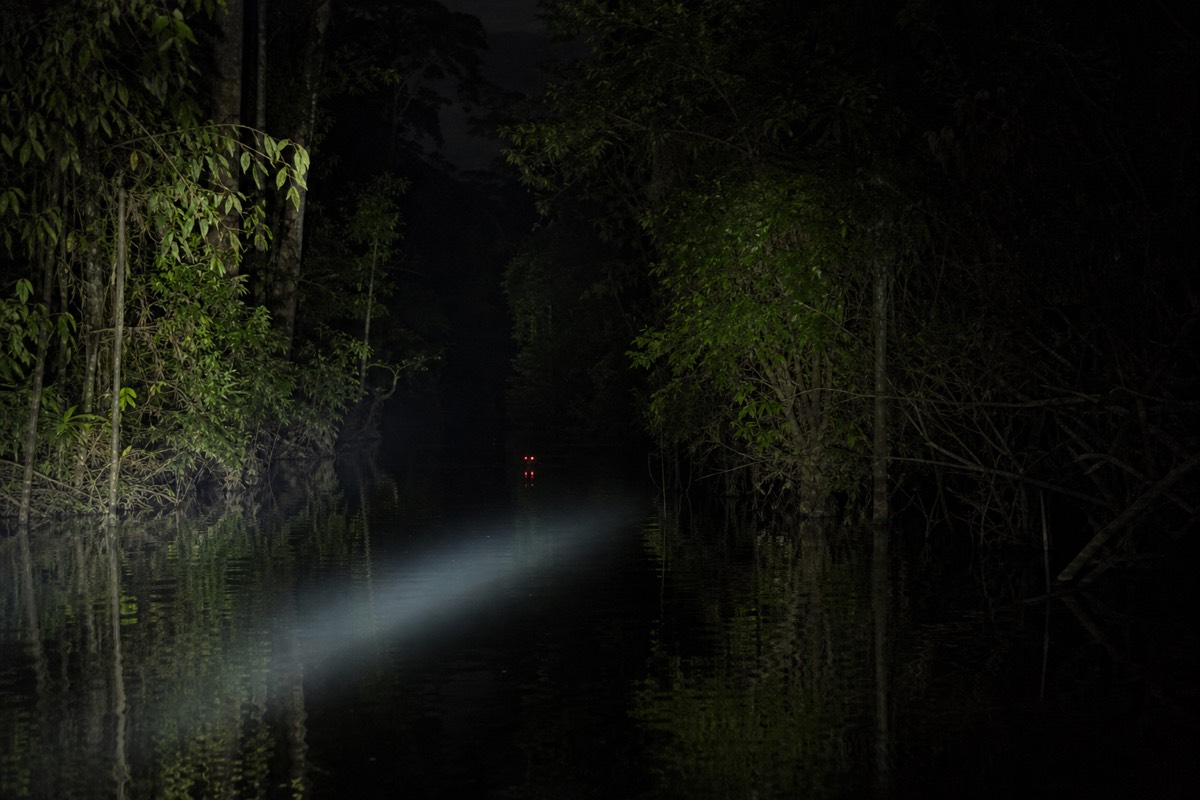
Expect caimans by eyeshine, frogs in real numbers including poison dart frogs, spiders and scorpions that fluoresce under UV light, stick insects, katydids and moths. Snakes, including boas, turn up occasionally. Nocturnal mammals such as night monkeys and, rarely, tapir or a small cat, are the bonus tier. The soundtrack is the part nobody warns you about.
Booking choice: Muyuna: 3 days / 2 nights. Forest walks, a night boat outing and dolphin watching from a lodge base. Meals, guide and round-trip airport transfers included.
Discover Muyuna: 3 days / 2 nightsWhat actually happens on an Amazon night walk?
You leave the lodge after dinner, on foot along a cleared trail, in a small group behind a guide with a torch. The pace is slow and stop-start, because almost everything worth seeing is found by scanning rather than walking. Most walks run one to two hours and stay close to the lodge.
The technique is what surprises people. Guides sweep the beam low across leaf litter and along trunk bases, looking for eyeshine and for shapes that are the wrong texture for a leaf. They pause constantly. They will stop for a spider you would have walked straight past, then point out that it has been sitting there in the same posture every night for a week.
Then somebody turns off every light. That is usually the moment of the trip: total darkness, absolutely no ambient glow anywhere on the horizon, and a wall of insect and frog noise loud enough to feel physical. It lasts about thirty seconds and people remember it for years.
What will you actually see after dark?
Frogs and insects in volume, caimans by eyeshine from the water's edge, spiders and scorpions under UV, and a reasonable chance of a snake. Nocturnal mammals are possible rather than likely. The realistic expectation is dozens of small encounters rather than one big one.
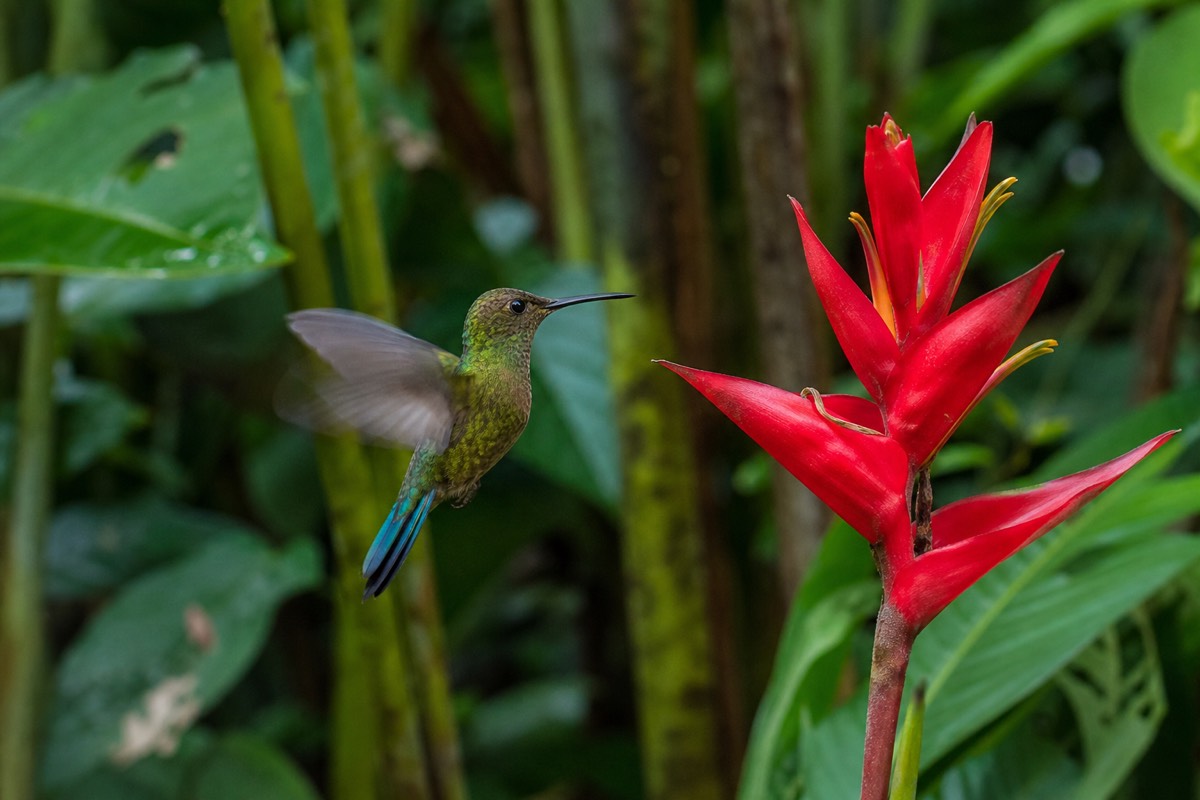
Poison dart frogs are one of the standouts. They are vivid, small and much easier to find at night, when they are active on wet leaf litter, than during a daytime walk. Tree frogs turn up on trunks and broad leaves at eye level.
Snakes are a genuine possibility rather than a promise. Boas and, near water, anacondas are occasionally found on night walks because guides know the places they use. If constrictors are the specific thing you are hoping for, the honest odds are covered in our piece on anacondas and jaguars.
| What you might see | Realistic odds on a night excursion |
|---|---|
| Caimans (eyeshine, night boat) | Near certain on lodge tours |
| Frogs, including poison dart frogs | Very likely, best at night |
| Insects, spiders, scorpions | Near certain, in volume |
| Boas or anacondas | Occasional, guide-dependent |
| Night monkeys | Possible, often heard before seen |
| Tapir, ocelot, margay, bush dog | Rare, night walks improve the odds |
Why do guides carry a black light?
Because scorpions fluoresce. Under ultraviolet light a scorpion glows a bright, unmistakable blue-green against dark leaf litter, and so do a range of other invertebrates. It turns a patch of forest floor that looked empty under white light into something startling.
This is the trick most people have never seen before and it lands every time. The guide picks a stretch of trail, switches the white torch off and the UV on, and small points of light appear across the ground and up nearby trunks. It is also a useful demonstration of how much is present all the time and simply invisible.
The black light does other work too. It brings out markings on moths and certain fungi, and it makes the general density of life on a single tree buttress obvious in a way that no daytime walk manages.
What is a night boat caiman search like?
Different in feel to a walk and often better. You go out in a small boat with the engine low or paddling, and the guide sweeps a spotlight along the bank. Caiman eyes throw back a distinct red-orange shine, and once you learn to read it you start finding them yourself.
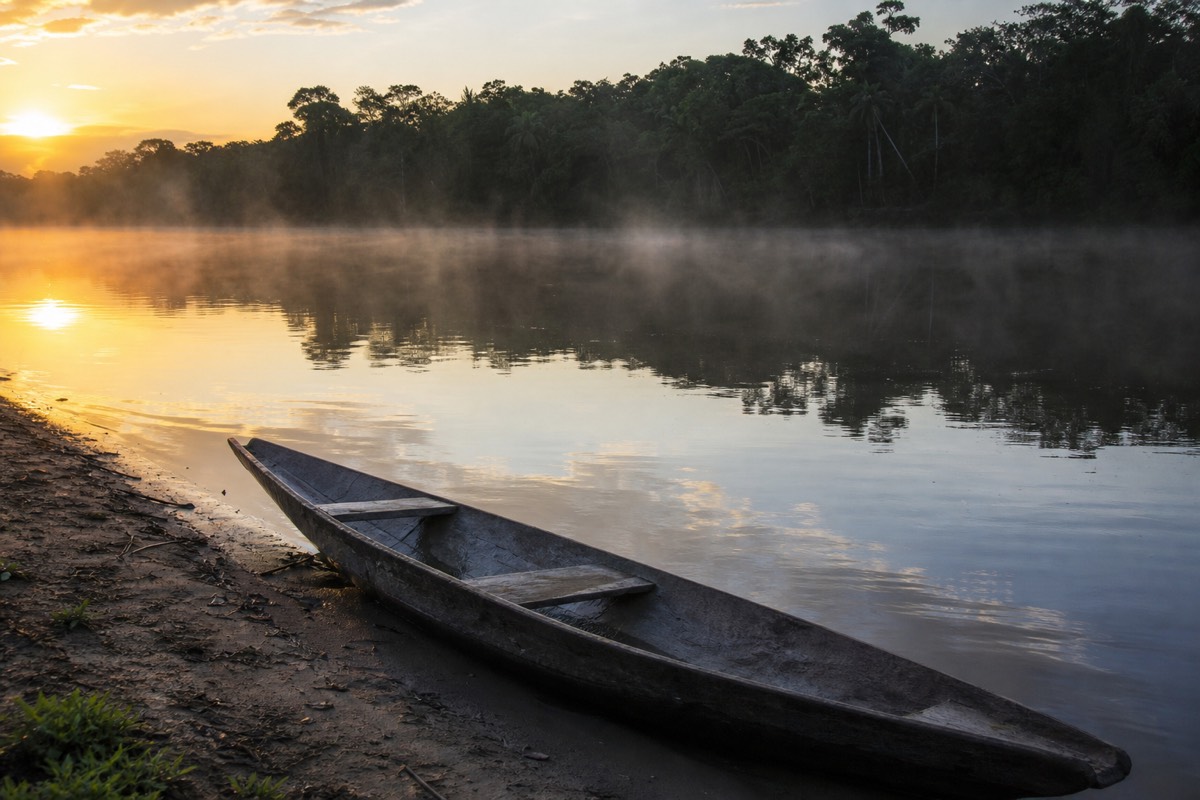
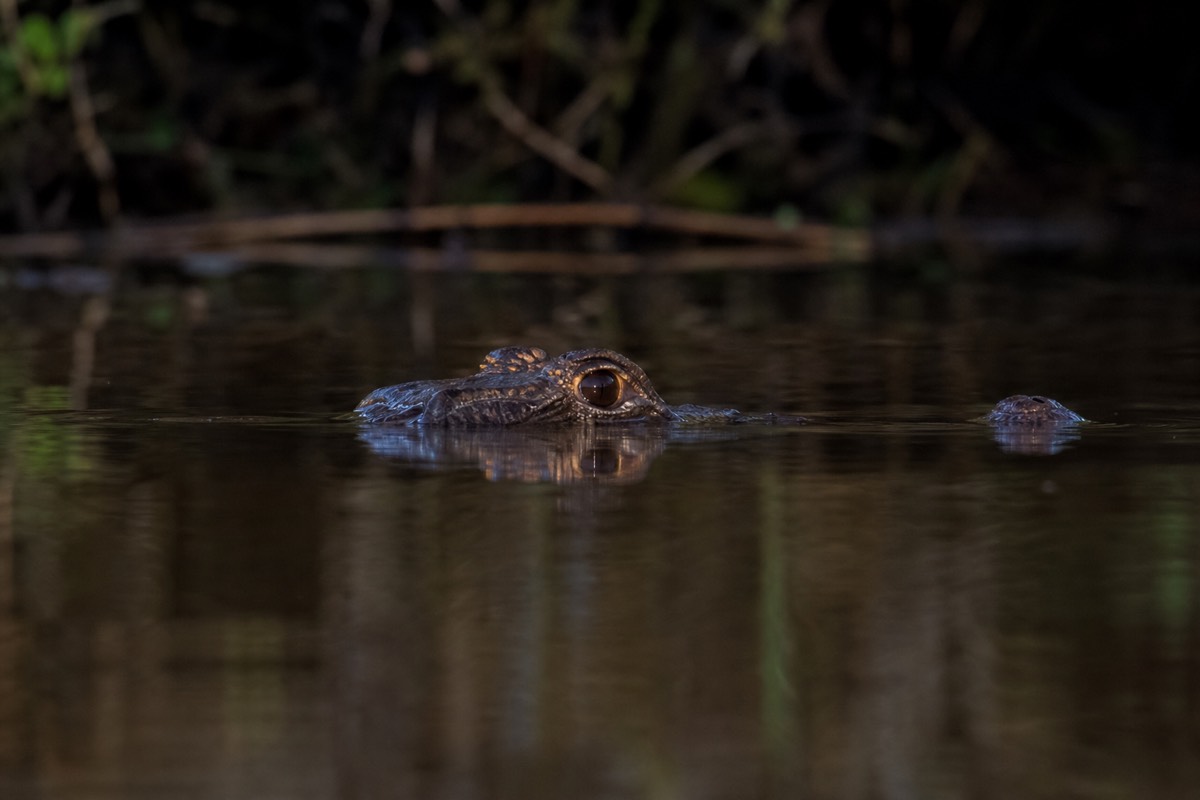
Spectacled caimans are the common find, generally small and calm about being looked at. Black caimans are the larger species and are the reason nobody is in the water after dark. Guides usually stay on the water and keep the boat at a respectful distance, and on many trips they will catch a small caiman briefly so the group can see it properly before releasing it.
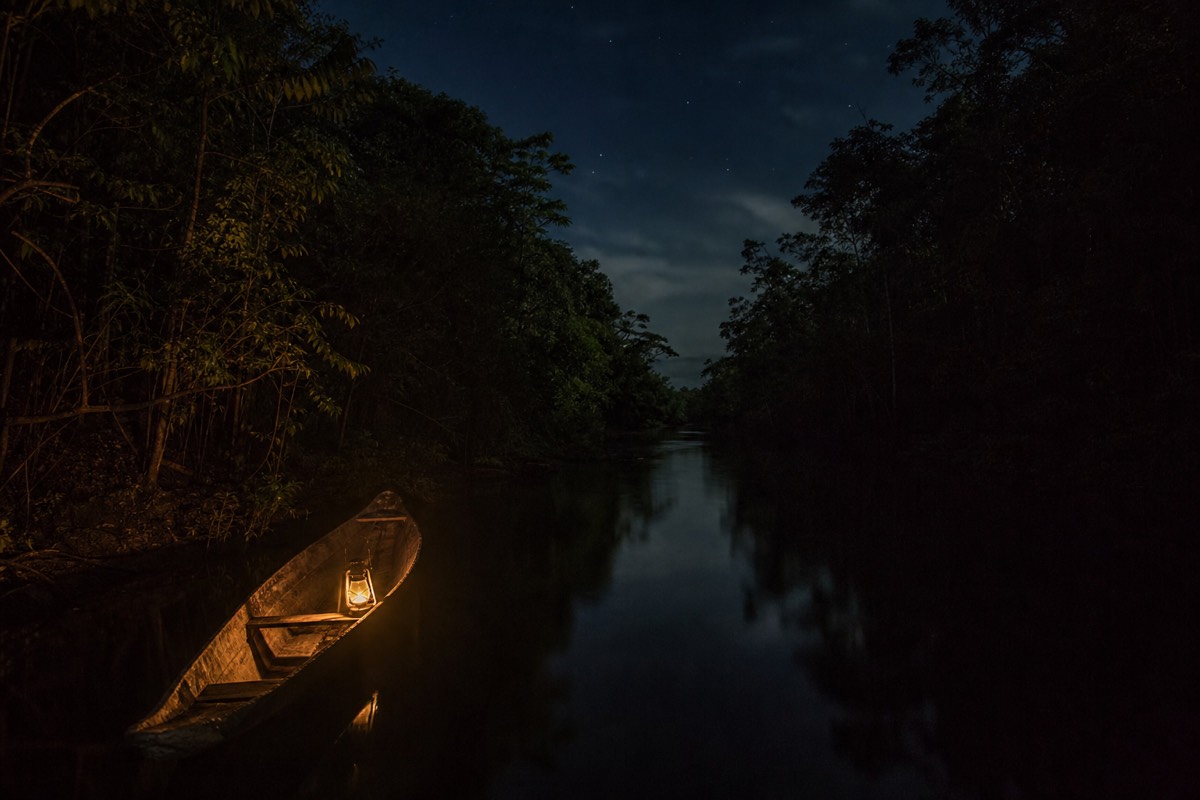
The water adds another layer. Sitting still in a canoe on a black channel with the light off, listening to the forest on both banks, is the closest most visitors get to feeling how big this place is.
Is a night walk safe?
Yes, when it is guide-led, which is how it is always run. Groups stay on cleared trails close to the lodge, guides know the terrain and which animals to give room, and nobody wanders off. The realistic hazards are a turned ankle on wet ground and mosquitoes, not wildlife.
Wear long sleeves and long trousers, tuck the trousers into your socks, and put on repellent before you leave the room rather than on the trail. Closed shoes with grip, not sandals. The forest floor stays wet and roots are everywhere.
Bring a headlamp if you have one. Most lodges provide torches and the guide carries the serious light, but a headlamp keeps your hands free and lets you look at something without asking anyone to redirect the beam. It appears on our what to pack list for exactly this reason.
Which tours include night walks?
Essentially every multi-day lodge tour near Iquitos. The night walk and the caiman spotlight sit in the standard daily rhythm alongside dawn birdwatching, a morning clay lick, a jungle trail and an afternoon oxbow lake. Day trips returning to the city are the format that misses it.
That is one of the strongest practical arguments for staying at least one night in the forest. A day trip gives you a boat ride and a walk in daylight, which is a real experience but a partial one. The dawn chorus and the night are the two halves of the day when the jungle is genuinely awake, and both require an overnight. We work through the trade-offs in how many days you need in the Iquitos Amazon.
| Time | Typical lodge day |
|---|---|
| Early morning | Birdwatching, clay lick, dolphin-watching boat trip |
| Midday | Lunch and rest, wildlife activity drops in the heat |
| Afternoon | Jungle walk, oxbow lake, canoe through flooded channels |
| Around 7:30 pm | Night walk, black light for insects, caiman spotlight |
Remote lodges give the best nights, simply because there is no light and no engine noise for a long way in any direction. Deeper areas such as the Pacaya-Samiria National Reserve raise the odds on the rare nocturnal species, and lodge choice matters more than most people expect, which we cover in our rundown of the best Amazon lodges near Iquitos. For the daytime half of the picture, see what the wildlife you'll actually see looks like across a full trip, or browse the Amazon tours from Iquitos that include night excursions as standard.
For current prices and departure dates, the operators behind our Iquitos Amazon Tours keep the live listings up to date.