How Many Days Do You Need in the Iquitos Amazon?
The most-booked tour on this site is three days. The second most-booked is two. Neither number came from a wildlife biologist, and the honest answer to how long you need depends far more on how the boat transfers eat your schedule than on anything a brochure will tell you.
For a paid experience alongside this guide, forest walks, a night boat outing and dolphin watching from a lodge base. Meals, guide and round-trip airport transfers included. Explore Muyuna: 3 days / 2 nights
Pricing note: figures in the original guide are illustrative historical examples, not current quotes. No independent wildlife sighting percentages or safety/welfare certification are verified. Use the dated provider options below to compare current details.
The most-booked tour on this site is a 3-day stay at Maniti Eco-Lodge, with 986 or more bookings behind it. The second most-booked is the 2-day version of the same lodge, at 878 or more. That tells you where most people land when they have to pick a number. It does not tell you whether they picked right.
Trip length is the single decision that changes an Amazon trip more than any other, more than the season, more than the lodge, more than the price. It decides whether you get a boat ride and a walk, or whether you get the dawn chorus, the night sounds, and a canoe drifting through flooded forest before breakfast.
Quick answer: three days is the practical minimum for a real jungle experience and it is the most popular format here. Four to five days is the sweet spot, both for what you see and for cost per day. Six and seven day trips are for people who specifically want depth, remote camps and a shot at the harder species. A single day trip from the city is a nice afternoon, not an Amazon trip. No independently measured sighting rate is verified for this guide; encounters depend on the route, conditions and wild animals.
Booking choice: Muyuna: 3 days / 2 nights. Forest walks, a night boat outing and dolphin watching from a lodge base. Meals, guide and round-trip airport transfers included.
Discover Muyuna: 3 days / 2 nightsCost per day by trip length
Per-day figures are the cheapest listed tour at each length divided by its number of days, rounded; operator prices change, so check the live listing.
How many days should you spend in Iquitos?
Plan four to six nights in the region total. That usually means three to five nights at a jungle lodge plus one night in the city, either side of your flight. Anything shorter compresses your travel days into your wildlife days. Anything longer only pays off if you are chasing rare species or want to see two different river systems.
The reason the answer is not simply "as long as possible" is that Amazon days are front-loaded with travel. Your first afternoon disappears into a boat transfer that runs anywhere from 30 minutes to three hours by speedboat, and your last morning disappears into the same trip in reverse. On a 3-day tour that leaves roughly one and a half genuinely full days in the forest. On a 5-day tour it leaves three and a half.
Put differently: going from three days to five days does not add 66 percent more jungle. It adds well over double the usable field time, because the fixed cost of getting in and out is paid once either way. That is the mathematics behind almost every piece of advice on this page.
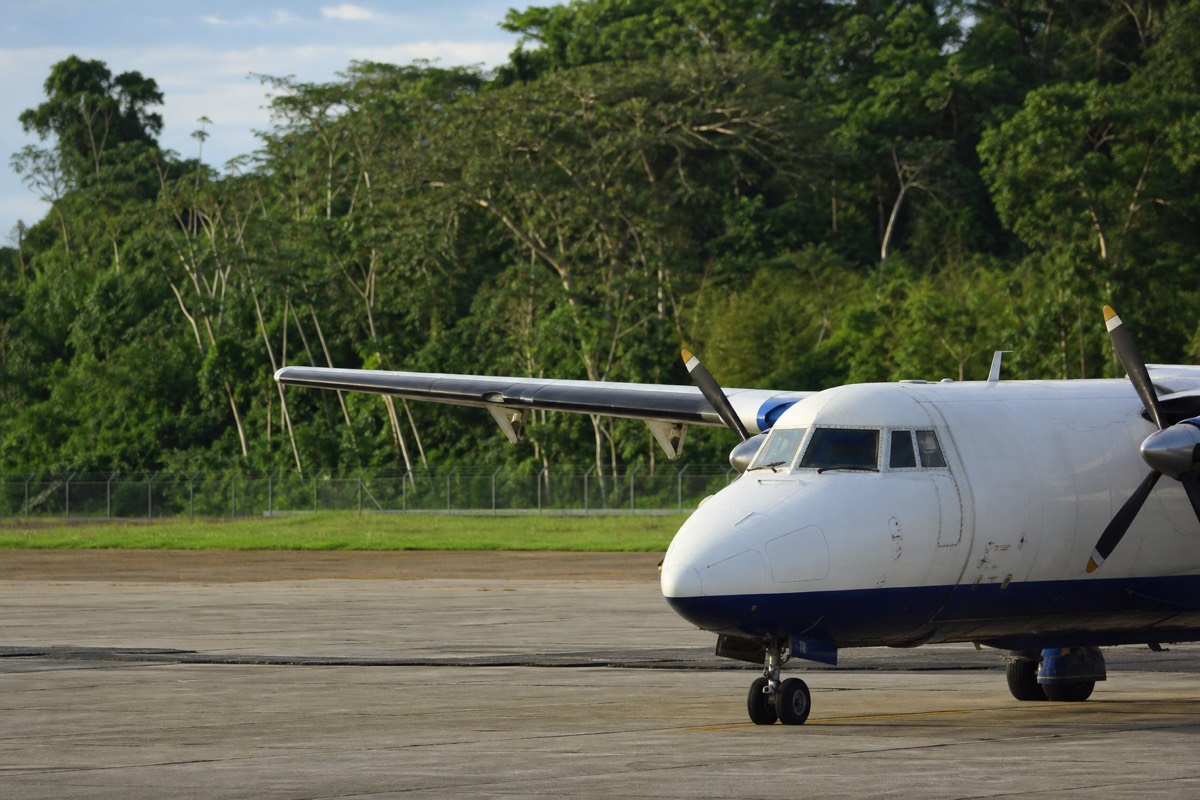
There is a second constraint most people forget. Iquitos has no road access, so you are flying in and out on the same handful of daily services from Lima, and the flight itself eats a day at each end unless you are lucky with timings. The guide on how to get to Iquitos covers that in detail, but budget for it now rather than discovering it later.
What does a day trip from Iquitos actually get you?
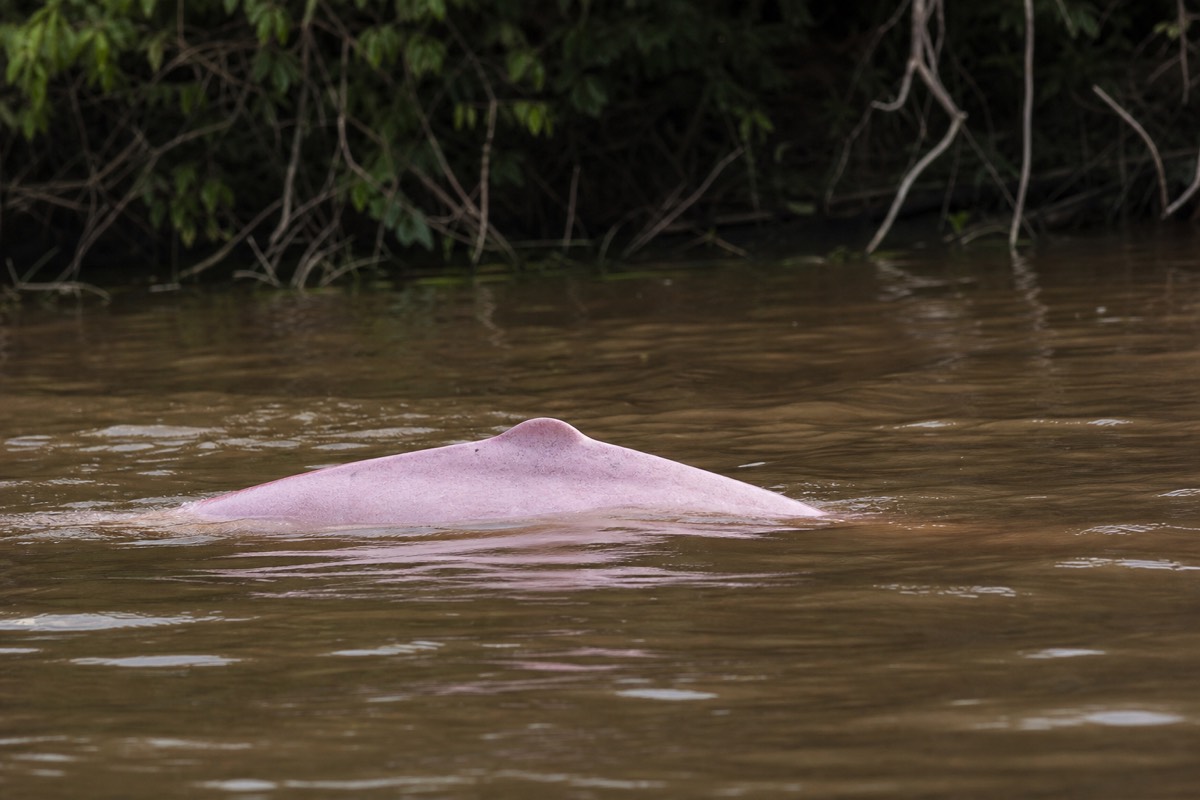
A day trip gets you on the Amazon, which is not nothing. You will see the river, probably pink river dolphins, likely monkeys, and you will be back in the city for dinner. What you cannot get is the dawn window, the night window, or any distance from Iquitos, and those three things are where most of the wildlife lives.
Day trips are genuinely good at what they do. They suit a layover, a first afternoon before a longer tour starts, or a traveller who is honestly more interested in the culture of the city than in the forest. The Belén Market tour and the food tour are city experiences rather than jungle ones, and they are among the highest-rated things to do in Iquitos for exactly that reason.
| Day option | Length | Price | Rating and bookings | What it is really for |
|---|---|---|---|---|
| Amazon jungle piranha fishing | 2 hours | $88 | 4.7 stars, 307+ booked | The cheapest way onto the water, fun with kids |
| Belén Market, floating houses and Amazon River, private | 4 hours | $110 | 5 stars, 478+ booked | The city and the river, no jungle |
| Taste the Amazon foodie adventure | 4 hours | $97 | 4.7 stars, 377+ booked | Amazonian food with a local guide |
| Monkey Island, Amazon River and native aquatic species | 7 hours | $150 | 5 stars, 682+ booked | The strongest wildlife day trip on the list |
| Iquitos Amazon day tour with wildlife | 8 hours | $121 | 4.8 stars, 303+ booked | A full day mixing river and a short walk |
| Peruvian rainforest biking with lagoon visit | Day trip | Price varies, check the listing | 5 stars, 270+ booked | Something different, active, land-based |
If you only have one day, the Monkey Island day trip is the one that gives you the most actual wildlife for the time, at 7 hours and 682 or more bookings. If you have one day and a tight budget, the piranha fishing tour puts you on the river for two hours at $88.
Is a 2-day Amazon tour worth it?
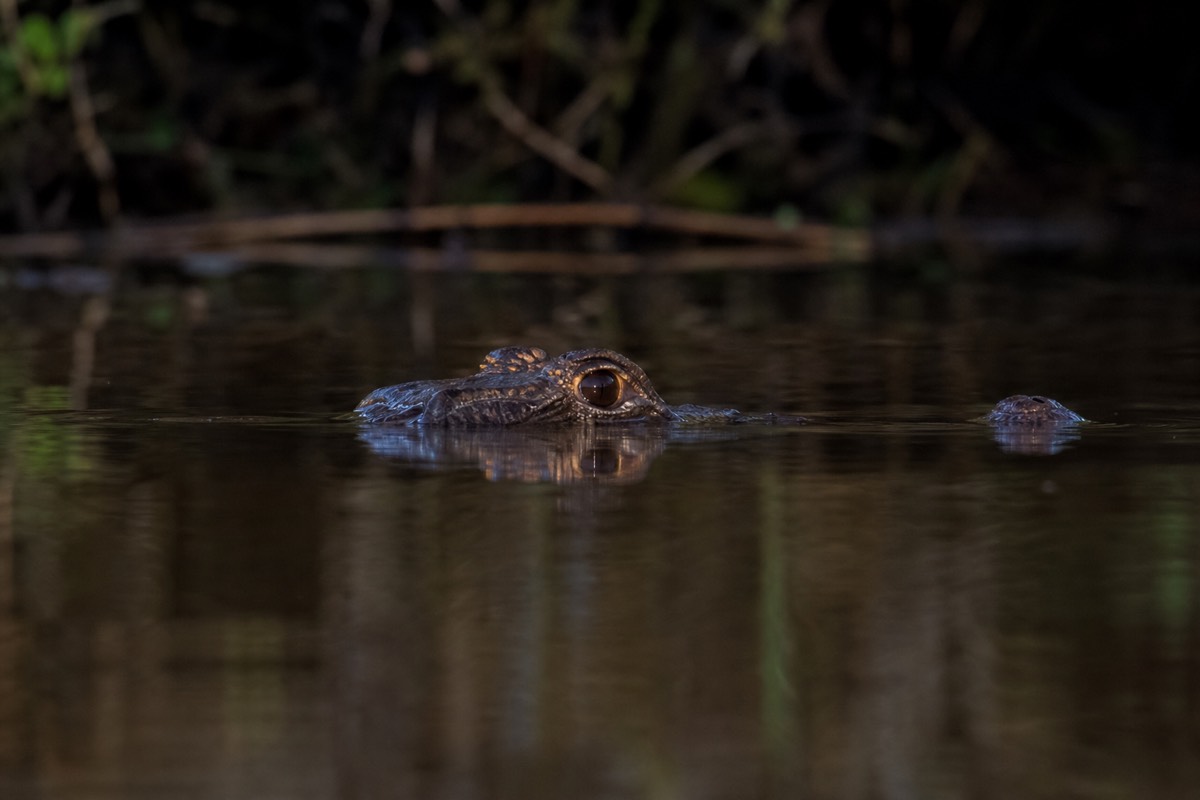
Yes, with a specific caveat. Two days buys you the one thing a day trip cannot: a night in the forest. That single overnight unlocks the dusk chorus, a night walk or caiman search by spotlight, and a dawn departure. It is a real Amazon experience, just a short one, and at $305 for the 2-day Maniti Eco-Lodge trip it is the cheapest way to get it.
The 878 or more bookings on that tour are not an accident. It is the honest minimum viable Amazon trip, and it works well for people whose schedule is genuinely fixed, for travellers adding the Amazon onto a Peru itinerary already stuffed with Cusco and Machu Picchu, and for anyone testing whether they like the heat before committing to a week of it.
What you give up is the middle. With two days, your first day is arrival and transfer plus one afternoon activity, and your second day is a morning activity plus the boat back. There is no full day. You will not reach the more remote lakes, you will not visit two different habitats, and you have zero weather buffer if a heavy morning of rain kills your best excursion window.
For most people who have flown a long way to get here, that last point is the one that stings. Three days costs a little more and adds a complete uninterrupted day in the field.
Is 3 days enough for the Iquitos Amazon?
Three days is enough for a solid introduction and it is the most popular format on this site. You get pink river dolphins, monkeys, macaws, caimans, probably giant river otters, a night excursion and a clay lick. What you do not get is depth: limited access to remote areas, low odds on rare species, and no buffer if the weather turns.
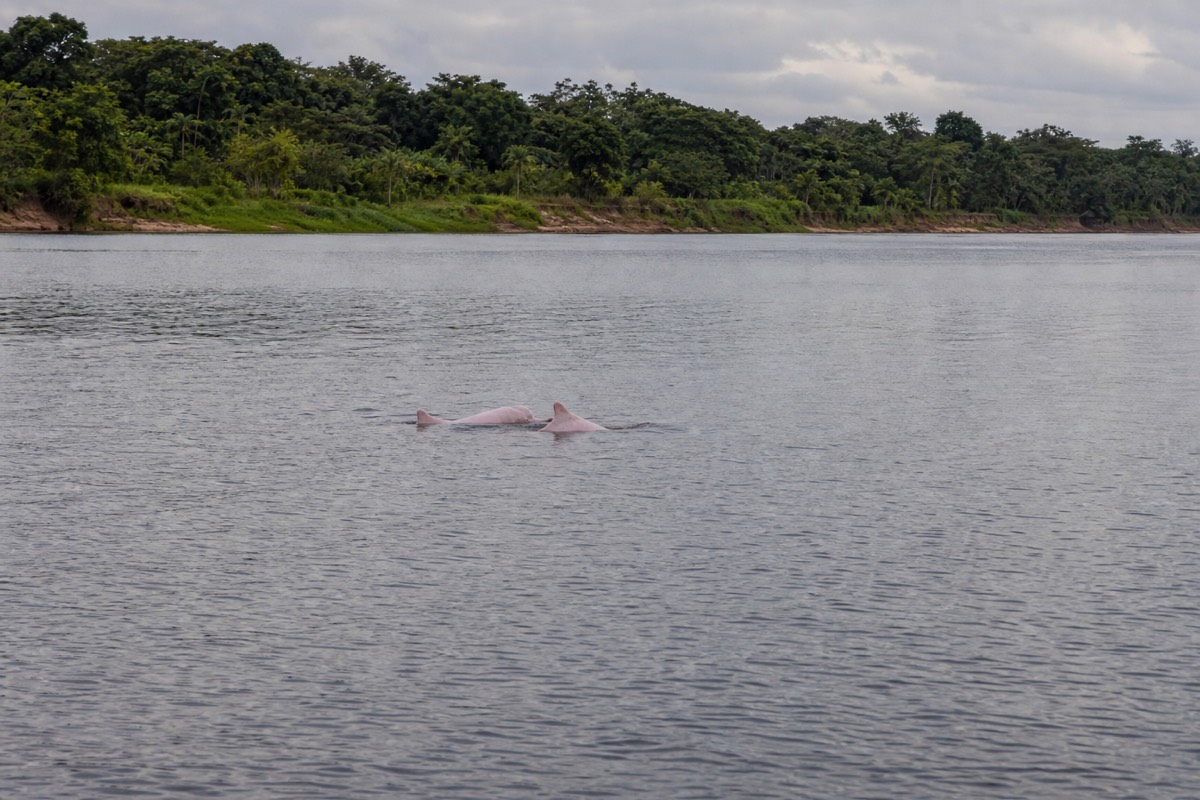
The standard 3-day shape looks like this. Day one is the flight in, the boat transfer, an afternoon jungle walk and a night walk after dinner, hunting frogs, tarantulas and caiman eyeshine. Day two is the full day: an early clay lick visit with macaws and parrots, a forest trail, an afternoon oxbow lake for otters and caimans, then a night boat. Day three is one morning activity, fishing or a canopy tower or a short walk, then back to Iquitos for an afternoon flight.
That is a properly good trip. It reliably delivers the animals people came for, and the reviews on the 3-day tours reflect it. Where it falls short is on the things that need time: a second habitat, a genuinely remote lodge, a second clay lick, and the rare-species odds that only climb with days in the field.
| 3-day tour | Price | Rating | Bookings | Character |
|---|---|---|---|---|
| 3-Day Iquitos Amazon Jungle Tour at Premium Eco Lodge | $420 | 4.8 stars | 311+ booked | The cheapest 3-day lodge option, premium property |
| Maniti Eco-Lodge 3-Day All-Inclusive Jungle Experience | $469 | 4.5 stars | 986+ booked, the most-booked tour on this site | The default choice, all-inclusive, high volume |
| Muyuna Lodge 3-Day All-Inclusive Jungle Adventure | $539 | 5 stars | 321+ booked | The highest-rated 3-day option, priced accordingly |
Those three prices, $420 to $539, are the price of a real Amazon trip in the northern Peruvian jungle. The 3-day format produces the strongest reviews on the site because it hits the point where the rhythm of the place becomes visible without asking for a week of your holiday.
What does a fourth day actually add?
The fourth day is the best-value day you can buy. It converts a rushed schedule into a relaxed one, adds a complete second full day in the field, gives you weather insurance, and it is where cost per day falls sharply. The 4-day, 3-night tour at $375 works out to roughly $94 a day, the second-lowest per-day figure of any format here.
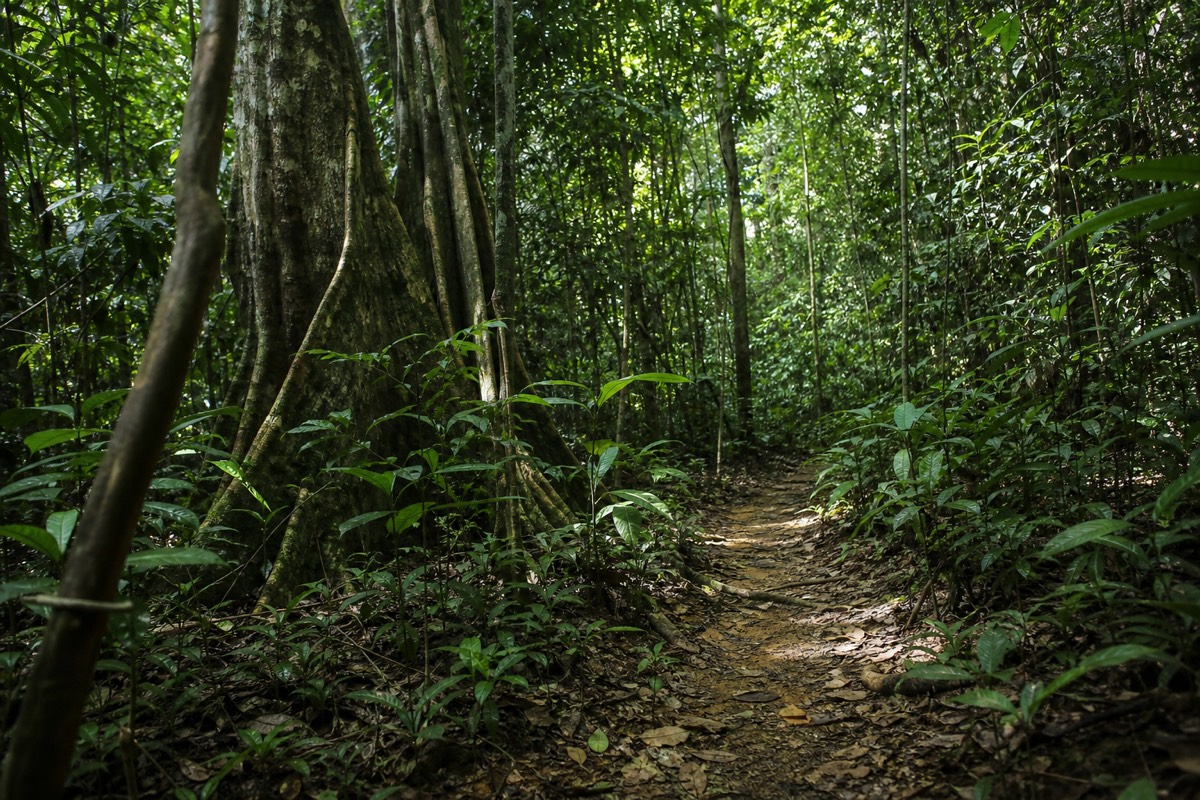
Practically, day four is what lets a guide take you somewhere far. Three-day itineraries are anchored close to the lodge because everything has to be a there-and-back. With four days, a full-day boat excursion to a distant oxbow lake or a remote colpa becomes possible without cannibalising your other activities.
It also changes the odds. Rare species respond to time, not to luck: more mornings out, more night walks, more chances at the harpy eagle nest your guide knows about or the tapir tracks that turn into an actual tapir. No independently measured sighting rate is verified for this guide; encounters depend on the route, conditions and wild animals. Three days does not put you in that conversation. Four starts to.
| 4-day tour | Price | Per day | Rating | Bookings |
|---|---|---|---|---|
| Iquitos 4D/3N Amazon Rainforest Jungle Tour | $375 | Around $94 | 4.8 stars | 468+ booked |
| Iquitos 4-Day Premium Eco-Lodge Amazon Adventure | $545 | Around $136 | 4.9 stars, the highest rating on any multi-day tour here | 349+ booked |
Those two tours bracket the choice neatly. One is the value pick and one is the premium pick, and both carry ratings at or above 4.8 with hundreds of bookings behind them. If someone asked for a single recommendation with no other information, a 4-day tour is what they would get.
Who actually needs 5, 6 or 7 days?
Longer trips are for three kinds of traveller: serious wildlife watchers chasing species that three days will not deliver, people who want genuine remoteness rather than a lodge an hour from the city, and travellers who want the Amazon to be the trip rather than a stop on one. Below five days the forest is a destination. At five and beyond it becomes an immersion.
The Jungle Explorer Tour, five days and four nights at $360, is the anomaly on the whole price list. At roughly $72 a day it is the cheapest per-day multi-day option here by a wide margin, and it carries a 4.9 star rating across 457 or more bookings. If your budget is the constraint but your calendar is not, that combination is hard to argue with.
The 6-day camping expedition at $909 is a different animal entirely. It swaps lodge infrastructure for jungle camping, which means sleeping under a tarp in the forest rather than in a bungalow with a fan. Its 4.3 star rating is the lowest of the multi-day options, and that is not a mystery: camping in the Amazon is genuinely hard, and people who booked it expecting a lodge said so. Booked with the right expectations by the right person, it is the most immersive option on the list.
At the top sits the 7-day Amazon jungle adventure at Maniti Eco-Lodge, $1,129, 5 stars, 299 or more bookings. Seven days lets a good guide work multiple river systems, visit more than one clay lick, run several night excursions, and absorb two bad-weather days without your trip collapsing. It is also long enough that the Pacaya-Samiria National Reserve, Peru's largest protected area and managed by SERNANP, comes properly into reach rather than being a name on a brochure.
How do the durations compare on price and payoff?
Cost per day is not a straight line. It sits around $150 a day for the 2-day trip, drops to roughly $94 at four days and $72 at five, then climbs back above $150 for the 6-day camping expedition and the 7-day premium lodge stay. The value zone is four to five days, and it is not close.
| Length | Price range here | Lowest per day | What you realistically get | Best-booked option at this length |
|---|---|---|---|---|
| Day trip (2 to 8 hours) | $88 to $150 | Not applicable | River, dolphins, likely monkeys, back in the city by evening | Monkey Island, 7 hours, $150, 682+ booked |
| 2 days, 1 night | $305 | Around $153 | One night in the forest, one night excursion, one dawn departure, no full day | 2-Day Maniti Eco-Lodge, $305, 878+ booked |
| 3 days, 2 nights | $420 to $539 | Around $140 | Not independently measured | Maniti Eco-Lodge 3-Day, $469, 986+ booked |
| 4 days, 3 nights | $375 to $545 | Around $94 | Two full days, a distant excursion, weather buffer, rare species come into play | Iquitos 4D/3N, $375, 468+ booked |
| 5 days, 4 nights | $360 | Around $72 | Three full days, multiple habitats, real immersion, the best per-day figure here | Jungle Explorer Tour, $360, 457+ booked |
| 6 days, camping | $909 | Around $152 | Deep forest camping rather than lodge comfort, maximum remoteness | 6-Day Amazon Jungle Camping Expedition, $909, 310+ booked |
| 7 days, 6 nights | $1,129 | Around $161 | Multiple river systems, several clay licks, best odds on rare species, full weather buffer | 7-Day Amazon Jungle Adventure, $1,129, 299+ booked |
Per-day figures are listed price divided by trip length, rounded. They are a planning tool rather than an exact comparison, because a camping expedition and a premium eco-lodge stay are not selling the same product. A fuller treatment of what drives these numbers is in the guide to how much an Iquitos Amazon tour costs.
How does trip length change what wildlife you see?
Common species barely move with trip length: monkeys, macaws, toucans, caimans, capybara and pink river dolphins are close to guaranteed on any well-run tour of three days or more. Length changes the middle and the top of the list, where sloths, giant river otters, anacondas and eventually jaguar and harpy eagle live.
| Wildlife | Day trip | 3 days | 4 to 5 days | 6 to 7 days |
|---|---|---|---|---|
| Pink river dolphins | Good chance | Very likely | Near certain, multiple encounters | Near certain, across several river systems |
| Monkeys and macaws | Possible | Not independently measured | Not independently measured | Not independently measured |
| Caimans | Unlikely, needs a night trip | Not independently measured | Not independently measured | Not independently measured |
| Sloths, turtles, capybara | Low | Not independently measured | Toward the top of that band | Reliably |
| Giant river otters | Very unlikely | Not independently measured | Good odds, multiple lake visits | Strong odds |
| Anacondas, boas, poison dart frogs | No | Possible on one night walk | Several night walks, better odds | Best odds, repeated attempts |
| Tapir, giant anteater, harpy eagle | No | Low | Not independently measured | Best realistic shot |
| Jaguar | No | Very low | Slim | Not independently measured |
The pattern is consistent: the first overnight buys the biggest single jump, from a boat ride to an actual ecosystem. After that each day adds smaller increments, but they compound. This is covered further in the guide to the wildlife you'll actually see.
How much of each day is spent travelling rather than looking?
Expect three to four hours a day on the water on a typical 4-day, 3-night tour, spread across a morning and an afternoon excursion. That is not dead time: boats move slowly at 10 to 20 kilometres per hour precisely so you can see things. But it does mean a short trip is mostly transit.
| Trip length | Typical daily boat time | Full days in the field | Transit as a share of the trip |
|---|---|---|---|
| Day trip | 2 to 6 hours, most of the day | Zero | Very high |
| 2 days | 3 to 5 hours | Zero | High, both days are partly transfer |
| 3 days | 3 to 5 hours | One | Around a third of the trip |
| 4 days | 3 to 4 hours, plus one longer excursion day | Two | Around a quarter |
| 5 days | 3 to 4 hours, one or two full-day boat excursions | Three | Around a fifth |
| 6 to 7 days | 3 to 5 hours, with one or two 6 to 8 hour days to reach deeper areas | Four to five | Lowest of any format |
Lodges sit one to three hours from Iquitos by speedboat, which is the fixed cost you pay at both ends. That is also the reason a lodge closer to the city is not automatically the better choice: the extra hour outbound often buys quieter water and better wildlife. The trade-off between lodge distance and comfort is a real one, and the comparison between a lodge and a river cruise turns on much the same question.
How many days do you need including flights?
Add two days to whatever tour length you pick. Lima to Iquitos is around 1 hour 45 minutes and there is no road alternative, so a 3-day tour realistically occupies five days of your Peru itinerary once you account for getting there, a city night, and getting back.
| Tour length | Nights in Iquitos city | Total days out of your trip | Comfortable for |
|---|---|---|---|
| Day trip only | 2 | 3 | A stopover, or an add-on to a Peru itinerary |
| 2 days, 1 night | 1 to 2 | 4 | Tight schedules, a first taste |
| 3 days, 2 nights | 1 to 2 | 5 | Most first-time visitors |
| 4 days, 3 nights | 1 to 2 | 6 | The best all-round choice |
| 5 days, 4 nights | 1 to 2 | 7 | Wildlife-focused travellers |
| 7 days, 6 nights | 1 to 2 | 9 | Amazon as the main event |
One night in the city before your tour is worth building in rather than treating as waste. It removes the risk of a delayed Lima flight torching your first lodge day, and it gives you the Belén Market, the floating houses and the riverfront, all of which are genuinely worth a morning. The timing of that flight also matters more in high season, which the guide to the best time to visit the Iquitos Amazon covers.
Which trip length is right for you?
Match the length to what you actually want, not to what sounds impressive. First-timers who want the Amazon to be memorable rather than exhaustive should book four days. Wildlife photographers and birders should book five or more. Anyone with a fixed 48-hour window should book the 2-day trip and enjoy it rather than skipping the region entirely.
| Traveller | Recommended length | Tour to start with | Why |
|---|---|---|---|
| First-timer, wants the highlights | 3 to 4 days | Maniti Eco-Lodge 3-Day at $469, or the 4D/3N at $375 | Delivers dolphins, monkeys, a clay lick and a night walk without a big commitment |
| Serious wildlife watcher or birder | 5 to 7 days | Jungle Explorer Tour at $360, or the 7-day adventure at $1,129 | Rare-species odds respond to days in the field more than anything else |
| Short on time | 2 days | 2-Day Maniti Eco-Lodge at $305 | One night in the forest still gives you dusk, dark and dawn |
| Budget-led, calendar flexible | 5 days | Jungle Explorer Tour at $360 | Roughly $72 a day, the best per-day figure on the list, 4.9 stars |
| Wants comfort and a premium lodge | 4 days | Iquitos 4-Day Premium Eco-Lodge at $545 | Highest rating of any multi-day tour here at 4.9 stars |
| Wants remoteness over comfort | 6 days | 6-Day Amazon Jungle Camping Expedition at $909 | Camping rather than lodge infrastructure, deepest access |
| Travelling with young children | 2 to 3 days | 2-Day or 3-Day Maniti Eco-Lodge | Shorter transfers, easier pacing, lodges welcome families |
| Only has one day | Day trip | Monkey Island at $150, or the piranha fishing tour at $88 | Real river time without an overnight commitment |
The most common regret people report is not booking too long. It is booking too short and realising on the last morning, watching a troop of squirrel monkeys work through the trees above the boat, that they are already heading back. Whichever length you choose, book the flight and the lodge together, and check the live listing for current pricing and availability before you commit. The full range of jungle tours from Iquitos runs from two hours to seven days, and the right length is the one that leaves you with more than a single full day in the forest.
The trips referenced on this page all come from our lineup of Iquitos Amazon Tours, which spans day tours through multi-day expeditions.