Things to Do in Iquitos Beyond the Jungle
Most visitors treat Iquitos as an airport with a river attached. Give it a day and you get a working Amazonian market, a waterfront built on rubber money, food you will not find anywhere else in Peru, and the strange fact of a major city with no road out in any direction.
For a paid experience alongside this guide, private guided market visit, floating-city exploration and river-confluence trip in one outing. Explore Belén and Amazon confluence: 4 hours
Pricing note: figures in the original guide are illustrative historical examples, not current quotes. No independent wildlife sighting percentages or safety/welfare certification are verified. Use the dated provider options below to compare current details.
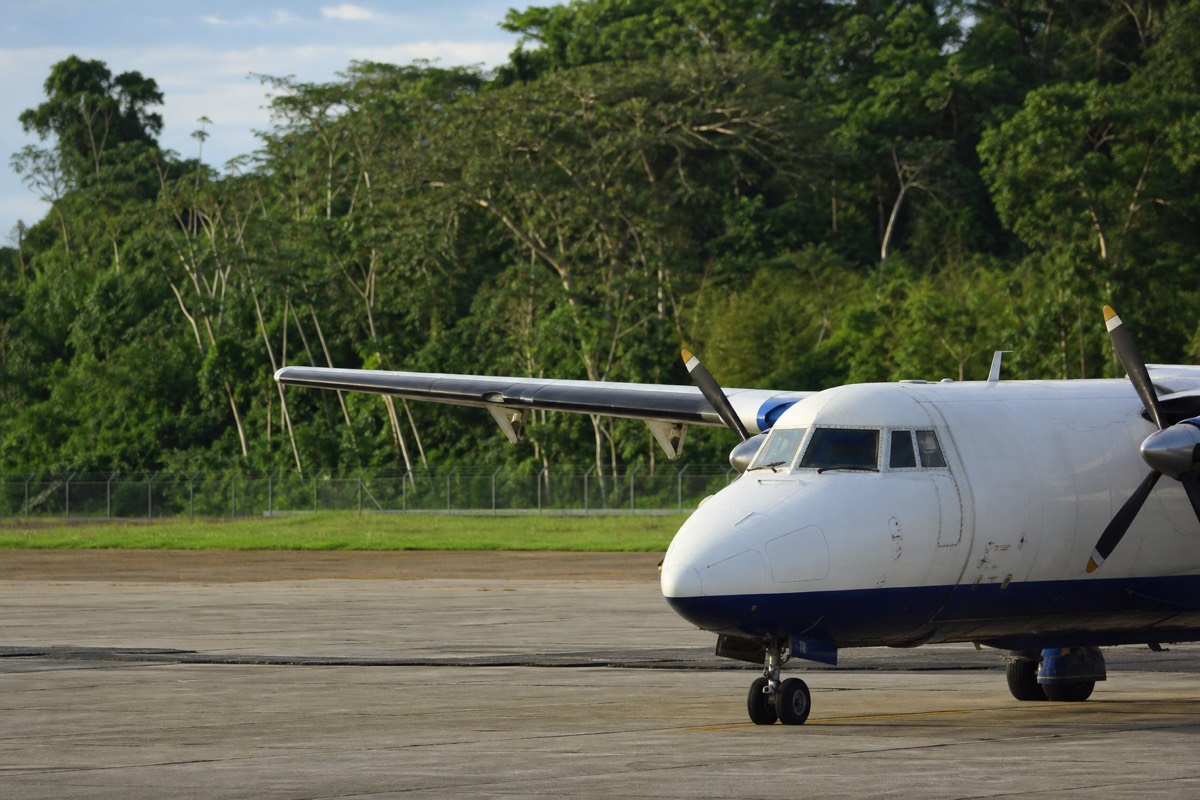
The sound of Iquitos is a small motorcycle engine, multiplied by several thousand. Motocarros, the three-wheeled taxis that do the work of buses and cars here, swarm every junction and make the waterfront feel busier than its map suggests. There is a reason the fleet looks the way it does: this is the largest city on earth with no road connection to the outside world, so nothing arrives by truck. Everything comes in by river barge or by plane.
That fact is not trivia. It shapes the food, the prices, the pace and the character of the place, and it is the single most interesting thing about spending a night here rather than treating the airport as a turnstile. Most visitors are here for the forest, which is fair, and this guide will not pretend otherwise. But almost everyone ends up with a spare afternoon or an unavoidable overnight, and the city rewards that time better than its reputation suggests.
Quick answer: one full day in the city is enough for most people, and two nights is the comfortable version. Give a morning to the market and the river, an afternoon to the waterfront and a food walk, and let the rest bookend your jungle trip. If your lodge transfer leaves early, spend your one night in town before the forest rather than after, because you will come back tired and happy and want a shower more than a walking tour.
Booking choice: Belén and Amazon confluence: 4 hours. Private guided market visit, floating-city exploration and river-confluence trip in one outing.
Discover Belén and Amazon confluence: 4 hoursHow long the short Iquitos-based trips run
Durations and starting prices as published on each tour's live listing at the time of writing; prices vary by date and group size.
Is Iquitos worth any time beyond the jungle?
Yes, for a day. The city is genuinely unusual: a working river port with boom-era architecture, a market that supplies a region the size of a country, and no road out in any direction. It is not a polished tourist town, and that is precisely the appeal for people who like places still mainly about their own business.
What Iquitos is not is a destination that fills a week. There is no cluster of world-class museums, the beaches are riverbanks, and the heat between ten and three discourages ambitious sightseeing. Treat it as a strong one-day city attached to an extraordinary region, and it will deliver. Arrive expecting Cusco and you will be disappointed by lunchtime.
The strongest single argument for the place is atmospheric. Standing on the waterfront watching a barge come up the Amazon, knowing the nearest road out of the country's whole northeastern quarter is a plane ride away, reframes the entire trip. Anyone still weighing the flight should read our fuller answer to is it worth visiting Iquitos, which takes the case apart properly.
How much time should you actually give the city?
Between three hours and two days, depending on what your flights and lodge transfers leave you. Three hours covers the waterfront. A full day covers the market, the river and a meal worth remembering. Two nights gives you a rest day around the jungle without wasting anything.
| Time available | What to do with it | What to skip |
|---|---|---|
| 3 hours, a long layover | Walk the waterfront promenade, look at the boom-era facades, eat once | Anything involving a boat, you will be watching the clock |
| Half a day, 4 to 5 hours | A guided market and floating-houses tour, then the waterfront at sunset | Trying to add a jungle excursion on top |
| One full day | Market in the morning, rest through the midday heat, food walk or a short river trip late afternoon | Two big activities in the same afternoon |
| One day plus one evening | All of the above plus a short river or lagoon trip, and a proper dinner | Nothing, this is the sweet spot |
| Two days | Add a half-day excursion outside town: piranha fishing, a bike and lagoon trip, or a river run | A third day, unless you are waiting on a flight |
| Three days or more | Put the extra nights into the forest instead | The city, honestly, it does not need this much |
The practical constraint is usually the lodge transfer. Jungle trips leave Iquitos in the morning and the boat ride to a lodge runs anywhere from 30 minutes to 3 hours, so your city time gets squeezed into the day you arrive and the afternoon you come back. Plan around those two windows rather than assuming you can slot the city in wherever. Our guide to how many days you need in the Iquitos Amazon covers the forest side of the same calculation.
What is there to actually do in the city?
The short list is the waterfront promenade, Belén Market and the floating houses, the boom-era streets around the main square, the food, and a short river or lagoon excursion. Most of it is walkable, cheap, and best attempted before ten in the morning or after four in the afternoon.
| What | Roughly how long | Best time of day | Notes |
|---|---|---|---|
| The Malecon riverfront promenade | 1 to 2 hours | Late afternoon into sunset | The city's social spine, with views over the water |
| Belen Market and the floating houses | 3 to 4 hours guided | Early morning, before the heat | Best done with a guide, both for context and for comfort |
| Boom-era streets near the main square | 45 minutes | Morning or evening | Tiled facades left over from the rubber trade |
| A local food walk | About 4 hours | Late afternoon | The fastest way into Amazonian cooking without guessing |
| Piranha fishing on the river | 2 hours | Morning | Short, cheap, and a genuinely fun hour on the water |
| Rainforest bike ride with a lagoon stop | Day trip | Morning start | Gets you out of the city without committing to a lodge |
| Monkey Island and river species trip | 7 hours | Early start | A full day, effectively a jungle taster rather than a city activity |
Notice how many of those are river activities. That is the honest shape of the city: its best hours point outward at the water rather than inward at the streets. Even the promenade is fundamentally a place to look at the Amazon from.
What is the Malecon actually like?
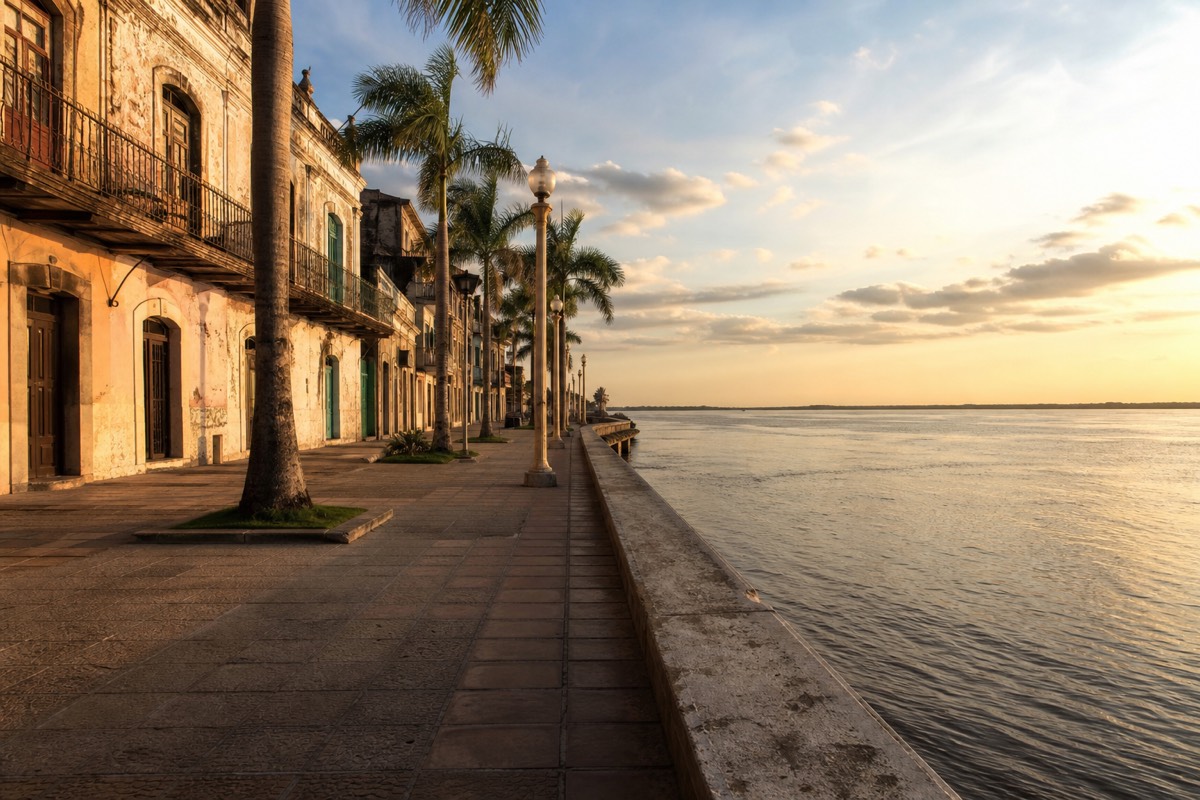
It is a raised riverfront promenade with the water on one side and bars, restaurants and old facades on the other. In the late afternoon it fills with families, vendors and people simply sitting, and it is the one part of town that works as an evening in its own right.
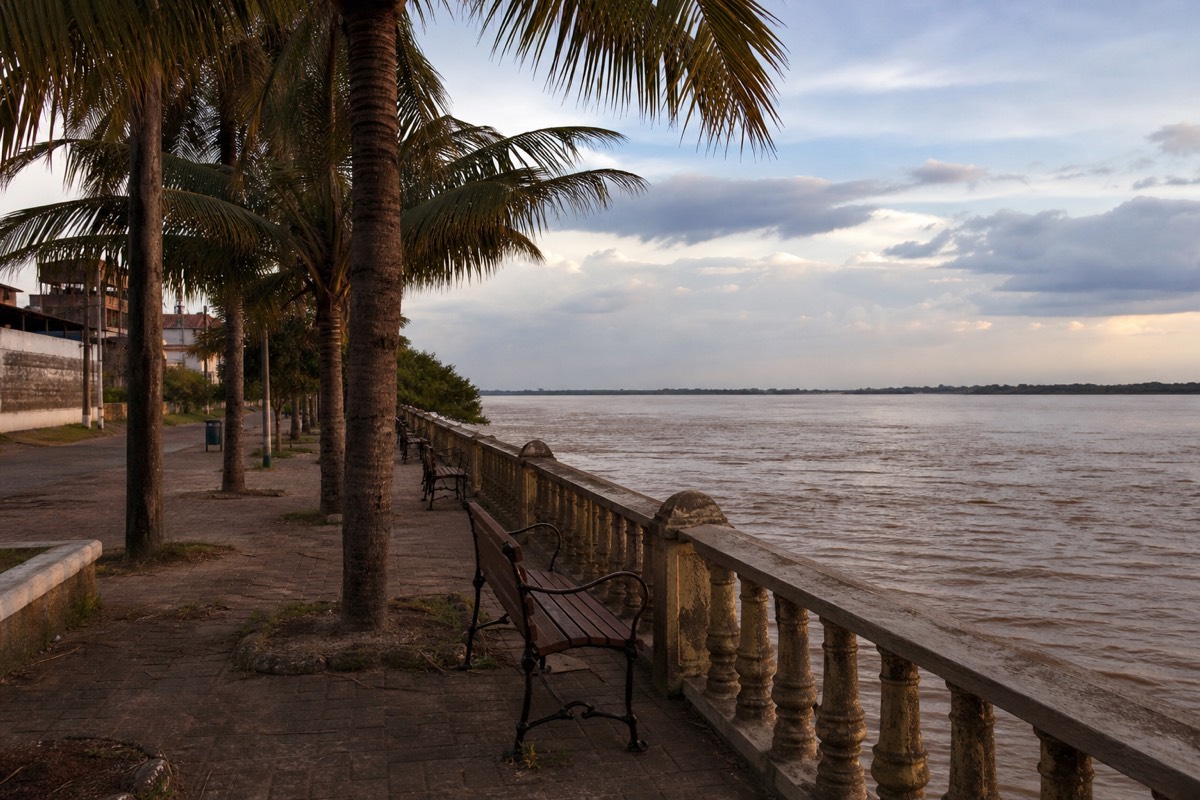
Come at sunset. The light over the river is the reason to be there, the heat has finally broken, and the whole city seems to arrive at once. During the day the same stretch is hot and largely empty, which is why visitors who walk it at noon come away wondering what the fuss was about.
The buildings behind it carry the other half of the story. Iquitos's history runs through a rubber boom that briefly made this remote river port very rich, and the money went into imported tiles and ironwork that still front several streets. They are worn now, and the contrast between the ornament and the working port below it tells you more about the place than any plaque would.
Should you visit Belen Market and the floating houses?
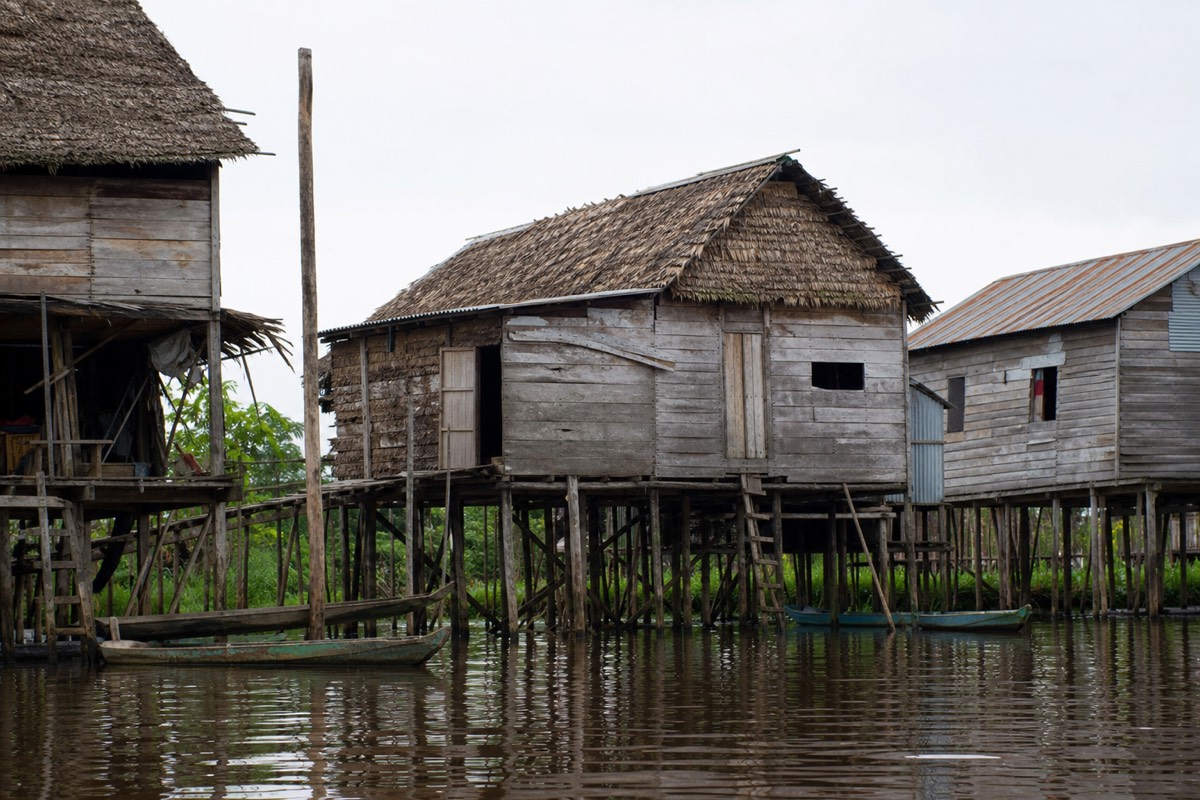
Yes, and go with a guide. Belen Market is a working Amazonian market rather than a craft bazaar, and the neighbourhood below it is built to survive the annual flood, with houses that float in high water and sit on the mud when the river drops. It is the single most memorable thing in the city.
The guided version exists for good reasons. A local guide can tell you what the unfamiliar produce is, which stalls are worth stopping at, and where the boundary of sensible wandering sits. The private tour sold here runs about four hours from $110, carries a 5.0 rating over 478+ bookings, and combines the market, the floating houses and a stretch of the Amazon River in one morning.
Go early. By late morning the market is at full heat and full volume, and the parts that feel fascinating at seven feel overwhelming at eleven. Bring small notes, keep your phone away, and treat it as somebody's workplace rather than a photo opportunity. Our dedicated guide to Belén Market goes into the layout, the produce and the etiquette in much more detail.
What should you eat in Iquitos?
Amazonian cooking is its own cuisine, built on river fish, cassava, plantain and fruit you will not have met before. Paiche, one of the largest freshwater fish in the world, is the headline. Juane, tacacho con cecina and patarashca are the dishes locals will steer you toward.
| Dish or ingredient | What it is | Worth knowing |
|---|---|---|
| Paiche | A very large river fish, firm and mild | The regional signature, served grilled or fried |
| Juane | Seasoned rice and chicken steamed in a bijao leaf | Traditionally tied to the San Juan festival in June |
| Tacacho con cecina | Mashed roasted plantain with cured, smoked pork | Heavy, excellent, usually a breakfast or lunch dish |
| Patarashca | Fish wrapped in leaves and cooked over coals | The most Amazonian thing on most menus |
| Camu camu | A tart river fruit, usually taken as juice | Sharp enough to wake you up, widely sold |
| Aguaje | Scaly palm fruit, sold on every second corner | An acquired taste, and a local obsession |
| Masato | Fermented cassava drink | Traditional, offered more often in river communities than in town |
We are not going to name restaurants or invent a review of one. Places change, and a recommendation we cannot stand behind is worth nothing to you. What works better here is a guided food walk: the four-hour Amazon food adventure sold here runs from $97 with a 4.7 rating across 377+ bookings, and it does the job of a local friend who knows which stall is having a good week.
One practical warning about street food and river water. Stick to cooked, hot food and sealed or filtered drinking water, especially in the first day or two while your system adjusts. Lodges provide filtered water, and a reusable bottle of 1 to 1.5 litres saves a lot of plastic across a trip.
How do you get around?
Motocarros, the three-wheeled motorcycle taxis, handle almost everything. They are everywhere, they are cheap, and there are no meters, so agree the fare before you get in. The central grid is walkable in the cooler hours, and anything beyond the city runs by boat.
| Mode | Use it for | Notes |
|---|---|---|
| Motocarro or mototaxi | Everything inside the city, including the airport run | Agree the price first, no meters, small notes help |
| On foot | The centre, the square, the promenade | Early morning and evening only, the midday heat is real |
| Taxi or ride app | Nights, and any trip with luggage | The safer default after dark |
| Boat | Anything outside the city, including every lodge | Transfers run 30 minutes to 3 hours depending on the lodge |
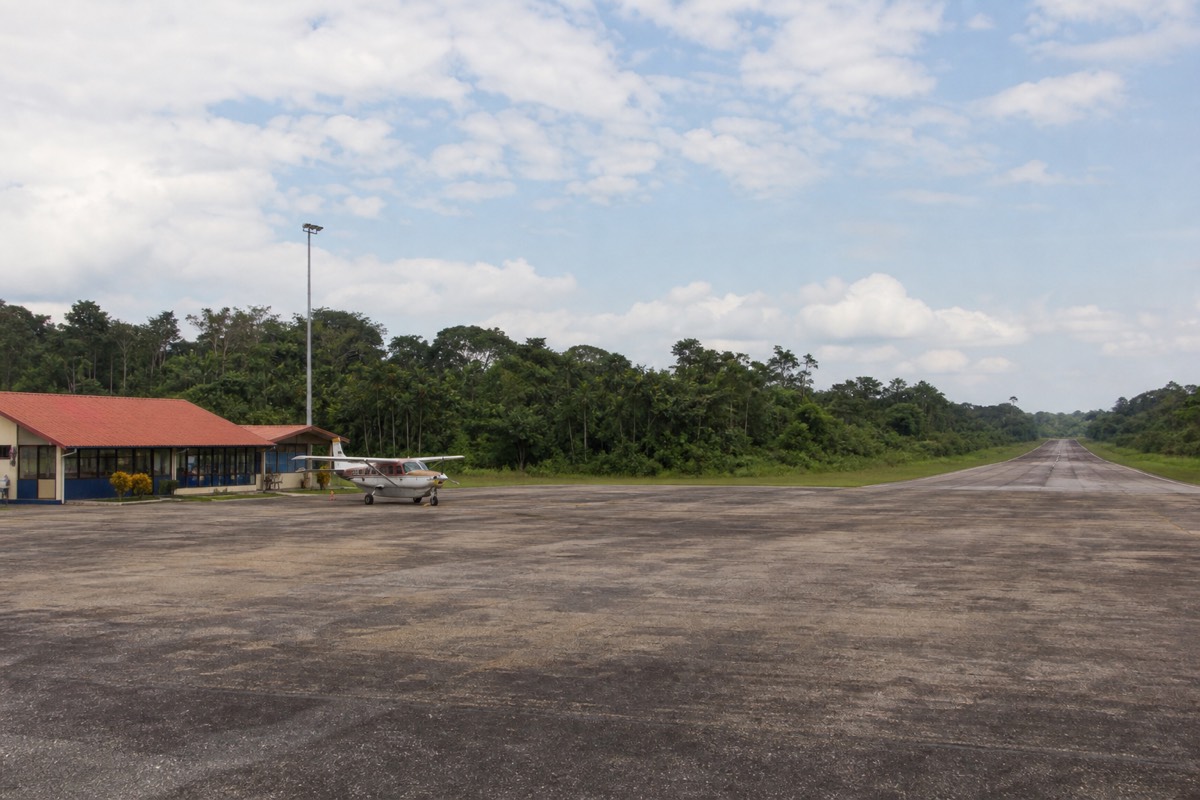
| Plane | Getting here at all | Roughly 1 hour 45 minutes from Lima, around $80 to $250 one way |
There are no roads out. The airport is the practical gateway for almost everyone, and the alternative is a river boat from Pucallpa or Yurimaguas that takes three to seven days for somewhere between $30 and $300 depending on whether you want a hammock deck or a cabin. That trip is a genuine adventure and a poor idea on a two-week holiday. Our guide on how to get to Iquitos covers both options in full.
Is Iquitos safe?
Generally yes, including for solo travellers and solo women, with the normal caveats of any busy South American river port. Violent crime against visitors is rare. Petty theft in crowded markets and around transport hubs is the realistic risk, so keep valuables out of sight and take a taxi at night.
The jungle side of a trip is the more controlled environment of the two, since lodge-based tours run with guides, life jackets, fixed schedules and staff who know exactly where everyone is. Solo travellers on group trips consistently report the experience as easier and more sociable than expected, and small groups of six to twelve create their own safety net.
In the city, the sensible rules are the boring ones. Do not flash a phone in Belen, do not walk unfamiliar streets alone late, and use a taxi rather than a motocarro after dark with luggage. Our fuller treatment of is Iquitos safe works through the specifics, including solo female travel and what lodges actually do about safety.
Does the season change what the city is like?
Yes, though less dramatically than it changes the forest. The river's flood cycle runs high from around December to May and low from June to November, and the difference is most visible in Belen, where houses that float in high water sit on exposed mud when the water drops.
| Aspect | High water, roughly December to May | Low water, roughly June to November |
|---|---|---|
| Belen floating houses | Actually floating, reached by canoe | Many sitting on mud, walkable in parts |
| Weather in town | Hot and humid, frequent afternoon showers | Hot and drier, easier to walk around |
| Visitor numbers | Low, prices softer | Higher, this is the main season |
| River traffic and port activity | Busy, deeper channels | Busy, more exposed banks and sandbars |
| Best for | Fewer people, dramatic flood scenes | Comfort, walking, jungle add-ons |
Temperature is not the variable. The equatorial climate keeps the city hot and humid all year, and it is the water level that makes one month feel different from another. If you are timing the trip around the forest rather than the city, our guide to the best time to visit the Iquitos Amazon makes the case month by month.
How do you fit the city around a jungle trip?
Put your city time at the front. Arrive a day before your lodge transfer, do the market and the waterfront while you are fresh, then leave for the forest. Coming back, you will want a shower, a proper meal and an early night far more than another walking tour.
| Day | Plan | Why this order |
|---|---|---|
| Day 1 | Fly in from Lima, check in, walk the promenade at sunset | Low-effort first evening after a travel day |
| Day 2 | Early market and floating-houses tour, rest at midday, food walk late afternoon | Both activities land in the cool hours |
| Day 3 | Morning boat transfer to the lodge, first jungle walk, night walk | Lodge trips start early, so this needs a clear morning |
| Days 4 to 5 | Full jungle days: dawn excursions, dolphins, trails, night boat | The reason you came |
| Day 6 | Morning activity, boat back to Iquitos, easy evening in town | Buffer between the forest and your flight |
| Day 7 | Fly out | Never book the jungle return and the flight on the same tight window |
That last row is the most useful line in this guide. River transfers depend on weather and water, and a delayed boat plus a same-day international connection is how people end up missing flights. Leave a night in the city as the buffer, and if nothing goes wrong you get a free evening on the waterfront out of it.
What should you pack for the city part?
The same kit as the jungle, minus the ambition. Light, quick-dry clothing, a hat, sunscreen, insect repellent and shoes you can walk in. Iquitos is hot and humid year-round, and the afternoon showers arrive without much notice.
Two things people forget. A dry bag or waterproof phone case is as useful in a motocarro during a downpour as it is on a boat, and small notes matter constantly, at markets, for fares and for tips. If you are heading into the forest afterward, our full what to pack list covers the long-sleeve, high-DEET, closed-toe-shoe end of the packing question.
Lodges commonly run a laundry service every day or two, which means you can pack lighter than instinct suggests. On small planes and boat transfers with weight limits, a soft duffel beats a hard case every time.
What can you do just outside the city without committing to a lodge?
Four short trips run out of Iquitos and back the same day: two hours of piranha fishing from $88, a rainforest bike ride with a lagoon stop, a seven-hour river and Monkey Island run from $150, and a full eight-hour wildlife day tour from $121. All of them return you to a hotel bed that night.
These are the right answer for anyone with an awkward gap: a spare day before a lodge transfer, a partner who does not want to sleep in the forest, or a trip too short for an overnight. They are not a substitute for a multi-day stay, and nobody should sell them as one. A day trip gives you a boat ride and a walk. The dawn chorus, the night sounds and a canoe through flooded forest all need at least one night out there.
Of the four, the two river days are the strongest value. The Monkey Island trip runs seven hours with river species as a stated focus, at $150 with a 5.0 average across 682+ bookings, and the eight-hour wildlife day tour covers similar ground from $121 with 4.8 stars over 303+ bookings. The two-hour piranha fishing trip is the cheapest way onto the water at $88, 4.7 stars, 307+ bookings, and it fits into an afternoon without rearranging anything.
The bike and lagoon trip is the outlier, and the one to pick if you would rather move under your own power than sit in a boat. Its price varies by date, so check the current listing, but the 5.0 rating across 270+ bookings suggests people get what they expect from it.
So is the city the reason to come?
No, and this guide is not going to pretend otherwise. The forest is the reason. The city is the gateway you pass through twice, and it happens to be an interesting one, which is a bonus rather than a headline.
Read it that way and the planning gets simple. Give Iquitos a day, ideally at the front of the trip, and put every other night into the forest where the wildlife is. A 3-day lodge stay is the format most people book, the 4 and 5-day trips are where the pace stops feeling rushed, and our comparison of the best Amazon lodges near Iquitos lays out the real options by price, rating and booking volume.
What the city does give you, in a single afternoon, is context. You see where the food comes in, how the river actually functions as a road, and what a working port makes of a place that has no road access to anywhere. Then you get on a boat and go find the pink river dolphins. Browse the full range of Amazon tours from Iquitos to see what fits the days you have.
When you are ready to move from planning to booking, browse the full set of Iquitos Amazon Tours and check availability.