Belen Market, Iquitos: What to Expect Before You Go
Below the last street in Iquitos, a whole district floats. Belen is a working market, a neighbourhood built on stilts and rafts, and the half day in the city that visitors remember. Here is what you will see and how to visit it well.
For a paid experience alongside this guide, private guided market visit, floating-city exploration and river-confluence trip in one outing. Explore Belén and Amazon confluence: 4 hours
Pricing note: figures in the original guide are illustrative historical examples, not current quotes. No independent wildlife sighting percentages or safety/welfare certification are verified. Use the dated provider options below to compare current details.
Walk south from the cathedral in Iquitos, past the last of the rubber-boom tilework, and the street simply runs out of city. Below you the ground drops toward the Itaya River and a neighbourhood spreads out across the mud and the water: thousands of houses on stilts and rafts, boats moving between them, a market pressing up against the top of the slope. This is Belen, and it is the reason a lot of people book a tour of the city at all.
It is also the single most misunderstood place in Iquitos. Depending on which travel forum you read, Belen is either a must-see slice of Amazonian life or somewhere you should not set foot. The truth is more ordinary than either version, and this guide sets out what you will actually find, what to be sensible about, and how to see it without being a nuisance to the people who live there.
Quick answer: Belen is a riverside district of Iquitos where much of the housing is built on stilts or floating platforms that rise and fall with the Amazon flood cycle, alongside a huge open-air market selling jungle produce, river fish and traditional medicines. It is safe to visit in daylight with a guide, worth about half a morning, and best seen on a small private tour rather than alone.
Booking choice: Belén and Amazon confluence: 4 hours. Private guided market visit, floating-city exploration and river-confluence trip in one outing.
Discover Belén and Amazon confluence: 4 hoursThe flood cycle that shapes the neighbourhood
Schematic of the annual flood cycle described in this site's own location notes, roughly December to May high water and June to November low. Not gauge measurements.
What is Belen Market and why is it famous?
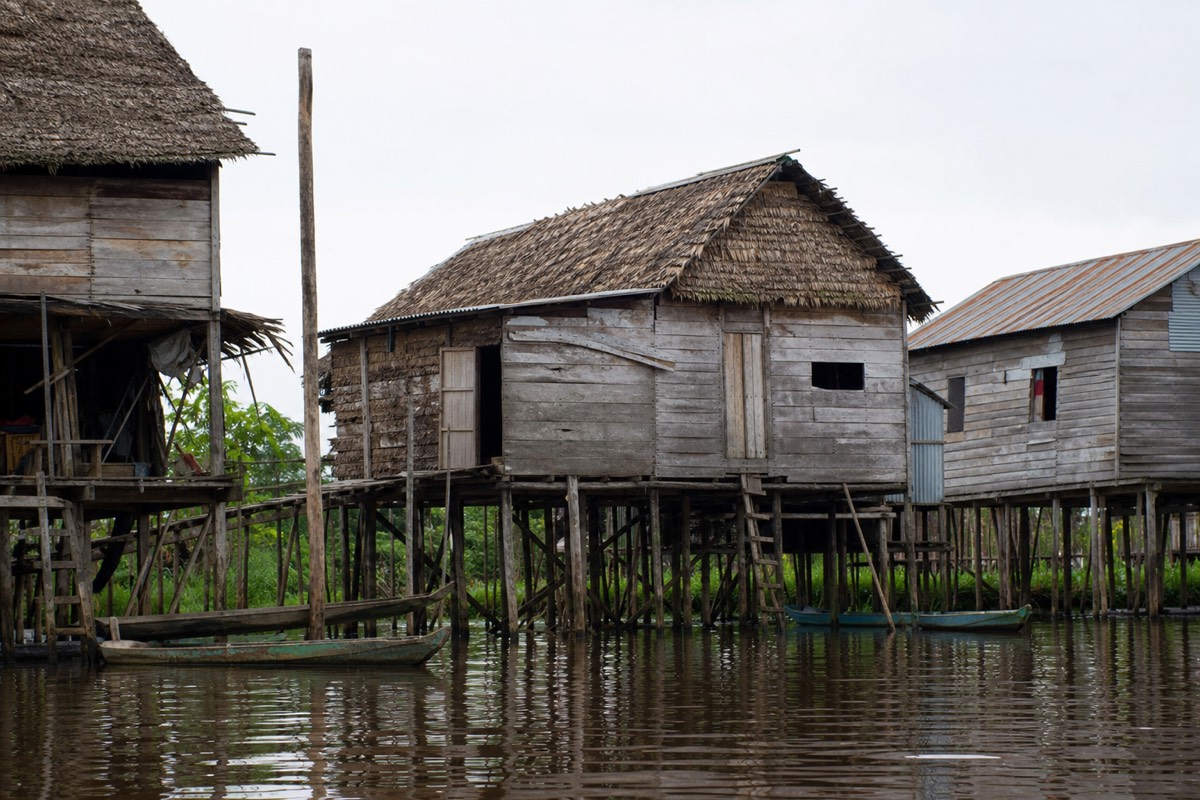
Belen is the market and riverside neighbourhood at the southern edge of Iquitos, on the Itaya River. It is famous for two things: the largest and most chaotic produce market in the Peruvian Amazon, and the floating and stilt-built houses of the lower district, which rise and fall by several metres over the course of a year.
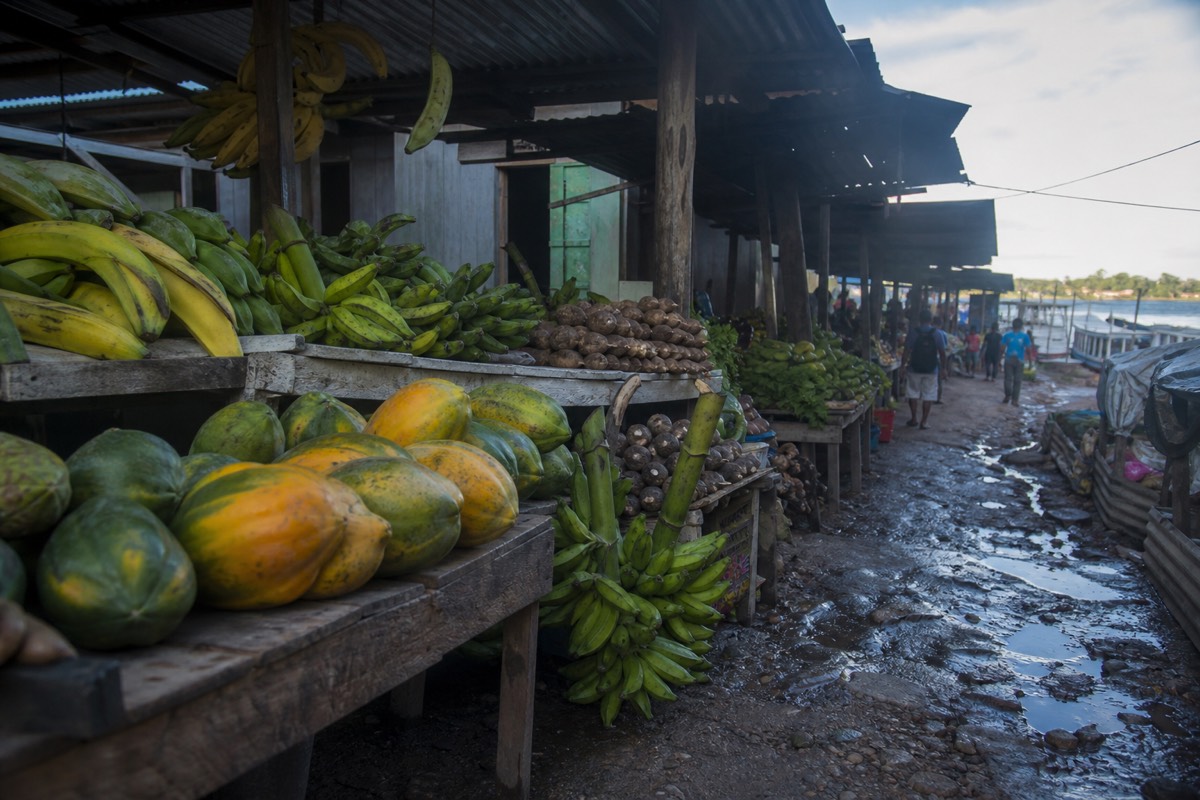
The market is not a tourist creation. It is where Iquitos does its shopping, and the great majority of people moving through it on any given morning are buying dinner, not photographs. Produce arrives by boat from up and down the river system and gets sold from tarpaulins, tables and doorways along a sprawl of streets that has grown organically rather than by plan.
The lower neighbourhood, often called the floating city, is a genuinely unusual piece of vernacular architecture. Rather than fight the flood cycle, people built for it. Some homes sit on tall hardwood stilts that keep the living floor above the highest water. Others sit on rafts of balsa logs and simply lift with the river, tethered in place, so the same house is at street level in September and afloat in April.
Between them, market and floating city form the most photographed part of Iquitos and the part that most reliably surprises visitors who came for the rainforest and had not thought much about the city itself.
Why are the houses built on stilts and rafts?
Because the river's annual flood cycle, not temperature, drives the seasons here. Roughly December to May is high water and June to November is low water, and the difference between the two is measured in metres. Building on stilts or on floating rafts is the practical local answer to a neighbourhood that spends part of every year underwater.
Iquitos sits at about 100 metres above sea level at the confluence of the Amazon, Nanay and Itaya rivers. All three rise together as rainfall accumulates across the upper basin, and the low ground at Belen is the first part of the city to go under. Rather than being an emergency, this is the expected rhythm of the year, and daily life adapts around it.
In high water, lanes become channels. People move by canoe between houses, shops keep trading from doorways at boat level, and a visit means a boat ride rather than a walk. In low water, the same lanes are mud and duckboards, the stilts stand exposed and often surprisingly tall, and you see the structural logic of the whole neighbourhood laid bare.
| Season | Months | What Belen looks like | How you see it |
|---|---|---|---|
| High water | Roughly December to May | Lanes flooded, rafts afloat, boats between houses | By boat, the classic floating-city experience |
| Peak of high water | Around March to May | Highest levels, most of the lower district on the water | Boat only in the lower section |
| Falling water | Around June to July | Mud reappearing, mixed access | Part boat, part walking |
| Low water | Roughly June to November | Stilts exposed, duckboards, much of it walkable | Mostly on foot, boats on the river channel |
If you want the boat-through-the-streets version specifically, aim for the high-water months. If you want to walk it, come in low water. Neither is better, they are different, and the month-by-month picture for the wider region is in the guide on the best time to visit the Iquitos Amazon.
What will you actually see at Belen Market?
River fish laid out whole, mounds of unfamiliar Amazonian fruit, sacks of rice and manioc, live poultry, bundles of bark and roots sold as traditional medicine, cheap household goods, and a solid wall of noise, smell and movement. It is a working food market first and a spectacle second.
The produce is the genuine highlight for most visitors. Camu camu, aguaje, cocona and copoazu are everyday items here and unknown almost everywhere else. Fish arrive from the river system in sizes that are hard to believe until you are standing next to one. Sacks of dried fish, plantain in every stage of ripeness, and chillies by the kilo fill out the rest.
Then there is the section that gets written about most: Pasaje Paquito, the alley given over to traditional medicine, where bottles of macerated bark, resins, plant tinctures and various preparations are sold by vendors who will explain what each one treats. Ayahuasca preparations are part of that trade. If you have an interest in the plant-medicine side of the Amazon, treat the alley as somewhere to look and ask questions, and read the separate guide on ayahuasca before you consider anything further.
You will also encounter things that sit uncomfortably with many visitors. Bushmeat and wild-caught species do appear in Amazonian markets, and Belen is not an exception. We are not going to sensationalise it, and we are not going to pretend it is not there. The reasonable response is not to photograph it for shock value and not to buy any wildlife product, which is both the ethical position and, in many cases, the legal one.
| Section | What is sold | Worth your time? |
|---|---|---|
| Fish landing | River fish sold whole, sometimes very large | Yes, most photogenic in the early morning |
| Fruit and produce | Camu camu, aguaje, cocona, plantain, manioc | Yes, the best reason to come |
| Pasaje Paquito | Barks, roots, resins, plant tinctures, traditional remedies | Yes, with a guide who can translate |
| Prepared food stalls | Juices, grilled fish, juane, regional snacks | Yes if the stall is busy and cooking to order |
| Household goods | Plastics, tools, clothing, hardware | Skip unless you need something |
| Floating city, lower Belen | Stilt and raft houses, boat lanes, river life | Yes, the part people remember |
Is Belen Market safe to visit?
Yes, in daylight, with normal precautions, and ideally with a guide. Iquitos overall has low rates of violent crime against visitors, and the realistic risk at Belen is opportunistic pickpocketing in a very crowded space rather than anything more serious. The market is not a place to wander at night.
The sensible measures are the same ones you would take in any dense market anywhere. Leave your passport at the hotel, carry a small amount of cash in a front pocket, keep your phone away except when you are deliberately taking a photo, and do not wear jewellery or a visible camera strap that advertises value. A daypack worn on your front rather than your back is a reasonable habit here.
The stronger argument for a guide is not personal safety, it is comprehension. The market has no signage, no map and no English. Without someone to explain what is on the tables, which alley leads where, and which boat is going in your direction, you will walk through a lot of noise and understand very little of it. With a guide you get the names of the fruit, the story of the flood cycle, and permission negotiated before a camera is pointed at anyone.
A practical note on the lower district: if the water is high, going into the floating city means getting into a small boat, and that should be arranged through a legitimate operator rather than by accepting an offer from someone at the waterfront. The wider version of the question, is Iquitos safe, has its own guide.
| Concern | Realistic risk | What to do |
|---|---|---|
| Pickpocketing | The main one, crowds are dense | Front pockets, bag on your chest, phone away |
| Getting lost | Easy, the layout is organic | Go with a guide, or stay on the main streets |
| Boat safety in the floating city | Low with a proper operator | Book through a tour, not a waterfront offer |
| Hygiene | Normal market conditions | Hand sanitiser, eat only at busy cooking stalls |
| Heat | Very real, no shade in places | Go early, carry water, hat |
| After dark | Higher, and pointless anyway | Do not visit at night |
How should you behave there, and can you take photos?
Treat it as somebody's workplace and somebody's street, because it is both. Ask before photographing a person or their stall, buy something if you have been taking up a vendor's time, do not photograph children, and do not treat the poorest housing in the city as a backdrop. A guide asking on your behalf, in Spanish, changes the interaction completely.
This matters more at Belen than at most attractions, because the neighbourhood is genuinely poor and gets a steady flow of visitors photographing it. Most vendors are relaxed about cameras when asked. Almost nobody enjoys having a lens pushed into their face without a word. The difference is a two-second question.
Buying something small is the easiest way to be a decent visitor. A bag of fruit, a fresh juice, a woven basket. It costs very little, it puts money directly into the neighbourhood, and it turns you from a spectator into a customer, which is a considerably more comfortable position to occupy.
A few other things worth knowing. Bargaining is normal but should be gentle, the sums involved are small. Small notes are far more useful than large ones. Closed shoes are better than sandals given the mud and the fish waste. And go early, both because the market is at its most alive before about nine in the morning and because the heat later is punishing.
Should you visit Belen on a tour or on your own?
A guided tour, for most visitors. The market has no signage, no English and no obvious route, the floating city needs a boat you have to arrange anyway, and a guide handles photo permission and explains what you are looking at. Independent visits are possible in daylight, but you will get a fraction of the experience.
The tour on this site that covers it is the private Belen Market, Floating Houses and Amazon River trip, which runs 4 hours, costs $110 and holds a 5 star rating with 478+ booked. Its itinerary walks the Malecon Tarapaca for the river views first, then goes through the market, then out by boat through the floating city, and ends where the Itaya meets the Amazon proper. That sequence is the right one: context, then chaos, then water.
Being private matters more here than on most tours. You set the pace, you can stop where something interests you, and you are not moving through tight market alleys as part of a group of twenty. Four hours is also about right. Belen is intense, and most people are ready for shade and a cold drink by the end of it.
| Guided private tour | On your own | |
|---|---|---|
| Cost | $110 for the private 4-hour tour | A few soles for a motorcart each way |
| Understanding what you see | High, everything gets explained | Low, no signage and no English |
| Floating city by boat | Included and arranged | You must negotiate a boat yourself |
| Photo etiquette | Permission asked for you in Spanish | Down to you and your Spanish |
| Safety | Higher, someone knows the ground | Fine in daylight with normal care |
| Time needed | About 4 hours including transfers | 1 to 2 hours if you only walk the market |
| Best for | First visits, photographers, anyone short on time | Repeat visitors, confident Spanish speakers |
What should you bring to Belen, and what should you leave at the hotel?
Bring small notes, hand sanitiser, water, closed shoes and a hat. Leave your passport, spare cards, jewellery and anything you would be upset to lose. The market is dense, hot and messy underfoot, and the smaller your visible footprint the more relaxed the whole visit becomes.
Footwear is the one people get wrong. Sandals are a bad idea in an environment of fish waste, mud and uneven boards, especially in the falling-water months when the ground is at its worst. Closed shoes you do not mind ruining are exactly right. In the wettest months a pair that dries quickly saves you an unpleasant afternoon.
Cash is the other one. Almost nothing here takes a card, and a large note produces either an awkward hunt for change or a sudden increase in the price. Bring small soles, keep them in a front pocket rather than a wallet, and split them so you are not opening a full stash in the middle of a crowd.
On the boat portion, if the water is high, treat your phone the way you would on any jungle river: in a waterproof pouch or a small dry bag. Spray, rain and the occasional wake are all normal. The full jungle version of this list is in the guide on what to pack for the Amazon, but for a morning at the market the short version above covers it.
| Bring | Why | Leave behind |
|---|---|---|
| Small notes in a front pocket | Nothing takes cards, big notes cause problems | Passport, spare cards, most of your cash |
| Closed shoes you can ruin | Mud, fish waste, uneven boards | Sandals and anything white |
| Hat and water | Little shade, real heat by mid-morning | Jewellery and visible valuables |
| Hand sanitiser | Ordinary market hygiene | Large camera bags that advertise gear |
| Waterproof pouch for your phone | Spray and rain on the boat leg | Anything you cannot afford to lose overboard |
| A little Spanish or a guide | No signage, no English anywhere | The expectation that anyone will speak English |
What else in Iquitos is worth your time?
The Malecon Tarapaca for river views, the rubber-boom architecture around the Plaza de Armas, the regional food scene, and a short trip out to the manatee rescue centre or Quistococha. Belen is the headline, but the city has enough for a full day between jungle legs.
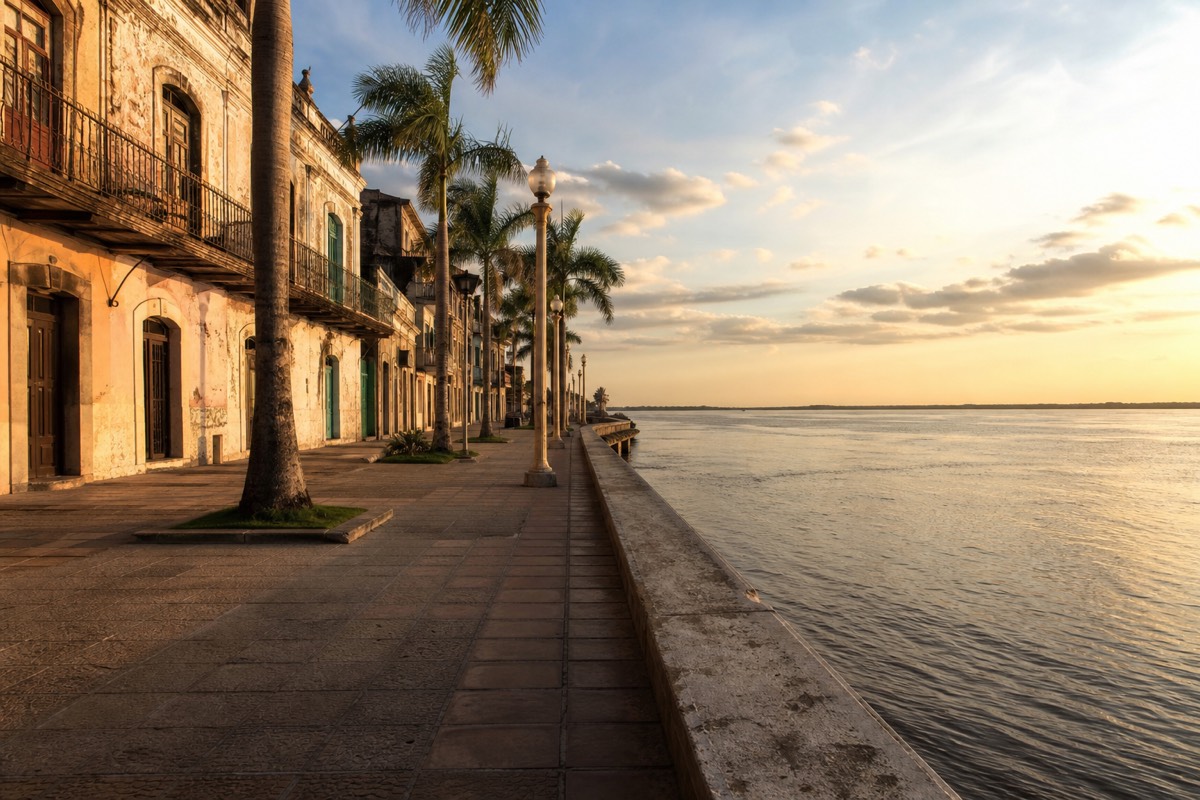
The Malecon is the natural pairing, and the private Belen tour starts there for a reason: standing above the river first gives you the geography before you drop into the market below. Late afternoon on the same promenade, when the heat drops and the city comes back outside, is the other good time to be there.
The architecture is easy to miss if you do not know to look for it. A century ago rubber money bought imported European tiles, ironwork and glass, and the buildings that survive give the centre an appearance that makes no sense for a town with no road out. Half an hour of wandering near the Plaza de Armas covers most of it.
Food deserves its own slot. Amazonian cuisine here is built on river fish, plantain, manioc and fruit you will not have met before, and having just walked past the raw versions in the market makes eating them far more interesting. The full list of things to do in Iquitos runs through the rest, including the options a short drive out of town.
| What | Time needed | Pairs well with Belen? |
|---|---|---|
| Malecon Tarapaca | 30 to 60 minutes | Yes, do it immediately before or after |
| Plaza de Armas and rubber-boom buildings | About 30 minutes | Yes, a short walk from the market |
| Amazonian food tour | Around 4 hours | Yes, ideally later the same day |
| Manatee rescue centre | Half a day with transfers | Separate half day |
| Quistococha lake and zoo | Half a day | Separate half day |
| A jungle day trip on the river | 7 to 8 hours | Different day entirely |
How does Belen fit into a wider Iquitos trip?
As a half-day in the city, ideally on your arrival day or the morning after you come back from the jungle. It pairs naturally with the Malecon, the rubber-boom architecture and the food scene, and it is the best possible introduction to how people actually live on this river system before you head upstream.
Most visitors fly into Iquitos and go straight to a lodge, then return with a spare half day before the flight out. That spare half day is exactly what Belen is for. It also works well on arrival, since the morning is the market's best hours and you are usually awake early after the flight from Lima anyway.
Pair it with food if you can. The city has an unusual regional cuisine built around river fish, plantain and jungle fruit, and having just seen the raw ingredients on a market table makes eating them afterwards considerably more interesting. The Narowe foodie tour, at $97 for 4 hours with a 4.7 star rating and 377+ booked, is the natural companion.
| When | Why it works |
|---|---|
| Arrival morning | Market is best early, you are already up after the Lima flight |
| Buffer day before the jungle | Protects against a delayed flight and fills the day usefully |
| Return morning from the lodge | Fits the half day most people have before flying out |
| Paired with a food tour | See the ingredients, then eat them |
| Not recommended | Afternoons in peak heat, and any time after dark |
Belen on its own is not a reason to fly to Iquitos. The rainforest is, and the case for that is made in the guide on whether it is worth visiting Iquitos. But of everything in the city itself, this is the half day that people talk about afterwards, and it puts the jungle trip in context in a way no lodge briefing manages. If you are still planning the rest, look at the range of jungle tours from Iquitos and at how many days you need in the Iquitos Amazon.
For current prices and departure dates, the operators behind our Iquitos Amazon Tours keep the live listings up to date.