Ayahuasca in Iquitos: What Travelers Should Know
Ayahuasca comes up constantly around Iquitos, and most of what travellers hear is either sales copy or rumour. This page sticks to what is documented: the legal position in Peru, the medical interactions that matter, and how to research a centre carefully.
For a paid experience alongside this guide, a Yarapa lodge stay with medicinal-plant walks, piranha fishing, night walks and village time. Meals, transfers, drinking water and rubber boots included. Explore Jungle Explorer: 5 days / 4 nights
Pricing note: figures in the original guide are illustrative historical examples, not current quotes. No independent wildlife sighting percentages or safety/welfare certification are verified. Use the dated provider options below to compare current details.
In 2008 Peru's national culture institute issued Resolución Directoral Nacional 836/INC, declaring the traditional indigenous use of ayahuasca part of the country's National Cultural Heritage. That document is the reason so much of the conversation around the Peruvian Amazon eventually circles back to this subject, and it is also the reason the legal picture is more complicated than "it is legal in Peru" suggests.
This article is informational. It is not encouragement, and it is not a booking page. The point is that anybody considering this should walk in knowing the two things that are genuinely documented and genuinely serious: what the law does and does not cover, and which medications and conditions make participation dangerous.
The one safety fact to take away: ayahuasca contains harmala alkaloids that act as potent monoamine oxidase inhibitors. Combining an MAO inhibitor with SSRI antidepressants can trigger serotonin syndrome, which can be fatal. If you take any prescription medication at all, and particularly an antidepressant, speak to a doctor before you consider this. Nothing on this page is medical advice.
Booking choice: Jungle Explorer: 5 days / 4 nights. A Yarapa lodge stay with medicinal-plant walks, piranha fishing, night walks and village time. Meals, transfers, drinking water and rubber boots included.
Discover Jungle Explorer: 5 days / 4 nightsIs ayahuasca legal in Peru?
Traditional indigenous use is legally recognised and protected. The 2008 declaration, Resolución Directoral Nacional 836/INC, named ayahuasca practice as National Cultural Heritage while explicitly separating that traditional context from commercial or consumer use. Retreat tourism therefore sits in a legal-but-unlicensed space: not prohibited, but not regulated or licensed either.
The international layer works differently again. DMT is a Schedule I substance under the 1971 UN Convention on Psychotropic Substances, while the ayahuasca plant decoction itself is not internationally controlled as a preparation. That distinction is why the brew can be legal in Peru while carrying serious legal risk if anyone tries to carry it across a border, which people do occasionally attempt and should not.
| Point | Position in Peru | What it means for a visitor |
|---|---|---|
| Traditional indigenous use | Recognised as National Cultural Heritage under RDN 836/INC (2008) | Legally protected practice within its cultural context |
| Commercial retreat tourism | Separated from the heritage declaration; not licensed as a regulated industry | No official register, no standard safety certification, quality varies widely |
| The brew as a substance | The plant decoction is not internationally controlled; DMT itself is Schedule I under the 1971 UN Convention | Never attempt to carry any of it out of the country |
The practical consequence of "legal but unlicensed" is the part most travellers miss. There is no government body auditing retreat centres, so no centre can point to an official safety licence. Screening standards, medical staffing and emergency planning are decisions each operation makes for itself.
What are the real medical risks?
The most documented danger is a drug interaction, not the experience itself. Harmala alkaloids in the brew are potent MAO inhibitors, and MAO inhibitors combined with SSRIs, certain other antidepressants and a range of other drugs can cause serotonin syndrome. That reaction can be severe and can be fatal, which is why medication screening is not a formality.
Serotonin syndrome is a medical emergency. In the middle of the Peruvian Amazon, hours by boat or road from a hospital, the distance itself becomes part of the risk profile. This is one reason responsible centres ask for a medical history in writing well before arrival, and why some decline participants outright.
Other commonly published concerns are cardiovascular and psychiatric. Blood pressure and heart rate changes make pre-existing cardiovascular disease a stated exclusion at many centres, and a personal or family history of psychosis is another, because of the risk of triggering an episode. None of that is exotic or fringe information, it is standard on the intake forms of centres that take screening seriously.
Which conditions and medications are usually listed as contraindications?
Responsible centres commonly exclude people taking SSRIs, MAOIs or antipsychotics, and people with cardiovascular disease, epilepsy, a history of psychosis, or who are pregnant. A centre that publishes this list before you ask is showing you its screening standard; one that never mentions it is telling you something too.
| Category | Commonly published contraindication |
|---|---|
| Medication | SSRIs and other serotonergic antidepressants |
| Medication | MAO inhibitors |
| Medication | Antipsychotics |
| Cardiac | Cardiovascular disease |
| Neurological | Epilepsy |
| Psychiatric | Personal or family history of psychosis |
| Other | Pregnancy |
Two things are worth saying plainly about that table. It is a summary of what responsible centres publish, not a complete medical screen, and stopping a prescribed medication in order to qualify is itself dangerous. Antidepressant discontinuation has its own clinical risks and clearance times, and it is a conversation for a doctor who knows your history, not for a retreat coordinator over email.
Does this site sell an ayahuasca retreat?
No. Iquitos Amazon Tours does not sell a dedicated ayahuasca retreat package and does not arrange ceremonies. The tours listed here are wildlife, river and lodge trips. Where the subject appears at all, it is as education about Amazonian plant knowledge, not participation.
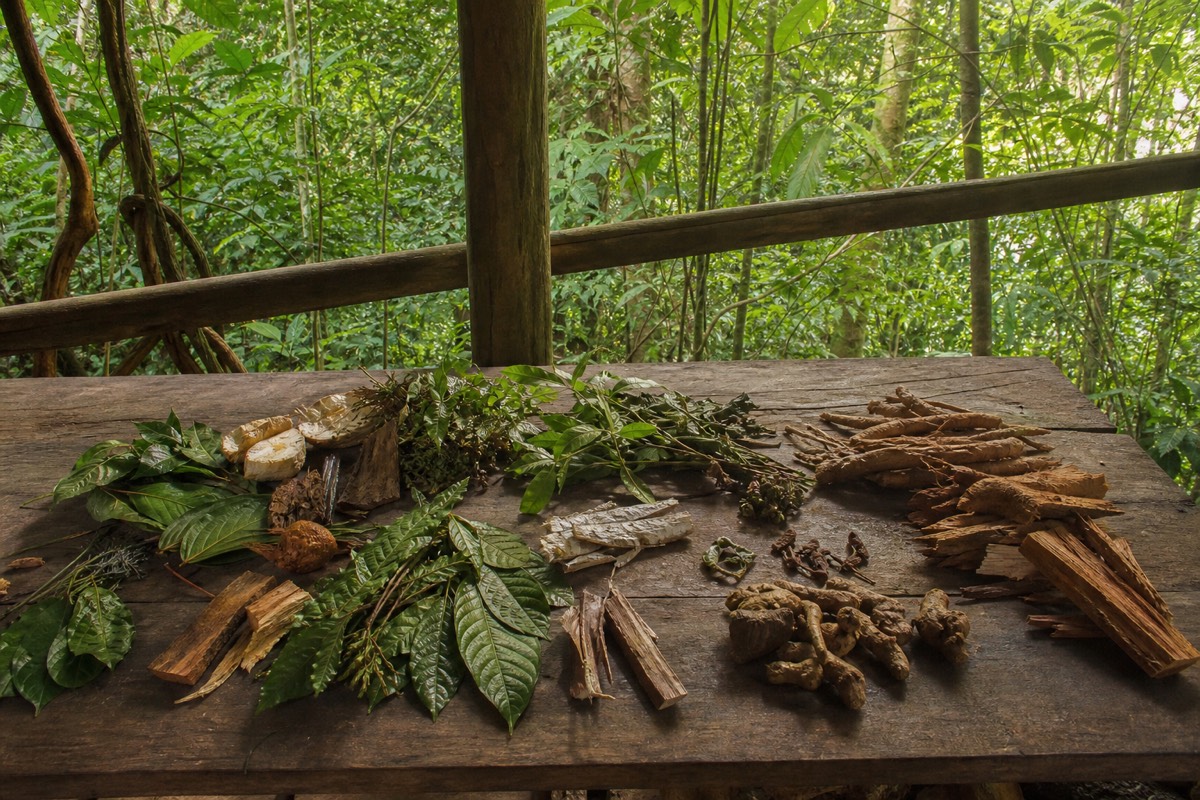
The one place it surfaces is the Jungle Explorer Tour, a 5-day, 4-night trip priced at $360 with a 4.9-star rating across 457 or more bookings. Its itinerary includes an educational stop covering medicinal jungle flora, including the plant known as the Soul Vine, or ayahuasca. That is a guide explaining a plant and its role in local tradition. It is not a ceremony, not a retreat, and no brew is served.
The same interest is easy to satisfy in the city itself. Belén Market has long been the place where Amazonian plant medicine is bought and sold by people who use it, and a guided walk through it gives you the cultural context without any of the medical questions above coming into play. It is one of the more genuinely informative things to do in Iquitos.
How should you research a retreat centre responsibly?
Judge centres on screening and safety infrastructure rather than atmosphere. Look for a written medical intake, a published contraindication list, a stated policy on stopping medications, named facilitators, an emergency plan with a realistic evacuation route, and no pressure to commit quickly. Independent directories that vet centres are a better starting point than a search engine.
For readers who want to research this properly, Ayahuasca Retreats in Peru is an independent directory that vets centres and publishes contraindication information, which makes it a more responsible place to begin than an unfiltered listings page. It is not affiliated with this site, and the point of mentioning it is that comparing centres against a consistent set of safety criteria beats comparing them on photographs.
Beyond that, apply the same instincts you would use to choose an ethical Amazon tour operator. How does the organisation talk about risk? Does it acknowledge that some people should not participate? Does it promise outcomes? Any operation guaranteeing healing, transformation or a specific result is selling something no one can deliver, and that overpromise is itself a screening signal.
What should you ask a doctor before considering this?
Bring your full medication list, including over-the-counter drugs and supplements, and ask directly about MAO inhibitor interactions. Ask about your cardiovascular status, any seizure history, and any psychiatric history in your family. If you take an antidepressant, ask what discontinuation would involve clinically and whether it is advisable at all.
That last question is the one people most often skip, usually because they have already decided. A doctor may well say no. That answer is information, and the whole reason the interaction risk gets flagged so consistently is that people have been harmed by ignoring it.
If the conclusion is that this is not for you, the Peruvian Amazon around Iquitos loses nothing. The rivers, the flooded forest, the dawn chorus and the wildlife are the reason most people come, and they ask nothing of your medical history. Amazon tours from Iquitos run year-round on exactly that basis, and the region is straightforward for independent travellers, which is a subject covered separately in the question of whether Iquitos is safe.
When you are ready to move from planning to booking, browse the full set of Iquitos Amazon Tours and check availability.