Is Iquitos Safe? A Practical Safety Guide for Amazon Travelers
The city and the jungle are two different safety questions, and the jungle half is usually the safer one. Here is the honest breakdown: what genuinely goes wrong in Iquitos, what guided lodge tours already handle for you, and the handful of habits that cover almost everything else.
For a paid experience alongside this guide, forest walks, a night boat outing and dolphin watching from a lodge base. Meals, guide and round-trip airport transfers included. Explore Muyuna: 3 days / 2 nights
Pricing note: figures in the original guide are illustrative historical examples, not current quotes. No independent wildlife sighting percentages or safety/welfare certification are verified. Use the dated provider options below to compare current details.
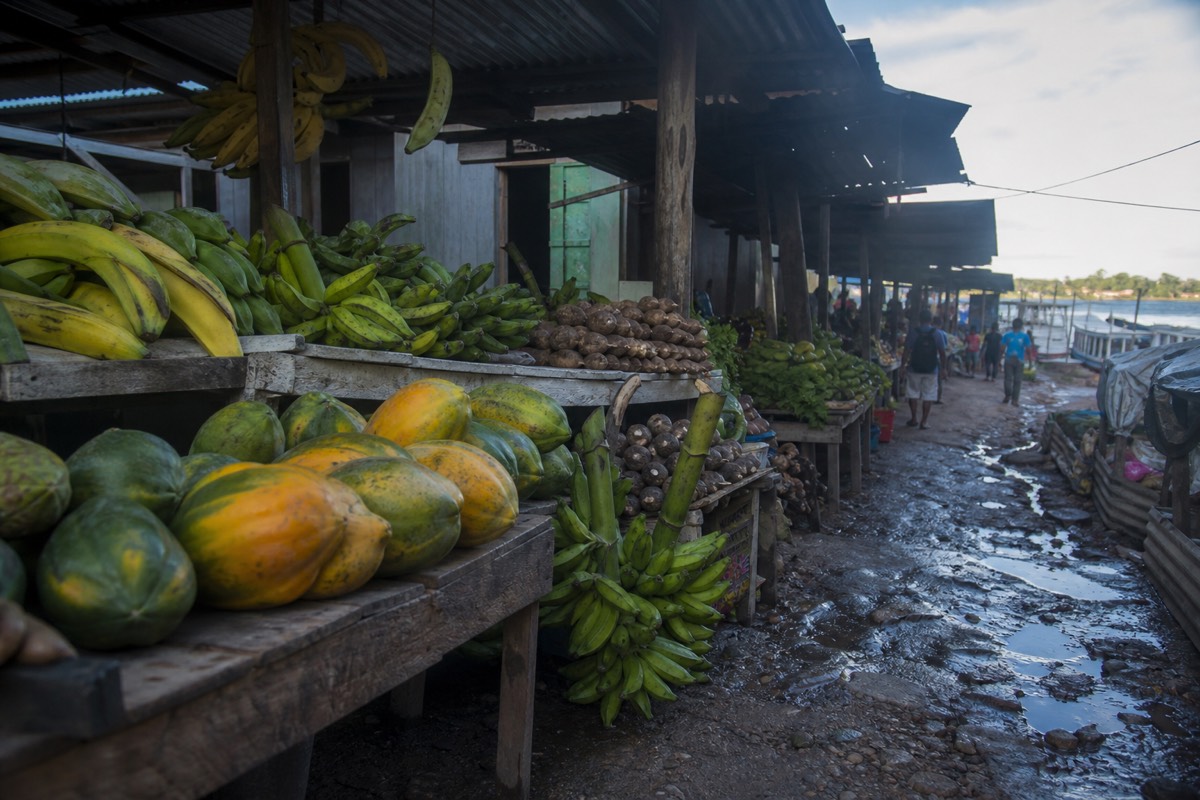
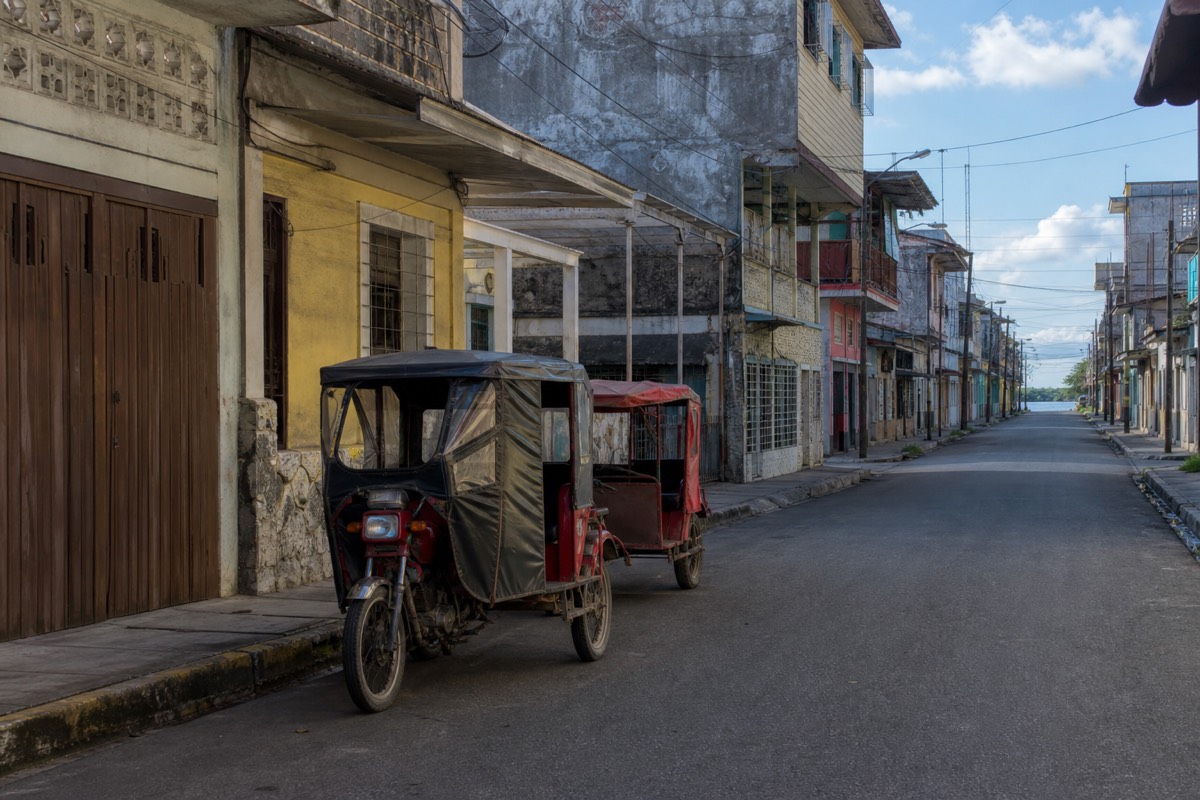
Two different questions hide inside one. The first is about a hot, loud river city where motorcarts outnumber cars and the biggest market in town floods every year. The second is about what happens once you are two or three hours upriver at a lodge with no road out, no pharmacy and no police station within reach. The honest answers are not the same, and blurring them together is why so much of what gets written about safety here lands as either alarmist or useless.
This guide keeps them separate. First the city itself: ordinary urban risk, crowded markets, river ports, getting around after dark. Then the tour side, which is what most visitors are actually nervous about, and where the picture is set by professional guiding rather than by crime. The short version surprises people: the jungle half of an Iquitos trip is usually the safer half.
Quick answer: Iquitos is generally safe for visitors, including solo travelers and solo women, and guided lodge-based Amazon tours are the safest part of the trip. Violent incidents against tourists are rare. The realistic risks are petty theft in crowded places such as Belén Market and the river ports, plus heat, sun and insects. In the forest you are never left alone, a guide leads every walk and every boat trip, and life jackets on the water are mandatory.
Booking choice: Muyuna: 3 days / 2 nights. Forest walks, a night boat outing and dolphin watching from a lodge base. Meals, guide and round-trip airport transfers included.
Discover Muyuna: 3 days / 2 nightsWhat actually goes wrong on an Iquitos trip
A qualitative ranking built from this site's own safety guidance and standard lodge operating practice, not a measured incident dataset: bar length reflects how likely you are to encounter something, not how serious it would be.
What are the real risks in Iquitos, and what already handles each one?
The risks that actually shape a trip here are insects, sun and heat, in that order, followed at some distance by petty theft in crowded places. Violent crime against visitors is rare, dangerous wildlife encounters are very rare because nobody walks unguided, and river travel is covered by mandatory life jackets and experienced captains.
Notice how little of that list is about crime. The thing most likely to affect your week in the Peruvian Amazon is a mosquito, and the second most likely is the sun reflecting off open water for four hours while you look for pink river dolphins. Those are dull risks, which is exactly why they get underestimated and why people arrive with pepper spray and no repellent.
The table below sets out each risk category, how likely you are to actually meet it, what the tour operation already does about it, and the part that stays yours.
| Risk | How likely you are to meet it | What already manages it | Your part |
|---|---|---|---|
| Insects (mosquitoes, sandflies) | Near certain, this is the risk you will genuinely experience | Lodges provide nets, screened rooms and repellent guidance | Repellent with 30 to 50 percent DEET on skin and clothing, long sleeves and long trousers, reapply at dawn and dusk |
| Heat, sun and dehydration | Very likely on open boats | Excursions are scheduled around dawn and late afternoon, midday is downtime | SPF 50 or higher, waterproof, reapplied roughly every two hours, wide-brim hat, polarized sunglasses, a 1 to 1.5 litre bottle refilled at the lodge |
| Stomach upset | Possible | Lodges serve filtered water and freshly cooked food | Drink the filtered water provided, skip ice from unknown sources, carry rehydration salts |
| Petty theft (bag, phone, camera) | Possible in crowded markets, ports and busy streets | Guided city tours keep a group together and moving | Day bag worn in front, passport and spare cards left at the hotel, phone out of your hand in a crowd |
| Boat travel | Rare | Life jackets are mandatory, captains are experienced river operators, transfers run in daylight | Wear the jacket and keep it on, electronics in a dry bag |
| Wildlife encounter | Very rare, and only realistic on foot in forest | A guide leads every walk, unguided walking is not permitted at lodges, guides carry protection on forest trails | Stay on the trail, walk behind the guide, closed shoes and long trousers, do not touch anything |
| Violent crime against tourists | Rare | A visible tourism economy in the centre and a strong local interest in keeping visitors comfortable | Taxi or a ride app after dark rather than walking unfamiliar streets, no visible valuables |
That structure holds for almost every visitor. The two rows at the top are near-guaranteed and cheap to solve. The bottom rows are frightening and unlikely, and most of them are already handled by somebody whose job it is to handle them.
Is it safe to walk around Iquitos?
Yes, walking around the centre of Iquitos in daylight is fine, and it is how most visitors see the city. The Plaza de Armas, the malecon and the streets between them are busy and visible. The two places to sharpen up are Belén Market and the river ports, where dense crowds make pickpocketing the realistic risk, and unlit residential streets late at night.
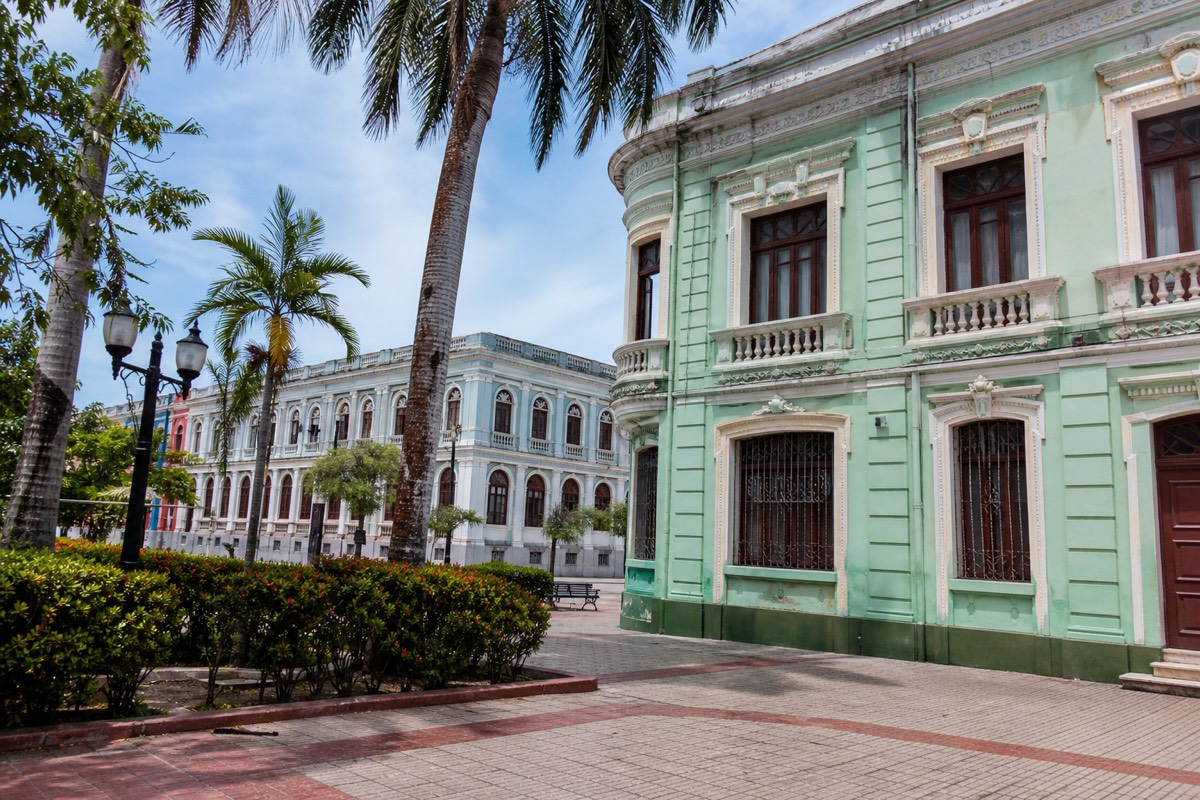
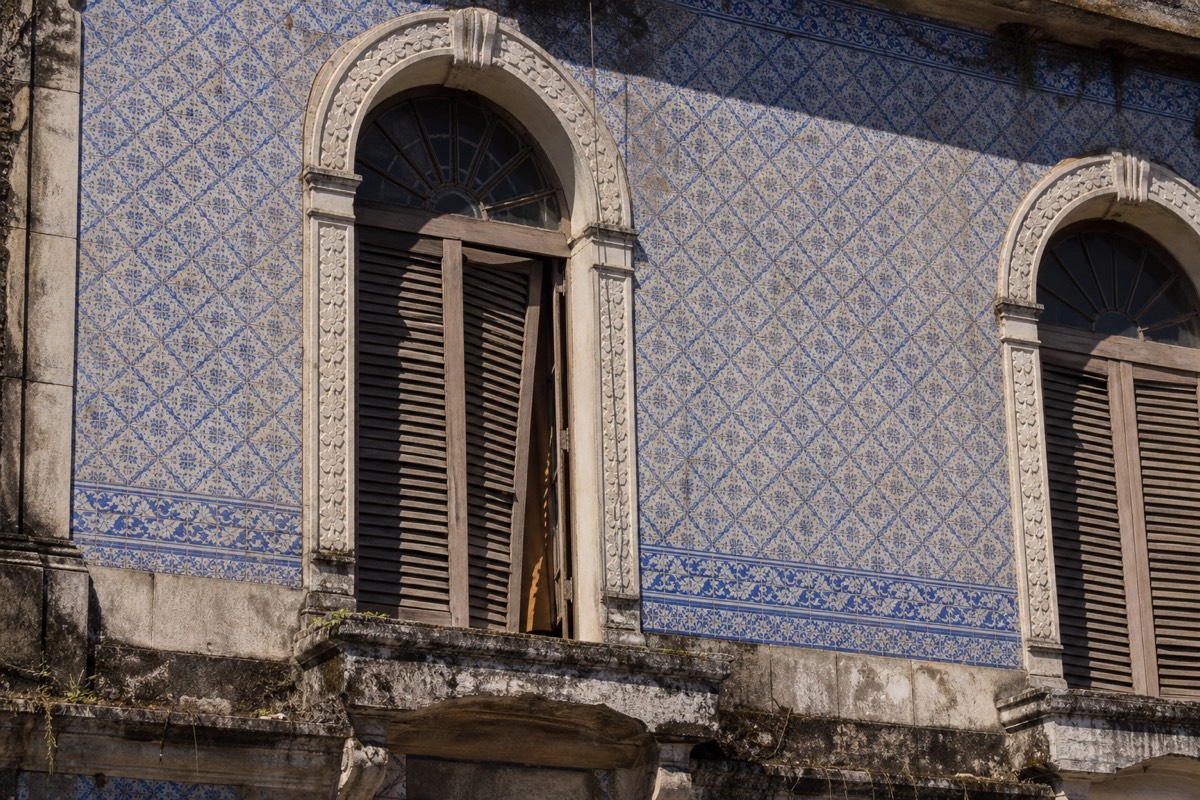
Iquitos is compact in the way river cities often are. The historic centre, with its tiled facades from the rubber boom, sits a few blocks back from the water, and the malecon runs along the bluff above the Itaya. You can walk that whole core in an afternoon. During the day it is a normal, working South American city centre: motorcart horns, ice cream carts, school groups, tourists with cameras.
The change happens at the market. Belén Market is genuinely one of the great markets of the Amazon, and it is also crowded, narrow and full of distraction, which is the exact environment where bags get opened. Nothing about that is unique to Peru. It does mean the market rewards a guided visit rather than a wander, particularly the lower Belén area where the floating houses sit on the water, because that is a working residential neighbourhood rather than an attraction, and arriving with someone local changes both the welcome and the risk. The Belén Market tour on this site runs four hours as a private trip and carries a 5 star rating across 478 or more bookings, which tells you the format works.
| Where | Realistic caution level | Why |
|---|---|---|
| Plaza de Armas and the malecon, daytime | Low | Busy, visible, the tourist heart of the city |
| The malecon, early evening | Low | Restaurants and bars are open, plenty of people about |
| Belén Market and the surrounding streets | Moderate, this is the pickpocket zone | Dense crowds and narrow aisles, distraction is the whole method |
| Lower Belén and the floating houses | Guided visit only | A working residential neighbourhood, not a viewpoint |
| River ports and boat landings | Moderate | Crowds plus luggage, unattended bags disappear |
| Quiet residential streets at night | Moderate | Poor lighting, few people, no reason to be there |
| Motorcart or taxi at night | Low, and better than walking | The standard local advice is to ride rather than walk after dark |
The other thing worth understanding about the city is why it feels the way it does. Iquitos has no road access to the rest of Peru, so everything arrives by air or by river. That gives the place a self-contained, slightly frontier character, and it also means the port areas are the real economic engine, busy at odd hours and not designed around tourists. Understanding how to get to Iquitos in the first place makes the geography of the city click into place quickly.
How safe are the guided jungle tours themselves?
Guided lodge-based Amazon tours are the most controlled part of an Iquitos trip. Remote lodges run 24 hour staffing, guides accompany every walk and boat trip, first-aid kits and emergency communication are standard, and solo travelers are never left alone in the jungle. Small groups of roughly six to twelve people mean the guide can see everyone at once.
This is the part that gets the least attention and deserves the most, because it inverts the usual assumption. Once you are on the boat out of Iquitos, you have handed the logistics to a professional operation whose entire business depends on nothing going wrong. There is no unstructured time in the forest, no going for a walk on your own, no ambiguity about where you are supposed to be.
| Safety feature | What it means in practice |
|---|---|
| 24 hour lodge staffing | Someone is awake and on site at every hour, including through the night |
| Guides on every walk and boat trip | No unguided wandering; guides carry protection on forest trails |
| First-aid kits on site | Basic medical response without waiting for a boat back to town |
| Emergency communication | Radio or satellite contact where phone signal stops, and it does stop |
| Mandatory life jackets | Worn on transfers and on excursions, including for children |
| Small groups of six to twelve, or private | The guide can count heads and actually watch the group |
| Fixed briefings and protocols | You are told the rules of each activity before it starts |
| Private cabins and rooms | Relevant for solo travelers and particularly for solo women |
The practical consequence is that choosing a well-reviewed lodge tour is itself a safety decision, not just a comfort one. The most-booked option on this site, the 3-day Maniti Eco-Lodge tour at 469 dollars, holds a 4.5 star rating across 986 or more bookings, and that volume is more informative than a flawless score on a handful of reviews. The same logic applies to the 4-day premium eco-lodge tour at 545 dollars with its 4.9 star average over 349 or more bookings.
Is Iquitos safe for solo travelers and solo women?
Yes. Solo travelers, including solo women, consistently report feeling safe and respected on Iquitos Amazon tours. Lodges offer private cabins, guides are professional, and small-group tours create a natural social net where solo visitors quickly connect with the rest of the group. Many describe it as safer than expected and one of the easier solo trips in South America.
Two things drive that. The first is structure. A solo traveler on a lodge tour is not solo in any meaningful operational sense: you are collected at the airport or hotel, put on a boat, briefed, fed, guided and counted. The second is the group dynamic. A tour of six to twelve people spending three days together in the same handful of canoes turns into a small temporary community by the second dinner, which is why so many solo reviews mention the other guests as a highlight.
The city requires the same judgement any unfamiliar city does. Keep your accommodation address written down, take a taxi or ride app rather than walking home late, do not carry your passport around, and let somebody at home have your lodge name and dates. That last one is worth doing even on a group tour, because in the forest your phone will not work and nobody will hear from you for two or three days.
For solo travelers deciding between formats, the private options are worth a look for a different reason than safety: a private guide sets the pace around what you want to see. The Belén Market and floating houses trip runs private for four hours at 110 dollars, which is a gentle way to start a solo trip before heading upriver.
Is the wildlife actually dangerous?
Not in the way the films suggest. Encounter risk is very low because you never walk unguided, and the species people fear most are the hardest to see at all. No independently measured sighting rate is verified for this guide; encounters depend on the route, conditions and wild animals. Anacondas and boas turn up occasionally on night walks near water, and guides deliberately know where to look, so encounters are led rather than stumbled into.
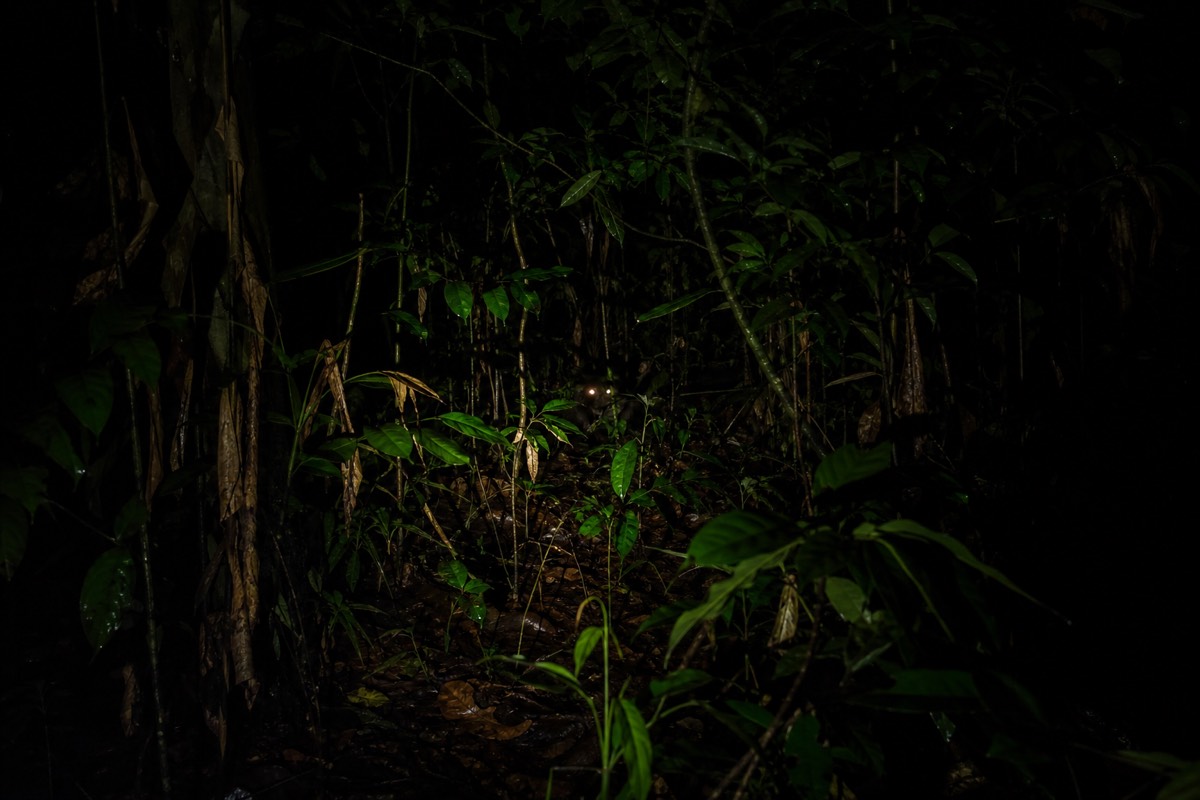
The wildlife you will meet constantly is small: insects, frogs, spiders on a night walk, and fish under the boat. The wildlife you might meet occasionally is large and shy. Caimans are the exception in that you will almost certainly see them, but you will see them as reflected eyes from a boat during a spotlight search, which is a viewing situation rather than an encounter.
| Species | Chance you see it | Chance it becomes a problem | Why |
|---|---|---|---|
| Mosquitoes and sandflies | Certain | The only one that reliably affects your trip | Constant presence; repellent and covered skin are the whole answer |
| Caimans | Not independently measured | Very low | Seen from a boat, spotlit at distance |
| Anacondas and boas | Occasional on night walks or near water | Very low | Guides know the spots, so sightings are guided and controlled |
| Jaguars | Not independently measured | Very low | They avoid people; a sighting is a lucky glimpse, not a confrontation |
| Piranhas | Certain if you fish for them | Very low | Small fish, handled by the guide, catch and release |
| Night-walk insects, frogs, spiders | Certain | Low | Look, photograph, do not touch, that is the entire rule |
If you want the full picture of what is realistically visible, the site's guide to the wildlife you'll actually see breaks the species list into honest probability tiers, and there is a separate piece on anacondas and jaguars for the two animals that generate the most questions. The short version: the animals that scare people are the ones you have to work hardest to glimpse.
How safe is boat travel on the Amazon rivers?
River travel is routine here and treated as such. Life jackets are mandatory, including child-sized ones, captains are experienced river operators, and transfers run in daylight on calm water. Expect 30 minutes to 3 hours by boat from Iquitos to your lodge, and roughly 3 to 4 hours a day on the water once you are there.
The rivers around Iquitos are wide and slow rather than white and technical. Excursion boats and dugout canoes move at 10 to 20 kilometres an hour precisely because slow is quiet and quiet is how you see animals. That pace is also what makes the boats stable and predictable.
Two practical points. First, the sun on open water is the real hazard of a long boat day, not the water itself, so a hat and a long-sleeved shirt do more for you than anything else in your bag. Second, take a dry bag. Spray, rain showers and the general dampness of the Amazon are hard on phones and cameras, and a soaked phone in a place with no signal and no shop is a genuine inconvenience. The site's guide on what to pack covers the rest of the kit list.
| Boat situation | Typical duration | Safety notes |
|---|---|---|
| Iquitos to lodge transfer | 30 minutes to 3 hours by speedboat | Daylight, life jackets on, luggage stowed and covered |
| Morning excursion | Around 1.5 to 2.5 hours | Dawn departure, calm water, cool air, best wildlife activity |
| Afternoon excursion | Around 1.5 to 2.5 hours | Strongest sun exposure of the day, cover up |
| Full-day excursion on longer tours | 4 to 6 hours, occasionally 6 to 8 | Picnic lunch aboard, bring extra water and sun cover |
| Night caiman search by canoe | Usually 1 to 2 hours | Spotlight from the boat, stay seated, guide directs |
What health risks should you actually plan for?
Bites, sunburn and dehydration, in that order, with stomach upset as a distant fourth. The Iquitos region sits at roughly 28 to 35 degrees Celsius in the day and 22 to 26 at night, humid year round, with mosquitoes and sandflies present constantly and peaking at dawn and dusk. Everything on that list is preventable with kit you can buy before you fly.
Remote lodges cannot resupply you. That is the single most useful frame for packing a medical kit: bring what you need plus a few days of margin, especially prescription medication, because there is no pharmacy an hour upriver and the boat runs on the lodge's schedule, not yours.
| Issue | What actually prevents it | Bring |
|---|---|---|
| Mosquito and sandfly bites | 30 to 50 percent DEET on skin and clothing, long sleeves and trousers in neutral earth tones, trousers tucked into socks on walks | Repellent, a buff or bandana, spare long-sleeved shirts |
| Sunburn | SPF 50 or higher waterproof sunscreen reapplied roughly every two hours; water reflection intensifies exposure on boats | Sunscreen, SPF lip balm, wide-brim hat, polarized sunglasses |
| Heat and dehydration | Continuous drinking rather than catching up later; midday rest built into most itineraries | A 1 to 1.5 litre insulated bottle, refilled with lodge filtered water |
| Stomach upset | Filtered lodge water, freshly cooked food, no unknown ice | Rehydration salts, anti-diarrhoea tablets, antihistamine |
| Blisters and cuts | Closed-toe shoes with grip, proper socks, no sandals on trails | Blister plasters, a small first-aid kit, painkillers |
| Running out of medication | Packing a full course plus several spare days | All prescriptions in original packaging |
| Being caught without light | Charging is limited at remote lodges and power can drop | Headlamp, spare batteries, a power bank |
Does the length of your tour change the safety picture?
It changes the demands rather than the danger. Day trips are daylight-only and end back in the city. Multi-day lodge stays add night walks, longer transfers and remote locations, all under the same guided structure. The one format that asks more of you is the 6-day camping expedition, which trades lodge infrastructure for tents.
Anyone weighing formats should read the site's guide on how many days you need in the Iquitos Amazon alongside this one, because the length question is mostly about wildlife odds and pacing. From a safety and comfort angle, the pattern below is what changes as trips get longer.
| Format | Real examples on this site | What changes for you |
|---|---|---|
| Half day in the city, 4 hours | Belén Market, floating houses and Amazon River private tour, 110 dollars, 5 stars, 478 or more booked | Guided and urban; the safest way to see the market and the floating houses |
| Day trip, 7 to 8 hours | Monkey Island tour, 150 dollars, 5 stars, 682 or more booked; Iquitos Amazon day tour, 121 dollars, 4.8 stars, 303 or more booked | Daylight only, back in Iquitos by evening, minimal kit needed |
| 2 to 3 days at a lodge | Maniti Eco-Lodge 3-day, 469 dollars, 4.5 stars, 986 or more booked; 3-day premium eco lodge, 420 dollars, 4.8 stars; Muyuna Lodge 3-day, 539 dollars, 5 stars | First night walks and night boat trips, full lodge infrastructure, no signal |
| 4 to 5 days | Iquitos 4-day premium eco-lodge, 545 dollars, 4.9 stars, 349 or more booked; 4D/3N rainforest tour, 375 dollars, 4.8 stars; Jungle Explorer 5-day, 360 dollars, 4.9 stars | Longer transfers, more remote water, a weather buffer built into the itinerary |
| 6 to 7 days | 6-day camping expedition, 909 dollars, 4.3 stars; 7-day Maniti adventure, 1,129 dollars, 5 stars | Highest self-sufficiency; the camping option swaps lodge rooms for tents, so pack accordingly |
How do you tell a safe operator from a risky one?
Look at review volume rather than review score, ask about group size, confirm that life jackets are mandatory and that no walk happens without a guide, and get the lodge name and itinerary in writing so you can leave it with someone at home. Operators who take safety seriously answer these questions immediately and specifically.
A 5 star rating on twelve bookings tells you almost nothing. A 4.5 star rating across 986 or more bookings, which is what the 3-day Maniti tour carries, tells you the operation survives contact with a large number of very different guests. That is the number to weight. The same reasoning is behind the site's guidance on how to choose an ethical Amazon tour operator, where the criteria for treating wildlife and communities well overlap heavily with the criteria for running a tight, safe operation.
| What to check | What good looks like | Why it matters |
|---|---|---|
| Rating plus volume | 4.5 stars or better across hundreds of bookings | Volume shows consistency; a perfect score on a handful of reviews shows nothing |
| Group size | Six to twelve people, or a private option | A guide can only supervise a group he can see |
| Life jackets | Stated as mandatory, child sizes available | Non-negotiable on a river system this size |
| Guide accompaniment | No unguided walks, guides on all excursions | This is what makes wildlife encounter risk very low |
| Emergency communication | Radio or satellite where phone signal ends | Remote lodges are hours from a hospital by boat |
| Age policy | Clear minimums; some remote lodges set 6 to 8 years, walking excursions in big-wildlife areas often 8 to 10, camping trips often 10 and up | Policies vary by lodge, so confirm rather than assume |
| Written itinerary and lodge name | Supplied before departure | So somebody at home knows where you are for the days you are offline |
What should you do if something does go wrong?
In the city, treat it like any urban incident: report a theft to the tourist police for your insurance claim, cancel cards, and use your accommodation as the first point of help. At a lodge, tell a guide or staff member immediately, because they hold the first-aid kit, the radio and the decision about a boat back to Iquitos.
Travel insurance that covers remote areas and river transport is the single most useful piece of preparation for the jungle portion of a trip. Evacuation from a lodge is a boat ride measured in hours, and while lodges are set up to make that call quickly, the cost side is yours.
Keep a small text file or a photo on your phone with your lodge name, operator contact, flight details and insurance policy number, and send the same information to one person at home. Then keep the lodge routine: go where the guide says, be back when the group is back, wear the life jacket, and do not take a walk on your own because you saw something interesting from the deck. Those four habits cover nearly every realistic scenario, which is why the best-run Iquitos Amazon tours enforce them without discussion.
The last piece of context is timing. Conditions shift with the river rather than the thermometer, so the best time to visit the Iquitos Amazon changes what a trip feels like: low water from June to November means firmer trails and more mosquito-free ground time, while high water from December to May means more of your day happens in a canoe. Neither is unsafe. They just ask for slightly different kit.