Amazon Wildlife You Can Actually See Near Iquitos
Some Amazon animals you will almost certainly see. Some you might. A few you probably will not, no matter how much you paid. Here is the honest breakdown, sorted by real sighting odds rather than brochure promises.
For a paid experience alongside this guide, explore the Yanayacu-Pucate by boat, with forest walks, birdwatching and night excursions. Camp accommodation, meals and reserve entry included. Explore Pacaya-Samiria: 4 days / 3 nights
Pricing note: figures in the original guide are illustrative historical examples, not current quotes. No independent wildlife sighting percentages or safety/welfare certification are verified. Use the dated provider options below to compare current details.
The howler monkeys start before the light does. Somewhere across the water a troop begins that low, roaring call that carries for kilometres through wet forest, and everyone on the lodge deck stops mid-coffee to listen. That is a real jungle morning near Iquitos. It is also the honest answer to the question most people are actually asking before they book anything: will I see wildlife, or is this a boat ride through green walls?
You will see wildlife. The northern Peruvian Amazon holds over 1,000 bird species and more than 300 mammals, and the forest here is a working ecosystem rather than a managed park. But sightings are not evenly distributed. Some species you meet on day one from the boat without trying. Others take four days, a good guide and some luck. Below is the split, based on operator reporting and visitor accounts from 2025 and 2026 on lodge-based trips.
No independently measured sighting rate is verified for this guide; encounters depend on the route, conditions and wild animals.
Booking choice: Pacaya-Samiria: 4 days / 3 nights. Explore the Yanayacu-Pucate by boat, with forest walks, birdwatching and night excursions. Camp accommodation, meals and reserve entry included.
Discover Pacaya-Samiria: 4 days / 3 nightsWhich Amazon animals are you almost guaranteed to see?
No independently measured sighting rate is verified for this guide; encounters depend on the route, conditions and wild animals. Most visitors tick off every one of them inside the first 48 hours, and a good share of those sightings happen from the boat rather than on foot.
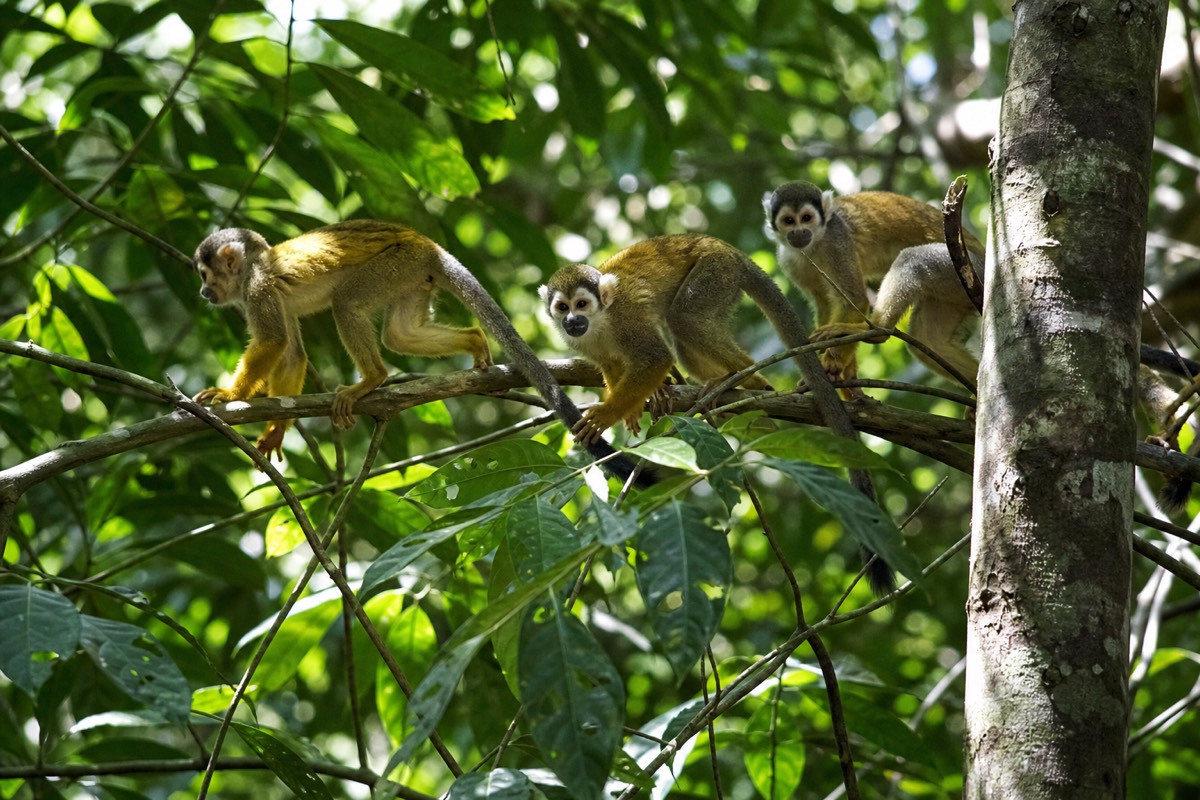
Monkeys are the reliable headline act. Squirrel monkeys and brown capuchins move in noisy troops through riverside branches, howlers announce dawn and dusk from a distance, and tamarins, woolly monkeys and night monkeys turn up on trails and near lodge clearings. Guides know which fruiting trees are producing that week, which is most of the trick.
Birds are constant rather than occasional. Scarlet, blue-and-yellow and red-and-green macaws gather in real numbers at clay licks, where peak activity runs roughly 7:00 to 9:00 in the morning. Toucans, kingfishers, herons, oropendolas, hummingbirds and the strange, prehistoric-looking hoatzin fill in the rest of the day.
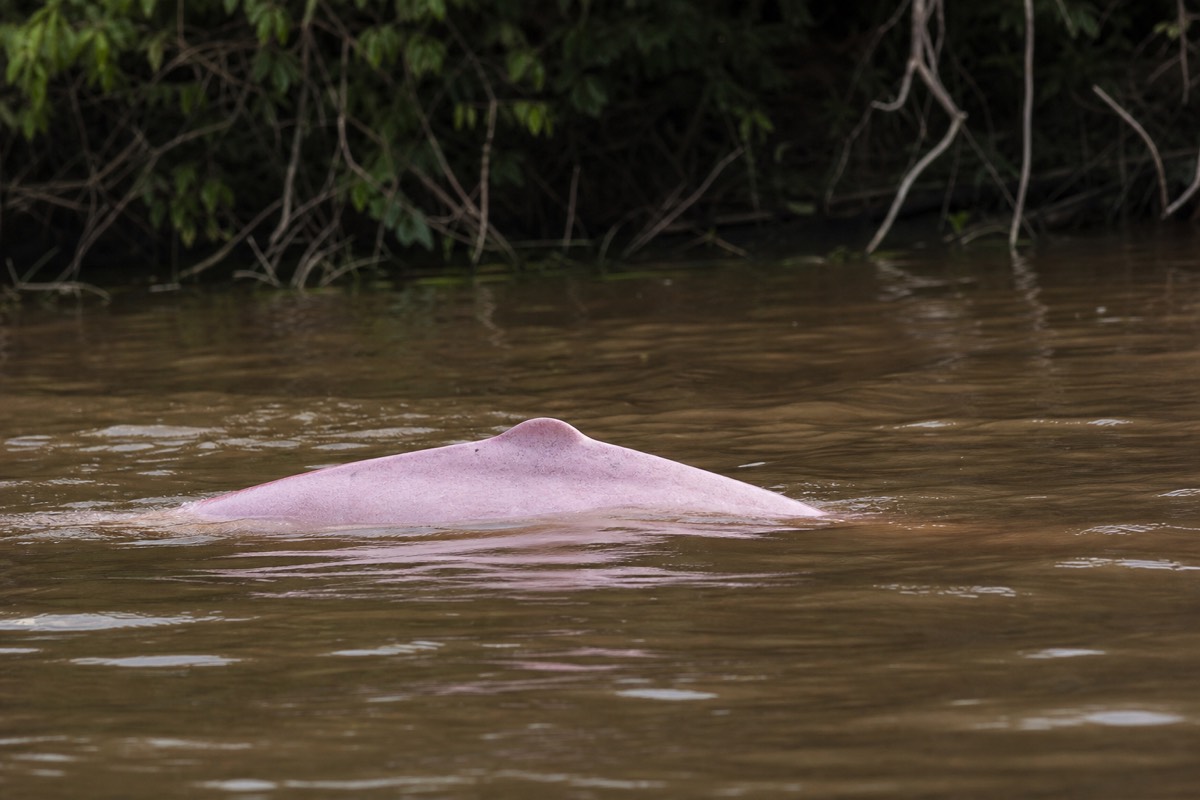
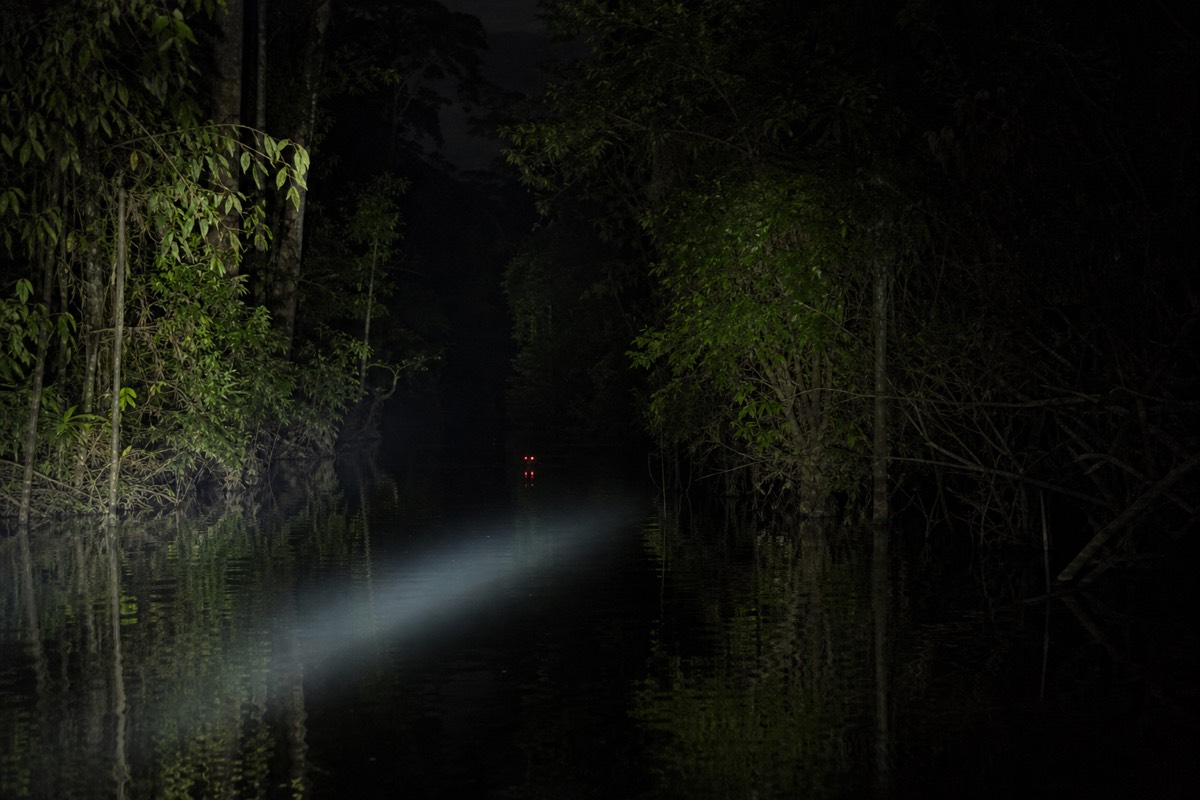
On the water, pink river dolphins surface around boats often enough that people stop photographing them by day two. No independently measured sighting rate is verified for this guide; encounters depend on the route, conditions and wild animals. Caimans show up on riverbanks and, more dramatically, as pairs of red eyeshine picked out by spotlight after dark.
| Species group | Typical sighting odds | Where you usually see them |
|---|---|---|
| Monkeys (squirrel, capuchin, howler, tamarin, woolly, night) | Not independently measured | Riverside trees, forest trails, near lodges |
| Macaws, parrots, toucans, hoatzin | Not independently measured | Clay licks, canopy towers, river channels |
| Pink river dolphins | Not independently measured | Main rivers, channel mouths, lagoons |
| Caimans (spectacled and black) | Not independently measured | Night boat trips, riverbanks |
| Capybara | Not independently measured | Grassy banks, swimming between islands |
Which animals are a strong maybe rather than a promise?
No independently measured sighting rate is verified for this guide; encounters depend on the route, conditions and wild animals. You have good odds on a three-day trip and very good odds on four or more days, but any one of them can simply fail to appear, and honest guides say so upfront.
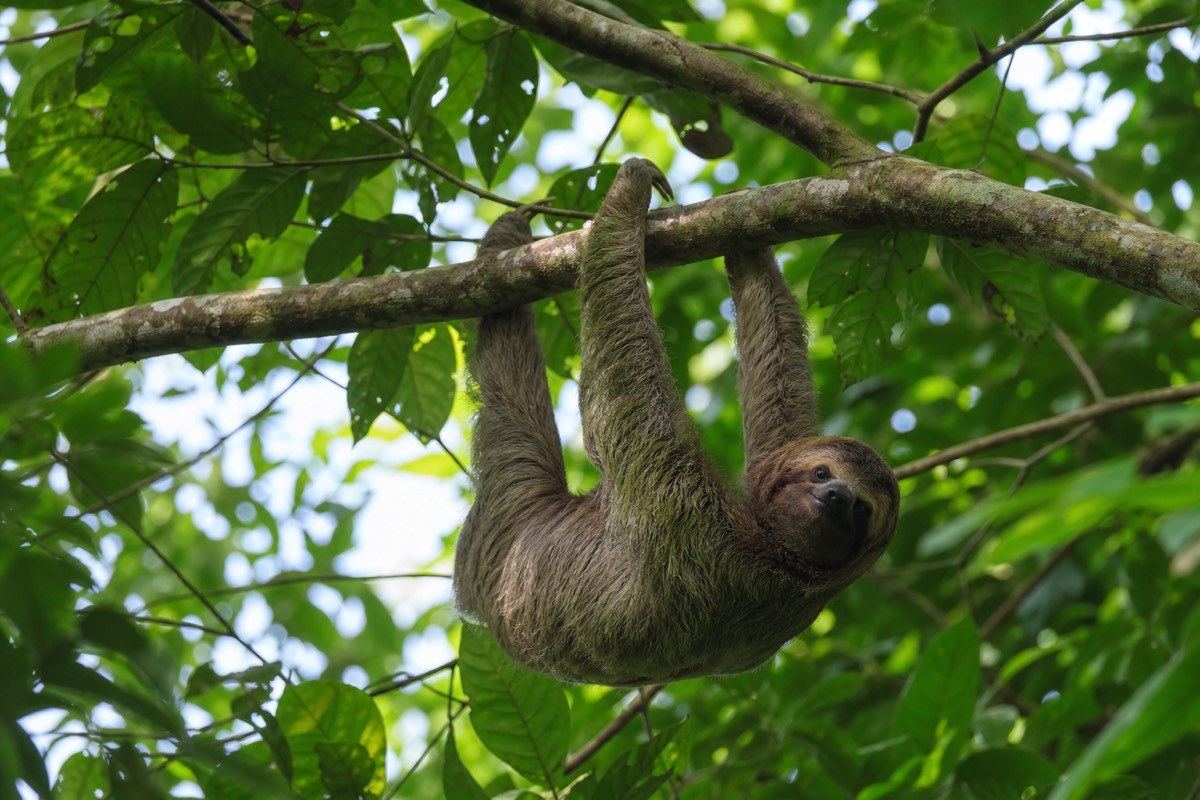
Giant river otters are the one people most want and most often ask about. They are loud, social and unmistakable when a family group is fishing an oxbow lake, and they are also mobile, so a lake that held them last week may be empty this week. Sloths are the opposite problem: they are usually there, they are just extremely good at looking like a termite nest. Guides find them with binoculars and patience.
Poison dart frogs light up on wet leaf litter, and they are far easier to find after dark, which is one of several reasons Amazon night walks are worth doing rather than skipping for an early bed. Snakes turn up occasionally near water and on night trails. If constrictors are the specific thing you came for, we go deeper into realistic odds in our piece on anacondas and jaguars.
Which Amazon animals stay genuinely rare?
No independently measured sighting rate is verified for this guide; encounters depend on the route, conditions and wild animals. Treat every one of these as a bonus. Booking a trip expecting a jaguar is the fastest way to be disappointed by an excellent tour.
The pattern here is simple. These animals are shy, thinly spread, mostly nocturnal, and they live in the least-visited parts of the forest. Remote areas like the Pacaya-Samiria National Reserve, Peru's largest protected area and a river journey from the city, give the best odds, and even there the honest number is a minority chance.
Tapirs and the small cats, ocelot, margay and bush dog, are night animals, so night excursions raise your odds. Harpy eagles are a guide-knowledge sighting: the ones people see are usually at nesting sites that local guides monitor across seasons.
What actually improves your chances of seeing more?
Four things move the needle more than anything else: staying longer, going out at dawn and after dark instead of midday, booking a guide who works these rivers year-round, and travelling during low water from May to October when animals concentrate around permanent water.
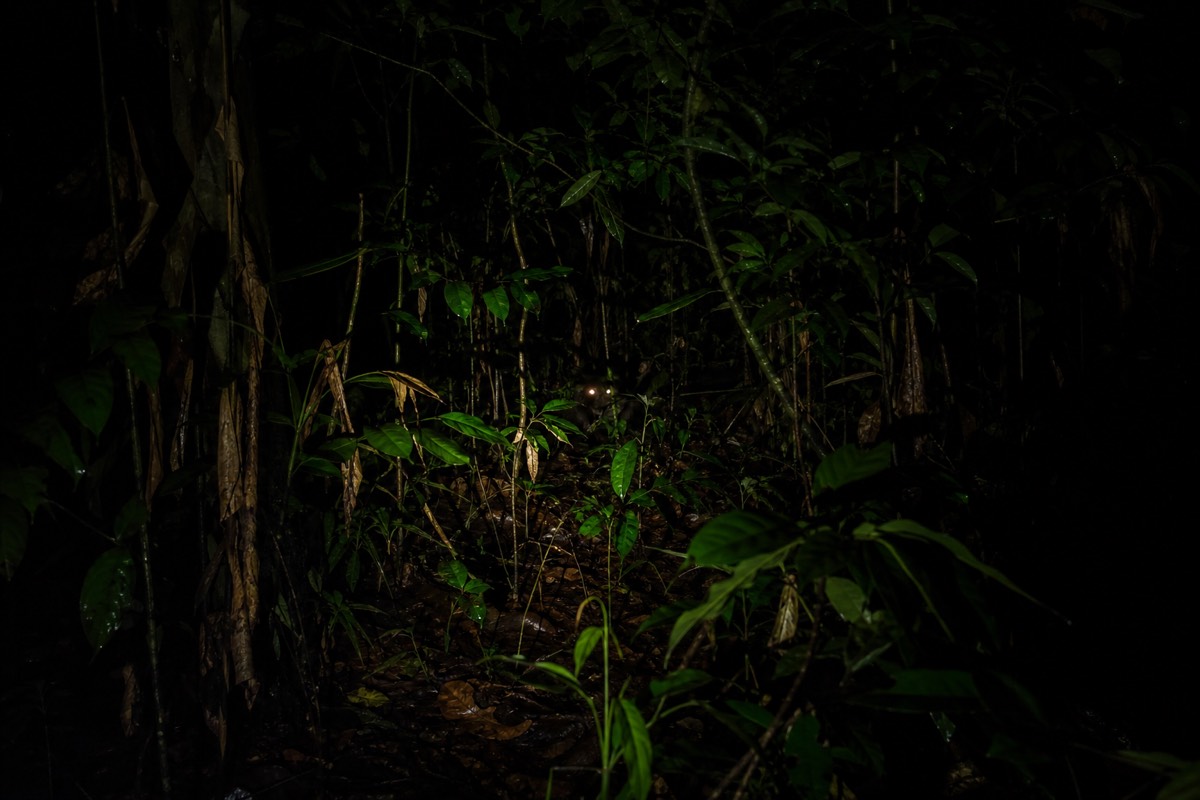
Time in the field is the biggest lever by a wide margin. A single day trip buys you a boat ride, a walk, and a genuine but shallow slice of the ecosystem. Three days is the point where dawn choruses, night sounds and a canoe through flooded forest all fit. Five to seven days is where the rare tier starts becoming plausible. We break the maths down in our guide to how many days you need in the Iquitos Amazon.
| What you change | Effect on sightings |
|---|---|
| Stay 4 to 7 days instead of 1 to 2 | Access to remote areas, repeat attempts, rare-species odds climb |
| Take dawn excursions (5:30 to 9:00 am) | Peak animal activity, calm water, fewer boats |
| Add night walks and night boat trips | Caimans, frogs, snakes, nocturnal mammals |
| Travel May to October (low water) | Wildlife concentrates at shrinking water sources |
| Small group or private tour | Guide follows sightings instead of a fixed schedule |
Does the season change what you see?
Yes, though not as dramatically as people fear. Low water from June to October, peaking July to September, concentrates animals around fewer water sources and opens every trail. High water from December to May floods the forest, spreads animals out, and turns canoe channels into the main way to travel.
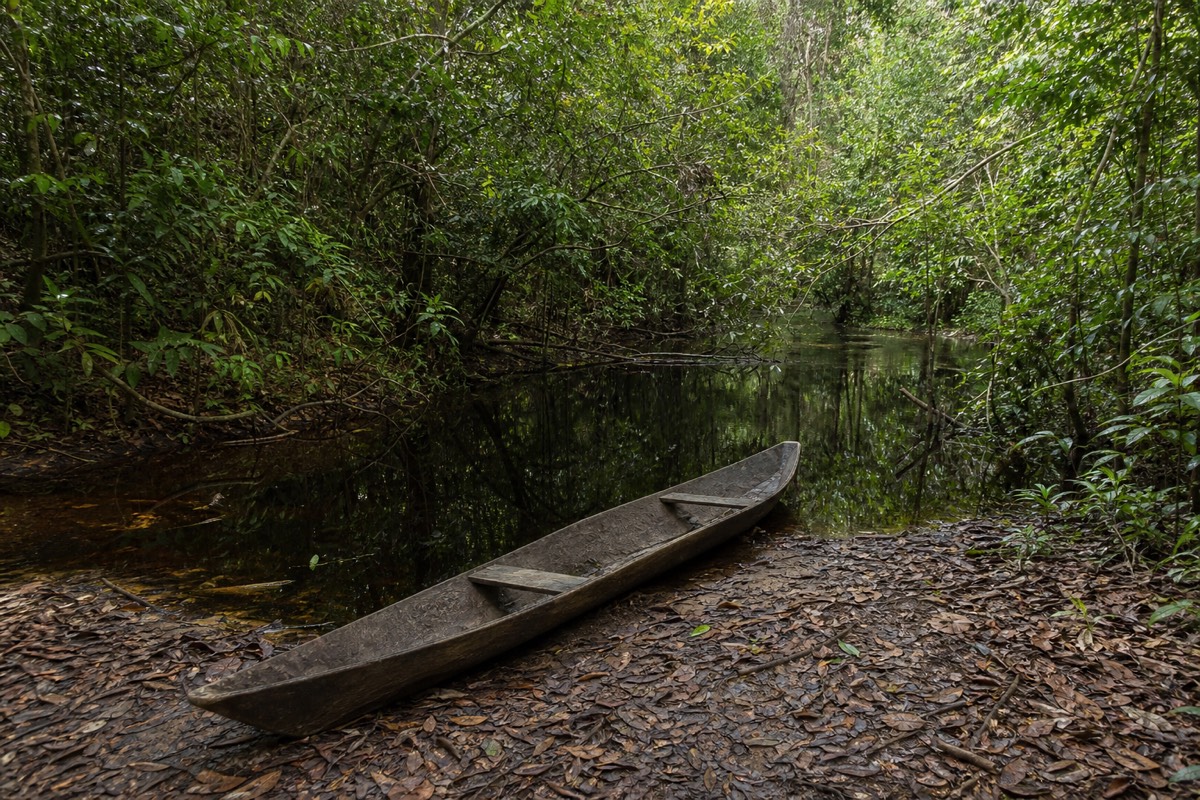
Neither season is empty. High-water months bring breeding colonies, migratory birds, lower prices and almost no other visitors, and flooded forest paddling is genuinely lovely. Low water simply makes the arithmetic easier: less space for animals to hide, fully walkable trails, and very active clay licks. If you are still choosing dates, our page on the best time to visit the Iquitos Amazon lays out both sides properly.
Is a day trip enough to see real wildlife?
A day trip reliably delivers dolphins, monkeys, birds and river scenery, and for a traveller with one spare day in Iquitos it is a real experience rather than a consolation prize. What it cannot give you is dawn, dark, or distance from the city, which is where most of the memorable sightings live.
The honest split is this. If you have one day, take it. If you have three, take three. Nearly everyone who books a short trip and loves it says the same thing afterwards, which is that they wish they had booked the longer one. Our full range of Iquitos Amazon tours covers both ends, from an eight-hour river and wildlife day out to seven nights deep in the forest.
If you would rather compare trips first, our full range of Iquitos Amazon Tours runs from single-day outings to week-long lodge stays.