How to Get to Iquitos: Flights, Airport, and Why There Are No Roads
Trace a road toward Iquitos on a map and you will not find one. This is the largest city on earth with no road connection to the outside world, and the only ways in are a single runway and the water itself.
For a paid experience alongside this guide, forest walks, a night boat outing and dolphin watching from a lodge base. Meals, guide and round-trip airport transfers included. Explore Muyuna: 3 days / 2 nights
Pricing note: figures in the original guide are illustrative historical examples, not current quotes. No independent wildlife sighting percentages or safety/welfare certification are verified. Use the dated provider options below to compare current details.
Look at a map of Peru and trace a road toward Iquitos. There is not one. Not a dirt track, not a seasonal route, nothing. The city sits at the confluence of the Amazon, Nanay and Itaya rivers, it is the largest city on earth with no road connection to the outside world, and the only ways in are a runway and a river.
That single fact shapes everything about getting here: the price of the flight, why cargo arrives by barge, why a pineapple costs what it costs, and why your jungle lodge is still two hours away after you land. Here is exactly how the journey works.
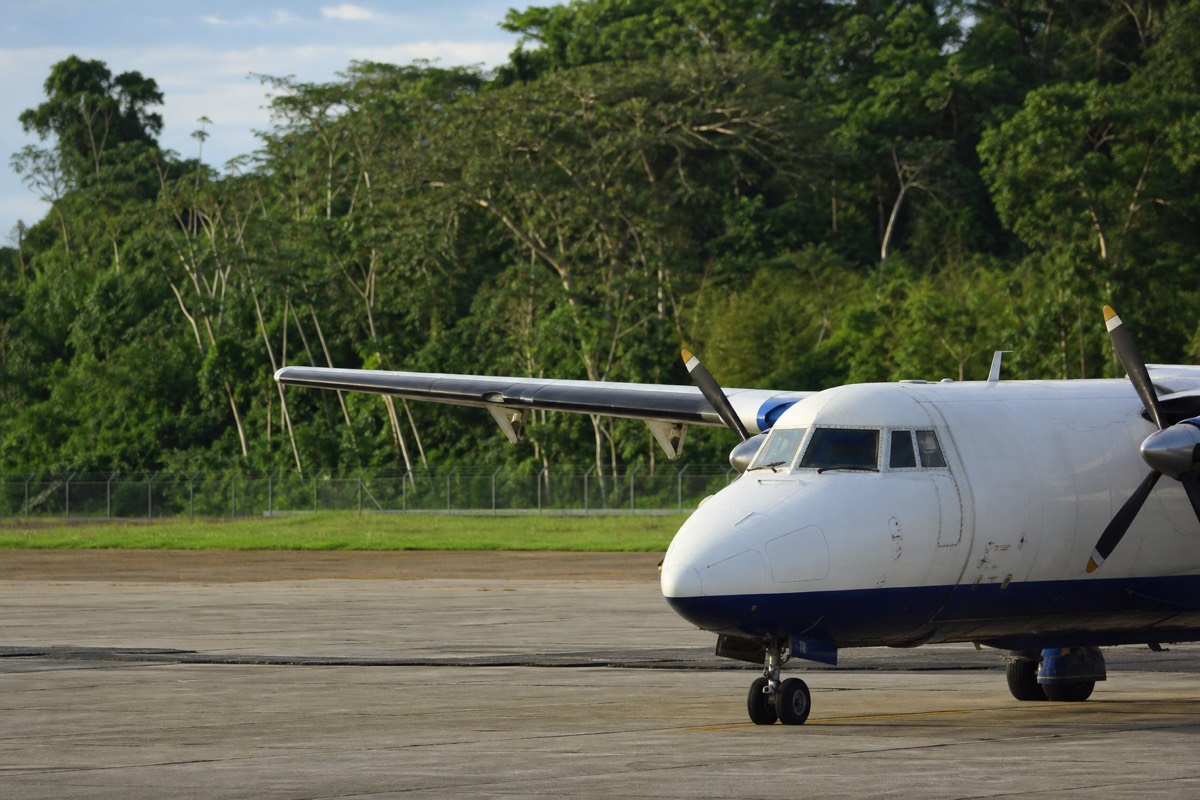
Quick answer: fly. Direct flights from Lima's Jorge Chavez Airport to Francisco Secada Vignetta International Airport (IQT) take around 1 hour 45 minutes, run several times daily on LATAM, Star Peru and Sky Airline, and cost roughly $80 to $250 one way. The only alternative is a cargo and passenger river boat from Pucallpa or Yurimaguas, which takes three to seven days and costs $30 to $300 depending on whether you want a hammock hook or a cabin. There is no road, so there is no bus and no drive.
Booking choice: Muyuna: 3 days / 2 nights. Forest walks, a night boat outing and dolphin watching from a lodge base. Meals, guide and round-trip airport transfers included.
Discover Muyuna: 3 days / 2 nightsGetting to Iquitos: cost and time by option
One-way fare ranges reported for Lima to Iquitos flights and for cargo and passenger river boats; fares move with season and booking date.
How do you get to Iquitos?
Two ways only: by plane or by river boat. Flying from Lima is what almost everyone does, at around 1 hour 45 minutes and roughly $80 to $250 one way with multiple daily services. The river boat is a genuine option for people with a week to spare and a tolerance for basic conditions, and a bad idea for anyone else.
The practical route for a visitor arriving from abroad is Lima first. International flights land at Jorge Chavez, you connect onto a domestic service, and you are in the Amazon before lunch if you time it right. Less common domestic connections exist from Pucallpa and Tarapoto, which can be useful if you are already deep in the country, but Lima carries the frequency and the competitive fares.
The third thing people ask about, driving, does not exist as an option. You cannot rent a car in Lima and drive to Iquitos. You cannot take a long-distance bus. The road network of Peru simply stops well short of the city, and the gap is filled by an unbroken expanse of rainforest and river.
Once you land, your journey is usually not over. Most jungle tours include a boat transfer from Iquitos to the lodge, running anywhere from 30 minutes to three hours by speedboat along the Amazon, Nanay or Itaya rivers. Budget that time into your arrival day rather than treating it as a bonus.
Why are there no roads to Iquitos?
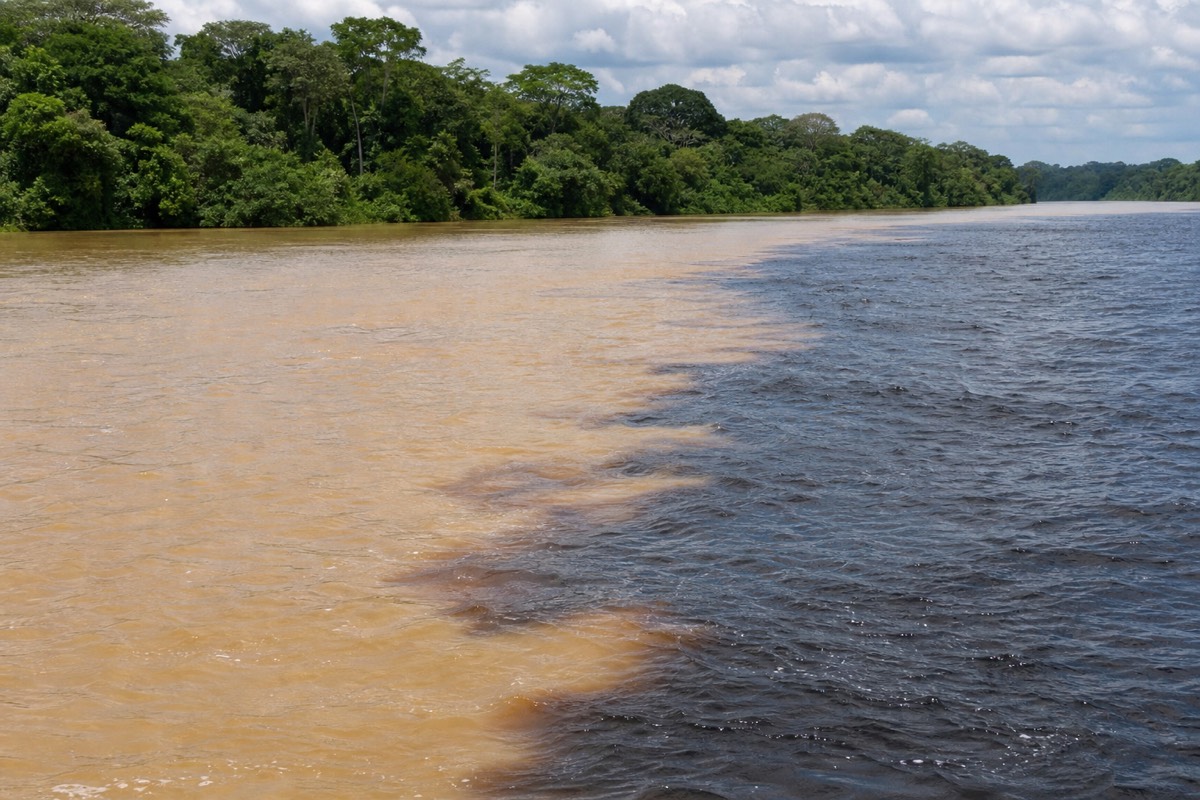
Geography and economics both say no. Iquitos sits in the middle of the Amazon basin, separated from the Peruvian highlands and coast by hundreds of kilometres of dense, flood-prone rainforest and a network of rivers that reshape themselves every year. Building and maintaining a highway through that is ruinously expensive, and the river already works.
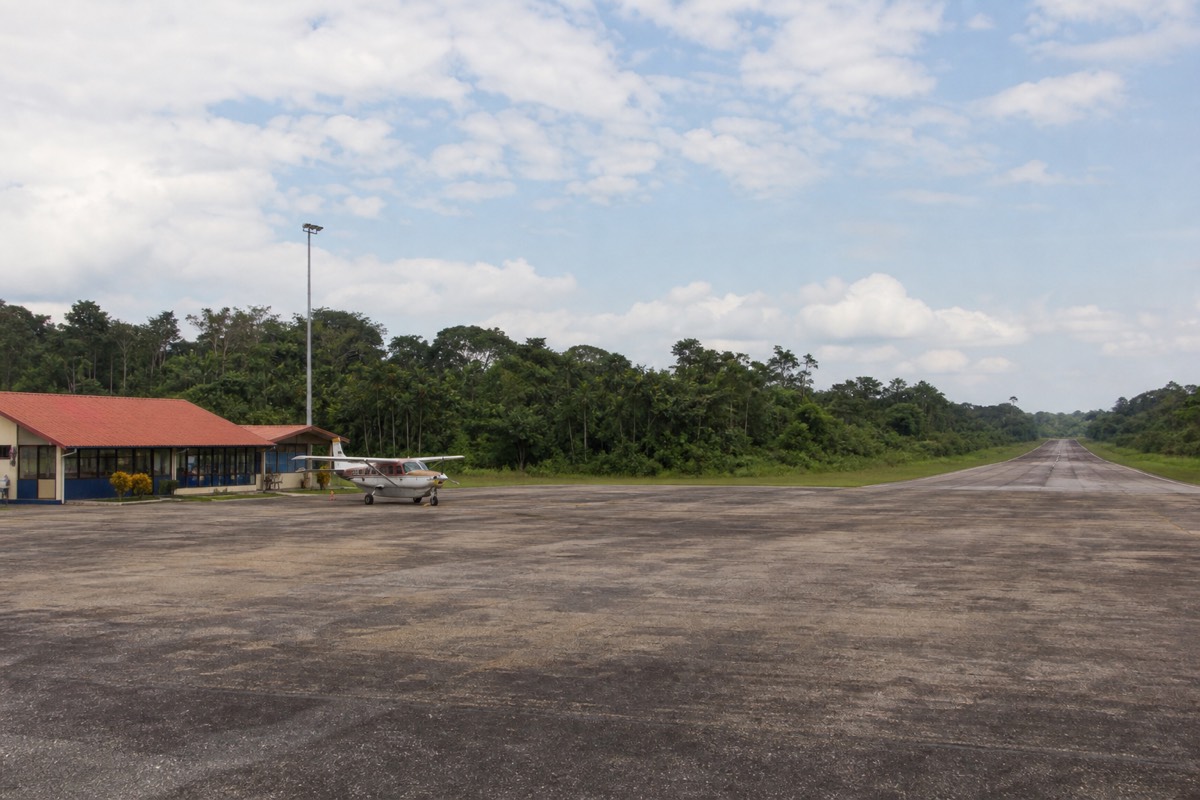
This makes Iquitos the largest city in the world with no road connection to the outside world. That is not a marketing line, it is a straightforward geographic fact, and it is the reason the place feels different the moment you land. Everything that is not grown or made locally arrived by plane or barge, which you can see plainly in the prices at Belén Market and in the sheer volume of river traffic on the waterfront.
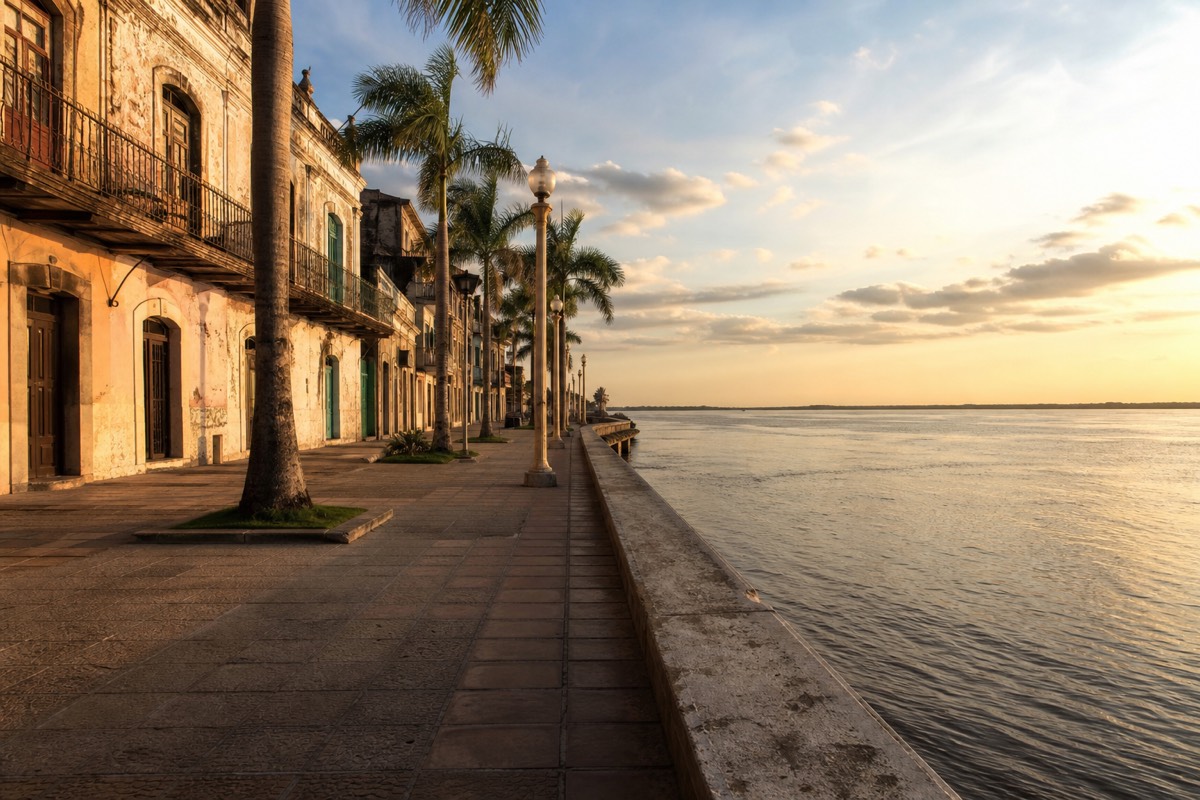
The rivers are the roads. The Amazon, the Ucayali, the Marañón, the Nanay and the Itaya carry cargo, passengers, fuel, building materials and mail. Iquitos is a port city in the true sense, and standing on the malecón watching barges work the channel tells you more about how this place functions than any museum could.
For a visitor, the isolation is the point. No independently measured sighting rate is verified for this guide; encounters depend on the route, conditions and wild animals. The absence of a road is not an inconvenience to be endured on the way to the jungle. It is why the jungle is still there.
Which airlines fly to Iquitos and what do flights cost?
LATAM, Star Peru and Sky Airline all fly Lima to Iquitos, with multiple daily departures between them. Expect roughly $80 to $250 one way and often $150 to $400 return, cheaper booked early and higher through the June to October high season. Flight time is about 1 hour 45 minutes.
| Route | Frequency | Flight time | Typical one-way fare | Notes |
|---|---|---|---|---|
| Lima (LIM) to Iquitos (IQT) | Multiple daily, LATAM, Star Peru, Sky Airline | About 1 hour 45 minutes | $80 to $250 | The standard route, best frequency and best fares |
| Pucallpa to Iquitos | Less frequent | Under an hour | Varies | Useful if already in central Peru |
| Tarapoto to Iquitos | Less frequent | Around an hour | Varies | An option, not a plan to build a trip around |
| Any international arrival | Via Lima | Connection required | Separate ticket, usually | No direct international service, connect at Jorge Chavez |
A few booking notes that actually save money. Fares climb steeply as departure approaches on this route, more than on many domestic Peru routes, because the seat supply is genuinely finite and demand is concentrated. Booking well ahead for the June to October window is the single most effective thing you can do, and it matters even more if your dates are fixed by a lodge reservation.
The window seat is worth requesting. The descent into Iquitos crosses an unbroken green horizon with the river system braiding beneath it, and it is the only aerial view of the Peruvian Amazon most visitors will ever get. On a clear morning it does more to explain the scale of the place than any amount of reading.
Weather delays happen, though rarely. Heavy rain or fog can hold departures, which is one more argument for arriving a day before your tour rather than connecting straight through. That buffer costs one hotel night and protects a trip that cost several hundred dollars.
What is Iquitos airport actually like?
Francisco Secada Vignetta International Airport, code IQT, is small, functional and close to town. One terminal, a handful of gates, basic facilities and a taxi and motocarro rank outside. You will be through it in fifteen minutes, which is fortunate because the humidity hits the moment the doors open.

Do not expect much in the way of shops, lounges or currency exchange at good rates. Change money in Lima or draw cash from an ATM in the city rather than relying on the airport. Bring small US dollar bills too, because tips for guides and lodge staff, commonly around $10 to $20 a day, are easiest handled in cash and there are no cash machines once you leave for the forest.
Baggage matters more here than at most airports. Small aircraft and boat transfers both have weight and space limits, and a rigid suitcase is a genuine nuisance on a wet boat landing. A soft duffel is the right bag, and most lodges will store your main luggage in Iquitos if you only need a small bag for the jungle. What to pack has its own guide, and the packing list is unusually consequential in a place with no shops.
Getting from the airport into town is quick and cheap by motocarro, the three-wheeled motorcycle taxis that make up most of the traffic in the city of Iquitos. Agree a fare before you climb in. If you have a lot of luggage or you are arriving after dark, take a proper taxi instead; the guide on whether Iquitos is safe covers the ordinary city-sense side of things.
Can you reach Iquitos by river boat?
Yes, and it is one of the great slow journeys in South America, but be honest about what it is. Cargo and passenger boats run from Pucallpa and Yurimaguas along the Ucayali and Huallaga river systems, taking three to seven days on an irregular schedule. Hammock deck passage costs $30 to $100, a basic cabin $150 to $300.
| Option | From | Duration | Cost | Conditions |
|---|---|---|---|---|
| Hammock deck, cargo and passenger boat | Pucallpa or Yurimaguas | 3 to 7 days | $30 to $100 | Open deck, you hang your own hammock, shared basic facilities, meals usually included and very simple |
| Basic cabin, same boats | Pucallpa or Yurimaguas | 3 to 7 days | $150 to $300 | A private cabin, still basic, more secure for luggage |
| Fast river launch, shorter legs | Regional river towns | Hours, not days | Varies | Local transport between river settlements, not a Lima alternative |
| Amazon river cruise vessel | Iquitos, round trip | 3 to 7 nights | Premium pricing | A holiday product departing from Iquitos, not a way of reaching it |
The schedule is the hard part. Departures are announced rather than published, and a boat leaves when it is loaded, which can be a day later than the day you were told. If you have a lodge booking on a fixed date at the other end, this is not the transport for you.
What you get in exchange is real. You watch the river towns go by, you eat what the crew eats, you sleep in a hammock strung between two strangers' hammocks, and you arrive with a sense of the distance that a 105-minute flight erases completely. Travellers who do it rarely regret it. They simply do not do it twice.
Note the last row of that table, because it confuses people constantly. An Amazon river cruise is a multi-day holiday that departs from Iquitos and returns to it. It is not a way of getting to Iquitos. If you are weighing that style of trip against a jungle lodge, the comparison of a lodge vs a river cruise is the place to start.
Flight or river boat: which should you take?
Take the flight. For nearly every visitor it is not a close call: 1 hour 45 minutes against three to seven days, a fixed schedule against a loose one, and a fare difference that a single extra hotel night largely erases. The boat makes sense only if the journey is the destination and your calendar is genuinely open.
| Factor | Flight from Lima | River boat |
|---|---|---|
| Time | About 1 hour 45 minutes | 3 to 7 days, schedule irregular |
| Cost, one way | $80 to $250 | $30 to $100 hammock, $150 to $300 cabin |
| Comfort | Standard short-haul aircraft | Basic to very basic, shared facilities |
| Reliability | High, occasional weather delays | Low, departures shift by a day or more |
| Booking | Online, months ahead | In person at the port, usually a day or two ahead |
| Luggage | Airline limits apply | Space is generous, security is your own responsibility |
| What you see | An hour of unbroken rainforest from the air | Villages, river life and the true scale of the basin |
| Suits | Nearly everyone, and anyone with a booked tour | Long-trip backpackers, slow travellers, no fixed dates |
| Total days consumed | Part of one day | Between a third and a full week of your trip |
Run the real arithmetic before romanticising the boat. Saving $150 on the fare while spending five extra days getting there is a poor trade if those five days could have been spent in the forest, where the actual reason for the journey lives. Five days is the length of the Jungle Explorer Tour, for reference.
What happens after you land?
Almost nobody stays in Iquitos city for their jungle trip. Lodges sit 30 minutes to three hours upriver or downriver by speedboat, and that transfer is usually included in the tour price. Most operators meet you at the airport or your hotel, run you to the port, and put you on the water the same day.
| Stage | Typical time | How it works |
|---|---|---|
| Airport to city hotel or port | Short, well under an hour | Taxi or motocarro, or an operator transfer if your tour includes it |
| Iquitos port to a near lodge | 30 minutes to 1 hour | Covered speedboat on the Nanay or Itaya |
| Iquitos port to a mid-distance lodge | 1 to 2 hours | Speedboat down the Amazon, wildlife visible en route |
| Iquitos port to a remote lodge | 2 to 3 hours or more | Longer river run, often the better wildlife territory |
| Toward the Pacaya-Samiria National Reserve | Longest transfers of all | Reserve access is by river to the south and west, usually part of longer tours |
| Lodge to daily excursions | 3 to 4 hours a day on the water | Morning and afternoon boat or canoe trips, deliberately slow |
That transfer is not dead time. Speedboats move slowly enough that pink river dolphins, caimans on the banks and birds working the water are all in play before you have even checked in. Several travellers get their first dolphin sighting on the ride to the lodge, which is a good early sign for the rest of the week.
The distance question cuts both ways. A lodge an hour from the city is easy to reach and cheaper to run, so it tends to cost less. A lodge three hours out sits in quieter water with less traffic and usually better wildlife, and it charges for the fuel. Neither is wrong, and how much an Iquitos Amazon tour costs breaks that trade-off down properly.
How do you get around Iquitos itself?
Motocarros, the three-wheeled motorcycle taxis that dominate every street in the city. They are everywhere, they are cheap, and they are the defining sound of Iquitos. Agree the fare before you get in, take a proper taxi late at night, and expect the ride to be one of the more memorable parts of your trip.
The city is compact enough that a lot of it is walkable, especially the riverfront malecón, the Plaza de Armas and the rubber-boom architecture around it. Belén Market and the floating houses of the Belén district are the two sights everyone should see, and both are best done with a guide who can explain what you are looking at rather than wandering in cold.
Petty theft in crowded markets is the realistic risk rather than anything dramatic. Keep valuables out of sight, do not carry your passport around, and use a taxi after dark. Solo travellers, including solo women, consistently report Iquitos as easier and calmer than they expected, and guided lodge tours in particular are about as controlled an environment as travel gets.
If you have a spare half day either side of your jungle trip, use it. The Belén Market tour runs four hours as a private trip and there is a food tour of similar length, both of which sit among the highest-rated things to do in Iquitos and neither of which requires leaving the city.
What does a realistic Lima to lodge itinerary look like?
Fly Lima to Iquitos on a morning departure, transfer to the port, and be at your lodge by mid-afternoon with an activity that same day. Coming back, expect a morning boat and an afternoon flight. That pattern costs you roughly two days at the edges of any tour, which is why a 3-day trip takes five days out of your itinerary.
| Day | What happens | Timing notes |
|---|---|---|
| Day 0, optional | Arrive in Iquitos, hotel night, malecon and Plaza de Armas in the evening | The buffer that protects your tour against a delayed Lima flight |
| Day 1, morning | Fly Lima to Iquitos, about 1 hour 45 minutes | Take an early departure, afternoon flights compress everything |
| Day 1, midday | Airport pickup, transfer to the port, boat to the lodge | 30 minutes to 3 hours on the water, lunch is often on the boat |
| Day 1, afternoon | Settle in, first jungle walk, then a night walk after dinner | Your first night excursion is usually the same evening |
| Middle days | Dawn excursions, clay licks, oxbow lakes, canoe trips, night boats | The actual trip, 3 to 4 hours a day on the water |
| Final day, early | One last dawn activity, then the boat back to Iquitos | The best wildlife window is 5:30am to 9:00am, take it |
| Final day, afternoon | Fly Iquitos to Lima | Leave three hours between your boat arrival and your flight |
The last row is the one people get wrong. A river transfer is weather-dependent and a boat that leaves late cannot be hurried. Three hours of slack between arriving at the port and your gate closing is not excessive, it is standard practice among people who have done this more than once.
How long the middle section runs is its own decision, and it changes the trip more than anything else here. The guide on how many days you need in the Iquitos Amazon walks through 2, 3, 4, 5 and 7 day formats with real prices attached.
When should you book flights to Iquitos?
Two to four months ahead for June to October, which is low-water season and the region's busiest window. Three to six weeks is usually enough for December to May, when the river is high, visitor numbers drop and both flights and lodges are easier to come by.
| Travel window | Water level | Demand | Book flights |
|---|---|---|---|
| December to February | High water, rising | Very low | 3 to 6 weeks ahead |
| March to May | High water, at peak | Low | 4 to 8 weeks ahead |
| June to August | Low water, falling | Highest of the year | 2 to 4 months ahead |
| September to October | Low water, near the bottom | High | 6 to 10 weeks ahead |
| November | Low water, starting to rise | Moderate | 4 to 6 weeks ahead |
Which window you want is a separate question from when to book, and it is a genuinely interesting one because the flood cycle rather than temperature drives the seasons here. Low water means walkable trails and concentrated wildlife. High water means canoeing through flooded forest and far fewer people. The full comparison is in the guide to the best time to visit the Iquitos Amazon, and it is worth reading before you fix your dates rather than after.
Book in this order: dates first, then the flight, then the tour, then a city hotel for the buffer night. Reversing the middle two is how people end up with a lodge reservation they cannot reach at a price they did not plan for.
What can go wrong, and how do you build a buffer?
Three things account for nearly every problem: a delayed or cancelled Lima flight, a river transfer that runs late, and a connection booked too tight at either end. All three are solved by the same cheap insurance, which is one spare night in Iquitos before your tour starts and three hours of slack before your flight home.
Weather delays into Iquitos are uncommon but they do happen, and heavy rain can slow a boat transfer at any time of year. Because there is no road, a missed flight cannot be salvaged by driving. The next departure is the next departure, and in high season it may be full.
Booking your international flight home for the same day you fly out of Iquitos is the classic mistake. Give yourself a night in Lima. It converts a stressful chain of connections into two easy days and costs less than rebooking a long-haul ticket.
The other buffer worth having is informational. Save your operator's phone number, your lodge name and your booking reference somewhere offline before you leave the city, because signal in the forest ranges from patchy to absent. Tell someone at home where you are going and when you are due back. That is standard practice for remote travel and it costs nothing.
None of this is difficult, and none of it should put you off. Getting to Iquitos is a single short flight followed by a boat ride through one of the most biodiverse places on earth. The isolation that makes the logistics feel unusual is exactly the same isolation that has kept the forest intact, and once you are on the water with a guide pointing out a sloth in the canopy, the arrangements stop mattering entirely. The full range of Amazon tours from Iquitos, from two-hour river trips to seven-day expeditions, all start from that same small airport.
The trips referenced on this page all come from our lineup of Iquitos Amazon Tours, which spans day tours through multi-day expeditions.